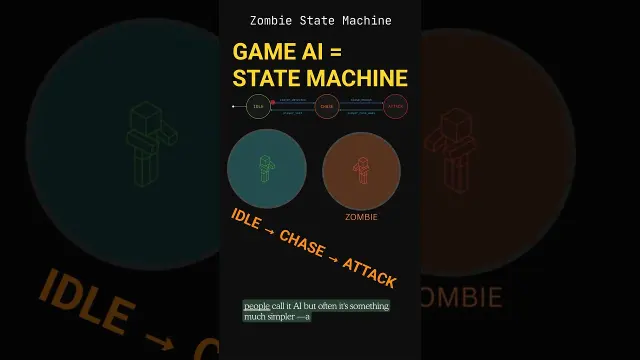
 Finite State Machines Explained Using Game AI
#Game Development
1 ideas
Finite State Machines Explained Using Game AI
Get new #Game Development ideas by email
Every Thursday: the week's best ideas, with the newest from #Game Development.
Related tags
Game Development Guide
Game development is the craft of designing, building, and refining interactive games for computers, consoles, mobile devices, and other platforms. It brings together creativity and technical problem-solving, combining art, storytelling, sound, rules, and player input into a finished experience. Some games are made by large teams with many specialists, while others are created by small studios or even by one person.
What game development includes
At its core, game development turns an idea into something playable. That usually starts with a concept: what the game is about, how the player interacts with it, and what makes it enjoyable. From there, the work may include writing, drawing characters and environments, creating animations, recording sound, programming gameplay, testing, and polishing the final result.
A game is more than visuals. It also needs clear rules, responsive controls, and a sense of progression. Good game development balances challenge and reward so the player feels motivated to continue.
Read more
Main parts of the process
Game development is often divided into a few broad stages:
- Planning: defining the game idea, audience, goals, and basic structure
- Prototyping: making a simple version to test the core mechanics
- Production: creating art, levels, code, audio, and other content
- Testing: checking for bugs, balance issues, and confusing gameplay
- Polish: improving performance, clarity, and overall feel
These stages may overlap, and many games go through repeated revision. It is common to change ideas after testing, especially when a mechanic does not feel fun in practice.
Common types and styles
Games come in many forms, from puzzle games and platformers to role-playing games, strategy games, simulations, and action games. Some focus on story, some on competition, and some on creativity or exploration. Visual style can also vary widely, from simple 2D art to detailed 3D worlds.
The important thing is that the style supports the gameplay. A fast action game needs clear movement and readable feedback, while a story-driven game may rely more on atmosphere, pacing, and character design.
Skills and tools to know
If you are just starting, it helps to learn the basics of:
- Game design principles, such as feedback, pacing, and player goals
- Simple programming or visual scripting
- Basic art and animation concepts
- Sound and music awareness
- Testing and problem-solving
Many beginners start by making very small games. A simple project teaches more than an ambitious one that is never finished. Clear scope matters: it is better to complete a small game well than to begin something too large.
Practical advice for beginners
Start with one idea and one main mechanic. Keep controls simple. Make sure the player understands what to do without too much explanation. Test early and often, because a game can feel very different when it is actually played. Ask yourself whether every part of the game helps the player enjoy the experience.
It also helps to study games you admire. Notice how they introduce rules, guide attention, and reward progress. Over time, game development becomes a mix of patience, iteration, and careful listening to how players respond.
A finished game does not need to be huge to be meaningful. What matters most is that it works, feels coherent, and gives the player a reason to come back.
Videos come from YouTube and posts from Instagram; titles and summaries are our own. All rights belong to their creators.