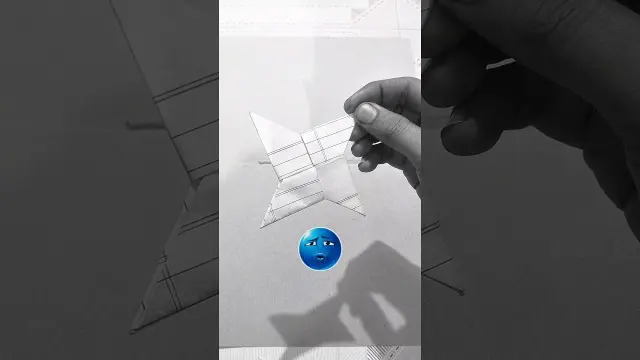
 Step by Step Paper Ninja Star Project for Beginners
#Beginner Paper Crafts
1 ideas
Step by Step Paper Ninja Star Project for Beginners
Get new #Beginner Paper Crafts ideas by email
Every Thursday: the week's best ideas, with the newest from #Beginner Paper Crafts.
Related tags
A Gentle Start to Paper Crafts for Beginners
Paper is one of the most forgiving materials you can work with. It is cheap, easy to find and quick to shape, which makes it a lovely place to start if you want to make something with your hands but are not sure where to begin. Paper crafts cover a wide range of activities, and almost all of them can be learned one small step at a time.
Where paper crafts come from
People have been folding, cutting and pasting paper for centuries, and many traditions grew up independently around the world. Folding paper into shapes became a recognised craft in Japan, cutting decorative designs from paper developed in several cultures, and the European tradition of quilling — rolling narrow strips into coils — has its own long history. Card making, bookbinding and papier-mâché have folk roots too. You do not need to know any of this history to enjoy the craft, but it helps to understand that these techniques were shaped by ordinary people using what they had.
The main kinds of paper craft
Read more
- Folding: origami and simpler geometric folds turn flat sheets into three-dimensional shapes.
- Cutting: from snowflakes and garlands to delicate papercutting and collage.
- Quilling: thin strips rolled, pinched and glued into decorative motifs.
- Papier-mâché: layered paper and paste built over a form, then painted.
- Paper construction: cards, boxes, envelopes, booklets and small paper automata.
The techniques overlap, and most people drift between them.
What you need to start
You can begin with surprisingly little: a few sheets of paper, a pair of sharp small scissors, a glue stick or a little white glue, a ruler and a pencil. As you go further you might add a craft knife and cutting mat, a bone folder for crisp creases, and a selection of paper weights.
Not all paper behaves the same way. Copier paper is thin and good for folding practice. Cardstock holds its shape for boxes and cards. Tissue and crepe are soft and drape. Textured papers add surface interest, while newsprint and old book pages are useful for collage. Try a few and you will quickly feel which suits what.
Practical tips for beginners
Choose projects that finish in a sitting. Nothing discourages a beginner like an enormous task half-done on the table.
Fold with intention. Line edges up carefully, press the crease down with a fingernail or bone folder, and unfold only when you mean to. Accurate early folds make everything afterwards easier.
Keep your cutting tools sharp and your blade perpendicular to the paper. A dull blade tears rather than slices, and ragged edges show.
Use a cutting mat and cut away from your body. Take your time with corners.
Apply glue sparingly. Excess glue wrinkles paper, and thin paper buckles quickly. A little on both surfaces, pressed briefly, usually holds better than a heavy bond.
Work on a clean, flat surface and keep a scrap sheet nearby for testing folds and glue.
Finally, keep your first attempts. Paper crafts improve through repetition, and comparing an early fold with a later one is the clearest sign of progress.
#Beginner Paper Crafts: frequently asked questions
How do I get started with paper crafts if I have never made anything before?
Pick one simple project you can finish in a single sitting, such as a folded shape, a folded star or a basic card, and make it a few times rather than jumping between techniques. Set out only the paper and tools that project needs so the table stays clear. Repetition on something small teaches you more than a large, half-finished project.
What supplies do I actually need to begin paper crafting?
A small stack of paper, a pair of sharp small scissors, a glue stick or a little white glue, a pencil and a ruler will carry you through your first projects. A craft knife with a cutting mat and a bone folder for crisp creases are worth adding once you know which techniques you enjoy. There is no need to buy a full kit up front.
Which kind of paper craft should I choose first?
Folding and simple cutting are the easiest entry points because they need almost nothing beyond paper and a flat surface. If you like detail work, rolled-strip quilling or papercutting may suit you better, while layered paste-and-paper projects appeal to people who enjoy slow building and painting. Try a little of each and follow whichever holds your attention.
How should I store and care for finished paper pieces?
Keep them flat, dry and out of direct sunlight, since light fades coloured paper and damp air makes it buckle and wrinkle. Store flat pieces between sheets of board or in a folder, and stand three-dimensional shapes somewhere they will not be crushed. Handle them by the edges to avoid marking the surface.
What are the most common mistakes beginners make with paper crafts?
The usual ones are folding without lining the edges up properly, using a dull blade that tears instead of slicing, and applying far too much glue, which wrinkles the paper. Working on a cluttered surface and starting projects too large to finish also trip up newcomers. Slowing down on the early folds and cutting away from your body fixes most of it.
What are good paper craft ideas for a gift or a special occasion?
Folded ornaments and stars, handmade cards and envelopes, small boxes and simple booklets all make well-received gifts and suit celebrations, holidays and thank-yous. Layered paste-and-paper bowls or shapes give you something you can paint and personalise. Keep your early versions too — comparing them with later ones is the clearest way to see your progress.
Videos come from YouTube and posts from Instagram; titles and summaries are our own. All rights belong to their creators.