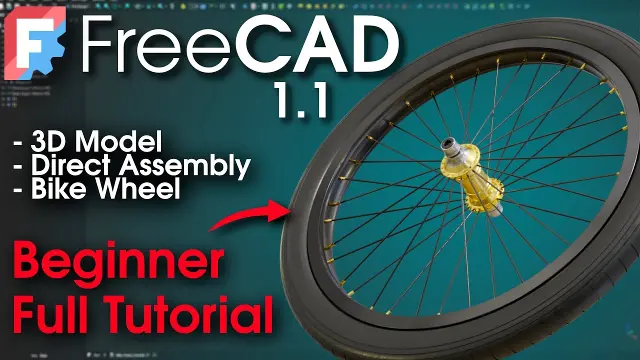
 FreeCAD Beginner Tutorial for Modeling a Bicycle Wheel
#Bicycle Wheel
1 ideas
FreeCAD Beginner Tutorial for Modeling a Bicycle Wheel
Get new #Bicycle Wheel ideas by email
Every Thursday: the week's best ideas, with the newest from #Bicycle Wheel.
Related tags
Bicycle Wheels: Parts, Types and Basics
What a bicycle wheel is
A bicycle wheel is one of the most important parts of a bike. It supports your weight, helps the bicycle move forward, and affects how the bike feels when you ride it. A wheel is more than just a circle: it is a carefully balanced structure made to be strong, light, and able to roll smoothly.
Traditional bicycle wheels developed from the basic idea of the spoked wheel, a design that has been used for many centuries in transport. In bicycles, the wheel became a practical blend of strength and efficiency, using a rim, spokes, hub, and tire to create a structure that can handle movement and pressure.
Main parts of a wheel
Read more
A bicycle wheel usually includes these parts:
- Rim: the outer ring that holds the tire
- Spokes: the thin supports that connect the rim to the hub
- Hub: the center part that lets the wheel turn around the axle
- Tire: the rubber outer layer that touches the road or trail
- Tube or tubeless setup: the air-filled part inside the tire system, depending on the wheel type
Each part plays a role. The rim gives shape, the spokes distribute force, and the hub allows the wheel to spin freely.
Common kinds and styles
Bicycle wheels vary depending on the type of bike and how it is used. Road bikes often use lighter wheels that roll efficiently on smooth surfaces. Mountain bike wheels are usually built to handle rough ground and stronger impacts. City and hybrid bikes may use sturdy, practical wheels meant for everyday riding. Children’s bikes, folding bikes, and cargo bikes can all use different wheel sizes and constructions as well.
Wheels also differ in their rim depth, spoke count, and material. Some are designed to be especially light, while others focus on strength and durability. The best choice depends on comfort, terrain, riding style, and the overall bike.
How wheels are made to work well
A good bicycle wheel needs balance between tension, shape, and alignment. The spokes must be evenly tensioned so the rim stays true, meaning it keeps a round shape and does not wobble from side to side. If a wheel becomes out of true, it may feel uneven or rub against the brakes.
Beginners should know that wheel strength does not come from one part alone. It comes from the whole structure working together. A wheel that is too loose, damaged, or poorly maintained can wear out faster and ride less smoothly.
Simple care and practical tips
Taking care of bicycle wheels does not have to be difficult. A few habits help a lot:
- Check tires regularly for wear, cuts, or low pressure
- Look at the rim and spokes for damage or looseness
- Spin the wheel to see if it runs straight
- Keep the hub area clean
- Avoid riding with a badly damaged wheel
If you notice a wobble, broken spoke, or rubbing sound, it is usually best to have the wheel adjusted before the problem gets worse. Small issues are often easier to fix early.
What to remember as a beginner
If you are new to bicycles, focus first on fit, safety, and simple upkeep. The wheel affects how stable and comfortable the bike feels, so learning its parts helps you understand the whole bicycle better. Once you know how the wheel works, it becomes much easier to choose the right bike, keep it in good condition, and ride with confidence.
Videos come from YouTube and posts from Instagram; titles and summaries are our own. All rights belong to their creators.