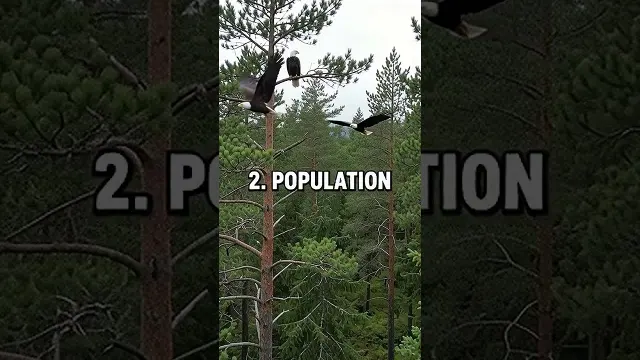
 Ecological Levels Made Easy for Environmental Science
#Biosphere
1 ideas
Ecological Levels Made Easy for Environmental Science
Get new #Biosphere ideas by email
Every Thursday: the week's best ideas, with the newest from #Biosphere.
Related tags
Biosphere: The Living Layer of Earth
What the biosphere is
The biosphere is the part of Earth where life exists. It includes all living things and the places they interact with: land, water, and the lower atmosphere. In simple terms, it is Earth’s life-supporting layer, where plants, animals, fungi, and microorganisms live together with the physical environment.
The word comes from Greek roots meaning “life” and “sphere.” It is used in environmental science to describe the global sum of all ecosystems, from forests and oceans to soil and the air near the ground.
How it is organized
Read more
The biosphere does not stand alone. It connects with other Earth systems:
- The lithosphere, or solid land and rocks
- The hydrosphere, or all water
- The atmosphere, or the air around Earth
Life depends on constant exchange between these systems. Plants take in water and carbon dioxide, animals breathe oxygen, and microorganisms help break down dead matter so nutrients can return to the soil and water.
Main parts of the biosphere
You can think of the biosphere as a web of living communities. These are often grouped into ecosystems, such as:
- Forests
- Grasslands
- Deserts
- Wetlands
- Freshwater systems
- Oceans and coastal areas
Each ecosystem has its own climate, organisms, and conditions. Some support dense plant growth, while others are defined by low water, cold temperatures, or high salinity. Even so, all of them are part of the same living whole.
Why the biosphere matters
The biosphere makes life on Earth possible. It helps regulate gases in the air, cycles water and nutrients, and supports food chains and habitats. It also gives us resources such as food, fiber, clean water, and materials. Just as important, it provides the natural processes that keep environments balanced over time.
When one part of the biosphere changes, others are affected too. For example, changes in land use, pollution, or climate can influence water quality, soil health, and the survival of species.
What beginners should know
If you are new to the topic, start with the idea that the biosphere is not a separate place, but a connected living system. Every organism is part of it, from tiny microbes in the soil to large animals in the ocean. Energy usually enters through sunlight and moves through living things, while matter is reused again and again through natural cycles.
A few practical ways to understand it better:
- Notice how a local habitat includes plants, animals, water, air, and soil together
- Think about how life depends on cycles of water, carbon, and nutrients
- Remember that ecosystems are linked, so changes in one place can affect another
- Use the biosphere as a broad concept when studying ecology, geography, or Earth science
The biosphere is one of the best ways to see Earth as a living, interconnected system.
#Biosphere: frequently asked questions
What exactly is the biosphere?
It is the whole zone of Earth where living things exist, together with the land, water and lower air they interact with. Rather than a place on a map, it is the thin living layer that wraps the planet and links plants, animals, fungi and microorganisms with their surroundings.
How is the biosphere different from an ecosystem?
An ecosystem is one local community of organisms plus its physical setting, such as a wetland or a forest patch. The biosphere is the global sum of all those ecosystems taken together as a single interconnected system.
What does the biosphere need in order to keep working?
It depends on constant exchange with the solid earth, the water and the air: gases moving in and out, water circulating, and dead matter being broken down so nutrients return to soil and water. Sunlight is the usual entry point for energy, which then passes through living things while matter is reused over and over.
Why does the biosphere matter in daily life?
It keeps the air and water in workable condition, cycles the nutrients that soils and plants depend on, and supports the habitats behind food chains. It is also the source of food, fiber, clean water and many materials people rely on without thinking about where they come from.
What do beginners usually get wrong about it?
A common mistake is treating the biosphere as a remote wilderness or a separate compartment from rocks, water and air. Others picture only animals and forget microbes and soil life, which do much of the work of breaking matter down and keeping cycles moving.
How can someone start learning about the biosphere?
Begin close to home: look at a local patch of ground and notice the plants, insects, soil, water and air as one working set rather than separate features. From there, follow the water, carbon and nutrient cycles to see how distant ecosystems end up linked to that small patch.
Videos come from YouTube and posts from Instagram; titles and summaries are our own. All rights belong to their creators.