 Ecological Levels Made Easy for Environmental Science
#Ecological Hierarchy
1 ideas
Ecological Levels Made Easy for Environmental Science
Get new #Ecological Hierarchy ideas by email
Every Thursday: the week's best ideas, with the newest from #Ecological Hierarchy.
Related tags
Understanding the Ecological Hierarchy
What ecological hierarchy means
Ecological hierarchy is the way living things and their surroundings are arranged in levels, from the smallest individual organism to the largest system on Earth. It helps you understand nature as a set of connected parts rather than isolated pieces. Each level has its own features, but it also depends on the levels below and above it.
This idea is used in environmental science, ecology, conservation, and education. It gives you a simple framework for studying how life interacts with water, soil, air, climate, and other living things.
The main levels
Read more
- Organism: one individual living thing, such as one plant, animal, or fungus.
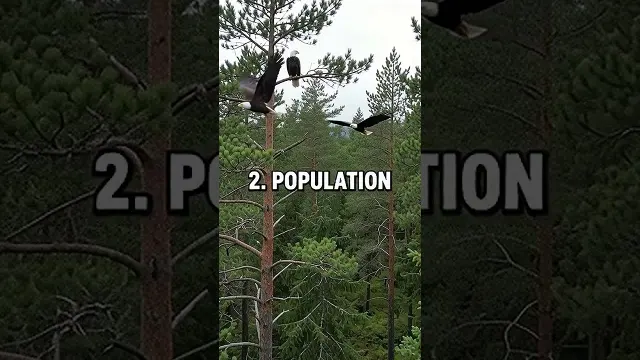
- Population: all members of the same species living in the same area.
- Community: all the different populations living and interacting in one place.
- Ecosystem: the community plus the nonliving environment, such as sunlight, water, rocks, and air.
- Biome: a large region with a similar climate, plants, and animals, such as a desert or forest.
- Biosphere: all ecosystems on Earth combined.
These levels are often shown as a ladder or nested circles. That is helpful, but remember that nature is not always neatly separated. Boundaries can overlap, especially where habitats meet.
How the levels fit together
Each level builds on the one before it. A single organism lives in a habitat. Many of the same organism together form a population. Different populations interact to make a community. When you add nonliving factors, you get an ecosystem. Several ecosystems shaped by similar climate patterns make a biome. Together, all biomes form the biosphere.
This structure matters because changes at one level can affect the others. For example, a change in water availability can influence individual organisms, whole populations, and eventually the wider ecosystem.
Why it matters in ecology
Ecological hierarchy helps scientists and students ask better questions. At the organism level, you might study how a species survives. At the population level, you might look at growth or decline. At the community level, you can explore competition, food chains, and species interactions. At the ecosystem level, you can study nutrient cycling and energy flow.
It is also useful for conservation. If you want to protect a species, you may need to protect its habitat, food sources, and neighboring species too. In this way, the hierarchy reminds you that living things depend on systems, not just on themselves.
A few things to keep in mind
- The same place can be studied at several levels at once.
- A habitat is not the same as an ecosystem: habitat is the place an organism lives, while ecosystem includes living and nonliving parts together.
- Food webs, biodiversity, and climate are often easier to understand when you place them within the hierarchy.
- You do not need to memorize it as a rigid list; think of it as a way to see connections.
If you are new to ecology, start with one local example, such as a garden, pond, or woodland patch. Identify the organisms, group them into populations, then notice the wider community and ecosystem around them. That simple exercise makes the whole hierarchy much easier to understand.
#Ecological Hierarchy: frequently asked questions
How do I start learning about ecological hierarchy?
Pick one small place you can actually observe, like a garden bed, a pond edge, or a patch of woodland, and begin with a single living thing there. Name the individuals you see, group the same kind together, then widen your view to the other living things around them and finally to the soil, water, and light they depend on. Working outward from something real makes the levels feel connected instead of abstract.
What is the difference between a habitat and an ecosystem?
A habitat is simply the place where a particular organism lives and finds what it needs. An ecosystem is broader: it includes the whole community of living things in that area plus the nonliving conditions around them. So a habitat sits inside an ecosystem, which is why protecting one species usually means protecting the wider system too.
Which level should I focus on if I'm studying a place?
It depends on the question you want answered, because the same spot can be examined at several levels at once. If you care about how one species survives, stay at the organism or population level; if you care about interactions, competition, or energy flow, move up to the community and ecosystem. There is no single correct starting point, only the level that fits what you are curious about.
How can I explain the hierarchy to children or beginners?
Use familiar examples and build upward: one tree, then all the trees of that kind, then everything living in the wood, then the soil and stream and sunlight as well. Nested boxes, stacked circles, or a simple drawing of a ladder all work well as visual aids. Keep it flexible rather than a list to memorize, since real nature overlaps at the edges.
What mistakes do people commonly make with these levels?
The most frequent slip is treating the levels as strict boxes with hard borders, when habitats and communities actually blend into one another. Another is confusing a habitat with an ecosystem, or stopping at the organism and forgetting the nonliving factors. It also helps to remember that a change at any level can ripple upward or downward, so nothing here stands alone.
How is the ecological hierarchy used in conservation?
Conservation work rarely succeeds by focusing on a single species in isolation. Saving one plant or animal usually means safeguarding its habitat, its food sources, and the other species it depends on, which means working at community and ecosystem level. That is why the hierarchy is a practical planning tool as well as a teaching one.
Videos come from YouTube and posts from Instagram; titles and summaries are our own. All rights belong to their creators.