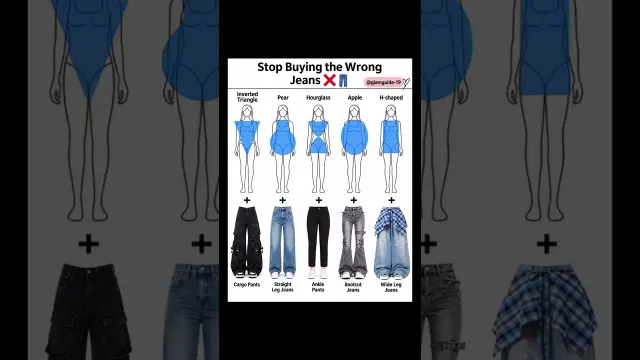
 How to Find the Perfect Jeans for Your Body Shape and Style
#Body Shape Fashion
1 ideas
How to Find the Perfect Jeans for Your Body Shape and Style
Get new #Body Shape Fashion ideas by email
Every Thursday: the week's best ideas, with the newest from #Body Shape Fashion.
Related tags
Dressing for Your Body Shape: A Beginner's Guide
Body shape fashion is the practice of choosing clothing by looking at the overall proportions of the body rather than at a single size or measurement. Rather than following a set of strict rules about what you "must" wear, the idea is to understand how the lines of a garment relate to your own outline, so that getting dressed feels easier and more intentional. It is a styling approach, not a judgement about how anyone should look.
Where the idea comes from
The idea has old roots: tailors have always adjusted garments to the person in front of them rather than to a standard form, and dressmakers' guides from the early twentieth century already described figures by their shoulder-to-hip balance. What changed over time is the tone. Older guides were often prescriptive and narrow; contemporary styling advice is more flexible, and most people who work with shape simply treat it as a vocabulary for describing balance, length and volume.
The main shapes
Read more
Most guides use a handful of simple descriptions, based on where the body appears wider or narrower:
- Balanced or straight: shoulders and hips roughly the same width, with little indentation at the waist.
- Curved or hourglass: shoulders and hips similar, with a clearly defined waist.
- Fuller at the hip: hips wider than shoulders, with weight carried lower.
- Broader at the shoulder: shoulders or bust wider than the hip line.
- Carrying volume at the middle: the waist is the fullest part of the torso.
These are approximations, and many people sit between two of them, or change category over the years. Treat the labels as a starting point for observation, not as an identity.
What beginners should know
The most useful skill is not memorising rules but learning to see where a garment puts its emphasis. A garment draws attention through colour contrast, pattern, seam lines, fabric weight and where it ends. A top that stops at the widest part of the hip reads differently from one that ends below it. A high waistband changes the apparent length of the leg. Once you notice these effects, you can decide for yourself whether you want to emphasise or soften a line.
Practical tips
Start with fit at the shoulders and bust for tops: these are the hardest areas to alter. For trousers and skirts, check the seat and the rise before anything else. Take note of where hems fall, and compare a couple of lengths rather than settling for the first one. Fabric matters as much as cut: crisp, structured cloths hold a line, while soft, drapey ones follow the body.
Try things on in a mirror from a few steps back, and in daylight if you can, because close-up views distort proportion. It also helps to try a garment in two sizes when you are unsure.
Most importantly, shape is a tool for your own comfort. If a rule does not serve you, you are free to ignore it and wear what you enjoy.
#Body Shape Fashion: frequently asked questions
How do I start dressing for my body shape if I have never thought about it before?
Begin by standing back from a full-length mirror and noticing where your outline appears wider or narrower — shoulders, waist, hip. Then look at the clothes you already wear and enjoy, and ask what those pieces emphasise, since a garment guides the eye through colour, seams, fabric and where it ends. That observation habit is more useful than learning a list of rules.
Do I need special clothes or a particular wardrobe to dress by body shape?
No — the approach is about how you read and choose garments, not about buying a new category of clothing. What helps is paying attention to fit in the areas that are hardest to alter, such as the shoulders and bust on a top, and the seat and rise on trousers or skirts. Beyond that, ordinary pieces you already own will work once you know where each one places emphasis.
How do I know which body shape description applies to me?
Compare the width of your shoulders with your hips and notice how much your waist indents between them, then match that to the simple descriptions most guides use. Keep in mind these are rough approximations, and plenty of people fall between two of them or shift over the years. Treat the label as a starting point for looking, not as something you have to commit to.
What is the most common mistake people make when choosing clothes for their shape?
The usual trap is treating the guidance as a set of prohibitions and avoiding whole categories of clothing before trying them. It also helps to try things on from a few steps back and in daylight, because a close-up view in a mirror distorts proportion and makes it hard to judge where a hem or waistband really falls. If a rule does not suit you, ignoring it is a legitimate choice.
How can I use body shape ideas for a specific occasion, like a wedding or a work event?
Decide first what you want the outfit to emphasise, then let the cut, fabric and length carry that decision rather than starting from a rule. A crisp, structured fabric holds a line and reads as more formal, while a soft, drapey one follows the body and feels more relaxed. Checking where hems end and how a higher or lower waistband changes the apparent leg length will do more for the result than following a formula.
How do I care for clothes so that shape-based styling keeps working over time?
Fit is the foundation of the whole approach, so keep garments fitting as they were meant to — a shoulder seam that has stretched or a waistband that has lost its line changes the silhouette. Follow the care label for each piece, since structured fabrics that hold a shape often need different handling from soft, drapey ones. Storing pieces with a little breathing room helps too, so folds and hangers do not distort the areas you relied on.
Videos come from YouTube and posts from Instagram; titles and summaries are our own. All rights belong to their creators.