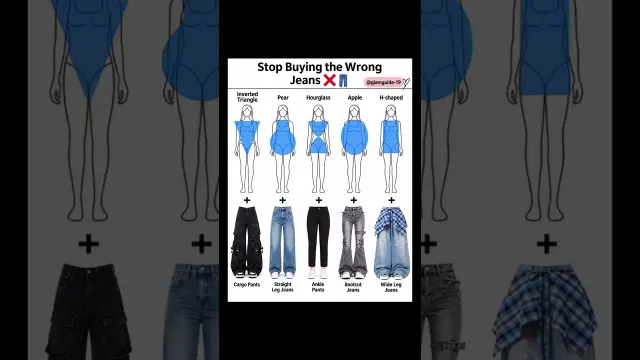
 How to Find the Perfect Jeans for Your Body Shape and Style
#Jeans Guide
2 ideas
How to Find the Perfect Jeans for Your Body Shape and Style
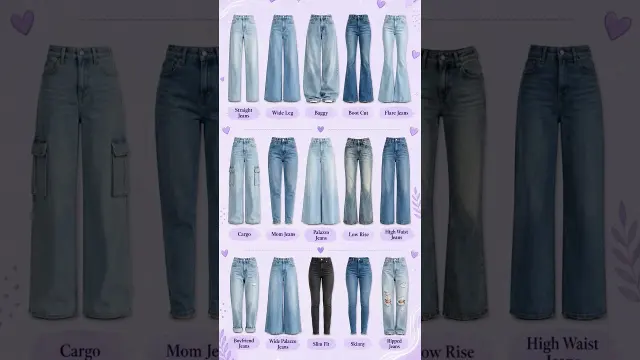 15 Types of Jeans for Women and Denim Outfit Inspiration
Get new #Jeans Guide ideas by email
Every Thursday: the week's best ideas, with the newest from #Jeans Guide.
Related tags
Jeans Guide
What jeans are
Jeans are trousers made from denim, a sturdy cotton fabric that has been used for workwear, casual wear, and everyday dressing for generations. They began as practical clothing, valued for durability and comfort, and became a wardrobe staple because they can be dressed up or down with ease. Today, jeans come in many shapes, washes, and finishes, but the basic idea remains the same: strong, reliable trousers that suit many different occasions.
Common styles
The main jean styles differ by how they fit through the waist, hips, and legs.
Read more
- Straight-leg jeans have a consistent width from hip to hem and are one of the most classic options.
- Skinny jeans fit close to the body from waist to ankle.
- Slim jeans are narrower than straight-leg styles but less tight than skinny jeans.
- Bootcut jeans gently widen from the knee down and balance well with boots or heeled shoes.
- Wide-leg jeans offer more room through the leg and create a relaxed silhouette.
- Flared jeans are fitted through the thigh and widen more noticeably below the knee.
- Cropped jeans end above the ankle and can show off footwear.
- High-rise jeans sit above the natural waist, while mid-rise and low-rise styles sit lower on the torso.
Denim finishes and details
Jeans also vary in their fabric and finish. Darker denim often looks more polished, while lighter washes feel more relaxed. Rigid denim has little stretch and can feel structured, while denim with a small amount of stretch may feel easier to move in. Distressing, fading, and whiskering are decorative effects that give jeans a worn-in look. Pocket placement, seam shape, and hem length can all change how jeans look and feel on your body.
How to choose a good fit
The best jeans are comfortable when you stand, sit, and walk. The waistband should stay in place without digging in, and the fabric should follow your shape without pulling across the hips or thighs. If you are trying on jeans, check the rise, leg opening, and inseam as well as the waist size. A pair that fits well in the waist but feels tight in the thighs may need a different cut, not just a different size.
A few simple tips can help:
- Try several rises to see which feels most comfortable on your torso.
- Move around in the fitting room before deciding.
- Pay attention to how the jeans sit at the back waist, since gaping can be a common issue.
- Choose a hem length that works with the shoes you wear most often.
Styling and care
Jeans are easy to style because they work with simple tops, shirts, knitwear, and jackets. A neat top and clean shoes can make them feel more refined, while a T-shirt and trainers keep them casual. To care for denim, wash jeans when needed rather than after every wear, and follow the care label to help preserve the color and shape. Turning them inside out before washing can also help reduce visible fading.
#Jeans Guide: frequently asked questions
How do I start choosing jeans if I have no idea what suits me?
Begin with a classic straight-leg cut in a mid-tone wash, since it sits comfortably between dressy and casual and works with most of what is already in a wardrobe. Try it in a couple of different rises so you can feel where the waistband lands on your torso, and move, sit and walk in the fitting room before deciding. Once you know which rise and leg width feel right, it becomes much easier to branch into other styles.
Which jeans style works best for my body shape?
Rather than matching a shape to a rule, look at balance: a wider leg adds volume below the hip, while a slimmer cut keeps the line close to the body, and a bootcut softly evens out a fuller thigh. Check the back waist first, because gaping there is a common frustration, and adjust the cut rather than just going down a size if the thighs feel tight. The rise matters as much as the leg shape, so experiment with high, mid and low before settling.
How should I care for jeans so they keep their colour and shape?
Wash them only when they actually need it instead of after every wear, and turn them inside out to limit visible fading. Follow the care label for temperature and drying, and let denim air dry where you can, since heat is what tends to shrink and distort it. Washing less often also helps the fabric hold its structure for longer.
What can I wear with jeans to make them look smarter?
A neat top, a shirt or a fine knit paired with clean, polished shoes instantly lifts jeans out of the casual zone, especially in a darker wash. A jacket or blazer over the top finishes the look without effort. Keep the trainers and graphic tees for relaxed days, and the same pair of jeans will cover both.
What mistakes should I avoid when trying on jeans?
The most common one is judging a pair only by the waist size and never sitting down in it, which hides problems in the seat and thighs. Ignoring the hem length relative to the shoes you wear most often is another, since a hem that pools or cuts off awkwardly spoils an otherwise good fit. Also be wary of choosing purely for stretch: denim with a little give feels easier to move in, but very stretchy pairs can lose shape over time.
Are ripped or faded jeans still a good choice, or should I keep it simple?
Distressing, fading and whiskering are decorative finishes that give denim a worn-in look, so they are a style decision rather than a quality one. A cleaner, darker pair is more versatile and easier to dress up, while a distressed pair works well for relaxed, casual outfits. Having one of each covers most occasions.
Videos come from YouTube and posts from Instagram; titles and summaries are our own. All rights belong to their creators.