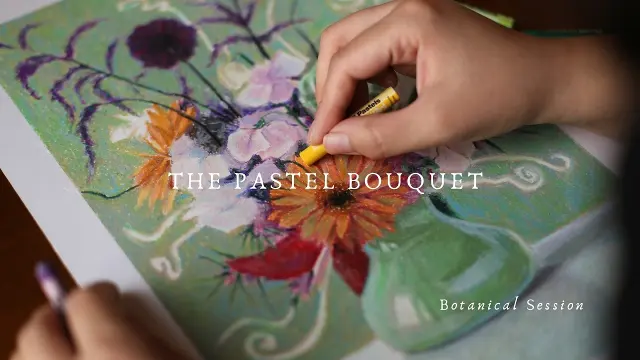
 Relaxing Botanical Oil Pastel Painting of a Flower Bouquet
#Botanical Art
1 ideas
Relaxing Botanical Oil Pastel Painting of a Flower Bouquet
Get new #Botanical Art ideas by email
Every Thursday: the week's best ideas, with the newest from #Botanical Art.
Related tags
Botanical Art: A Beginner's Guide to Drawing Plants
Botanical art is the practice of depicting plants — their flowers, leaves, stems, roots, seeds and fruit — with enough care and accuracy that the image reads as a true record of the species. It sits somewhere between science and poetry: a good botanical drawing is precise about structure, yet still expressive about the plant's character.
Where it comes from
Illustrating plants is an old craft. Herbals and medical manuscripts needed recognisable images so that plants could be identified, and by the age of exploration, botanical illustrators were travelling with collectors and sending home records of unfamiliar species. Many of those images are now valued as artworks in their own right. What has remained constant is the purpose: to look closely, and to describe what you see faithfully.
The main approaches
Read more
Botanical art covers a wide range of media and moods.
- Botanical illustration leans towards accuracy: clear outlines, correct proportions, careful attention to the number and arrangement of petals, and often a note of scale.
- Botanical painting, usually in watercolour, builds soft layers of transparent colour and is prized for capturing the delicate translucency of petals and leaves.
- Drawing in graphite or coloured pencil suits detailed study and is the most forgiving place to begin.
- Sketchbook and loose botanical work, including pastel and ink, favours atmosphere over completeness — a single flower, a study of a seed head, a corner of a garden.
- Field studies record plants where they grow, trading polish for immediacy.
What beginners should know
Start with one subject, not a whole bouquet. A single leaf, a fallen petal or a sprig of herbs is enough to teach you a great deal.
Look before you draw. Measure with your pencil held at arm's length to check proportions. Notice how a stem attaches, how a leaf curls, which side of the flower faces the light. Most of botanical art is observation, and the drawing is only the record of it.
Work from life whenever you can, and from good photographs when you cannot. If you pick plant material, keep it fresh in water and work reasonably quickly, or press it for later.
Learn a little about plant structure — the parts of a flower, how leaves are arranged along a stem, the difference between a bud and a calyx. You do not need a botany degree, but the vocabulary helps you see.
Practical tips
Draw lightly at first and keep your early lines soft; it is easier to refine than to erase. Build colour gradually, letting each layer dry in watercolour, and test tones on spare paper before committing. Leave white paper for highlights rather than adding opaque white. Group your working studies on one sheet so you can compare shapes.
Finally, keep a sketchbook of the plants around you, season after season. Nothing improves botanical art faster than steady, curious looking — and over time those pages become a quiet record of where you have been.
#Botanical Art: frequently asked questions
How do I start botanical art if I have never drawn plants before?
Begin with a single small subject rather than an entire bouquet — one leaf, a fallen petal or a sprig of herbs will teach you more than a crowded arrangement. Spend time simply looking at it before your pencil touches the paper, noting how the stem joins the leaf and which way the flower turns toward the light. Soft, light lines are easiest to refine later, so resist pressing hard in the early stages.
What materials do I actually need to begin?
Graphite or coloured pencils and a decent sketchbook are the most forgiving starting kit, since they let you build detail slowly and correct as you go. If you are drawn to translucency and softness, watercolour is the classic choice, and it helps to have spare paper nearby for testing tones before committing to the final sheet. Whatever you pick, keep a small water glass or jar handy if you are working from cut plant material, because freshness makes a real difference.
Should I choose botanical illustration or a looser, more expressive style?
The two answer different desires: illustration aims at an accurate, clear record of structure and proportion, while loose sketchbook work chases atmosphere and the character of a moment. Many people enjoy both and move between them depending on whether they want a precise study or a quick impression. Try each once with the same subject and see which one holds your attention longer.
How do I keep cut flowers and leaves fresh while I am drawing them?
Stand stems in a little water and work at a steady pace rather than leaving material lying on the table for hours. Some subjects wilt faster than others, so it can help to start with the parts that fade soonest and save slower ones for later. If a plant will not hold up, pressing it flat is a sensible way to capture its shape for a future session.
What are the common mistakes beginners make with botanical art?
The usual culprits are skipping the observation stage, working too dark too early, and trying to paint an elaborate arrangement before single subjects feel comfortable. Adding opaque white for highlights instead of leaving the bare paper showing is another habit worth breaking, since it flattens the delicate look of petals. Rushing colour layers before each one dries also muddies the result, so patience between passes pays off.
Do I need to learn plant anatomy to draw plants well?
Not formally, but a little vocabulary goes a long way because it teaches your eye what to look for — the parts of a flower, how leaves sit along a stem, how a bud differs from a calyx. That knowledge turns vague shapes into structures you can describe accurately. A short glossary or a simple field guide is plenty; no qualification is required.
Videos come from YouTube and posts from Instagram; titles and summaries are our own. All rights belong to their creators.