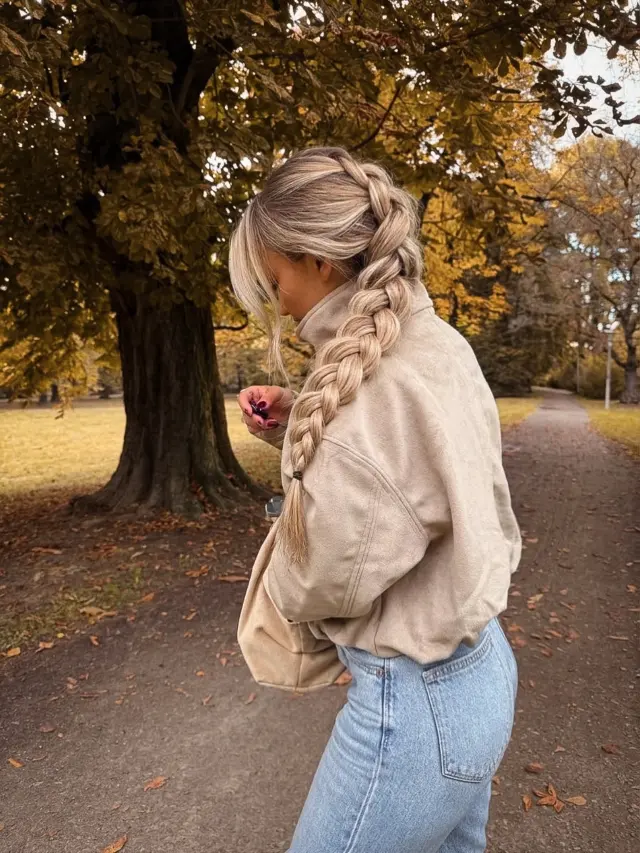
 Soft Braided Hairstyle for Autumn Looks
#Braided Hair
1 ideas
Soft Braided Hairstyle for Autumn Looks
Get new #Braided Hair ideas by email
Every Thursday: the week's best ideas, with the newest from #Braided Hair.
Related tags
Braided Hair: A Guide to Styles, Techniques and Care
Braiding is one of the oldest ways human beings have ever styled their hair, and it remains one of the most versatile. At its simplest, a braid is three strands crossed over one another in a repeating pattern, but that plain idea opens into an enormous family of shapes, textures and traditions. Braided hair appears across cultures and centuries, from the tightly woven patterns used across parts of Africa to the loose plaits painted on ancient Mediterranean pottery, and it has always been as much practical as decorative — a way to keep long hair tidy while working, sleeping, travelling or celebrating.
The main kinds of braid
Most braids grow out of a few base techniques. The three-strand plait is the foundation: three sections woven evenly over one another to form a flat, rope-like band. From there the family branches out. A French braid adds new hair to each section as it travels down the head, so the braid stays close to the scalp. A Dutch braid works the same way but crosses the sections underneath instead of over, which makes the braid sit proud of the head in a raised ridge. A fishtail braid uses two sections with small slivers taken from the outer edge of each, giving a fine, herringbone look. Rope and twist braids roll two strands around one another, while box braids divide the head into many small, precisely parted sections worked one at a time.
What beginners should know
Read more
Start with clean, dry hair that is not slippery — freshly conditioned hair can be harder to grip. A little light product or a spritz of water helps give texture and hold. Brush everything smooth and free of tangles before you begin, then section the hair with clips so you are never fighting loose strands. Tension matters: a braid pulled too tight can feel uncomfortable and strain the scalp, so aim for even, gentle pressure throughout rather than maximum tightness.
Practice the basic three-strand plait until your hands move without thinking. Many people find it easier to learn on someone else's hair first, where they can see what they are doing, then transfer the movement to their own. Braiding your own hair in a mirror is genuinely harder, and getting a tidy result on the back of your head takes time.
Making braids last
Braids hold best when they are finished with a small elastic that matches the hair colour, and a light mist of flexible hold spray or a little serum on the ends helps keep flyaways calm. Sleeping on a satin pillowcase or wrapping the braid loosely reduces friction and frizz, particularly with fine hair. When you take a braid out, undo it gently from the end rather than pulling from the top, and give the hair a proper brush and a rest before braiding again — especially with tight styles worn close to the scalp, which benefit from being alternated with looser ones.
#Braided Hair: frequently asked questions
What do I need to start braiding hair at home?
You really only need a brush, a few clips to hold sections out of the way, and a small elastic to finish the end. Working on clean, dry hair gives the best grip, since freshly conditioned hair can be too slippery to hold a braid. A light styling product or a spritz of water adds texture and helps the braid stay neat.
How do I choose which kind of braid to try?
Think about where you want the braid to sit and how much hair you have to work with: a French or Dutch braid pulls in new hair as it travels so it stays against the head, while a basic plait or fishtail hangs loose from a single starting point. Loose plaits and twists suit relaxed everyday looks, and the tighter, sectioned styles hold their shape for longer. If you are new to braiding, start with the plain plait and build up to the styles that add hair along the way.
How do I keep a braid from slipping out or turning frizzy?
Finish with an elastic close in colour to the hair and smooth the ends with a little serum or flexible hold spray to calm flyaways. Sleeping on a satin pillowcase or loosely wrapping the braid overnight cuts down on friction and frizz. When you take it out, undo from the end rather than pulling from the top so you do not drag tangles through the length.
What mistakes do beginners make most often?
Pulling too tight is the big one — a braid that strains the scalp is uncomfortable and does not look better for it, so aim for even, gentle tension. Skipping the brushing and sectioning step is another, because loose strands make the weave uneven and hard to follow. Braiding hair that is still damp with conditioner, or trying to learn on your own head in a mirror, also makes the first attempts much harder than they need to be.
How can I style braids for a special occasion?
Braids work beautifully for events because they can be as soft or as sculpted as you like: a loose, slightly undone plait reads relaxed and romantic, while a neat French braid or a pinned-up braided shape looks more formal. Adding a subtle texture through the hair before you start gives the finished braid more fullness. Give yourself time rather than rushing it, and finish with a light mist of hold spray so it lasts through the day.
Videos come from YouTube and posts from Instagram; titles and summaries are our own. All rights belong to their creators.