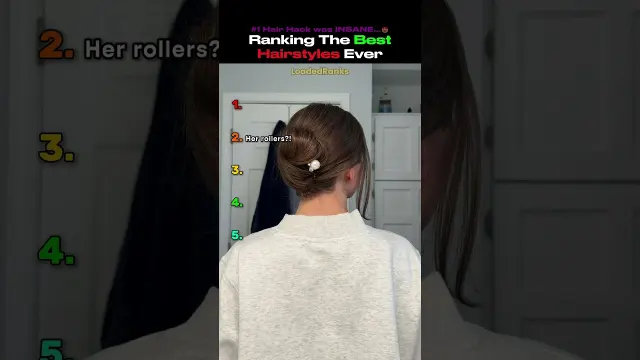
 Testing Popular Hairstyles: French Braid, Claw Clip and Roller Bun
#French Braid
2 ideas
Testing Popular Hairstyles: French Braid, Claw Clip and Roller Bun
 Soft Braided Hairstyle for Autumn Looks
Get new #French Braid ideas by email
Every Thursday: the week's best ideas, with the newest from #French Braid.
Related tags
French Braid: A Complete Guide to the Classic Plait
A French braid is a three-strand plait that gathers hair as it travels, rather than hanging free from a single starting point. You begin with a small section near the crown, divide it into three, and then, at every crossing, pick up a little more hair from either side and feed it into the braid. The result is a plait that lies flat against the head and takes in the whole length of your hair in one continuous shape.
The name points to France, though the underlying idea — building a braid by adding new hair as you go — turns up in many places and has long been worn for both practical and decorative reasons. That is worth remembering: a French braid is a technique, not one fixed look, which is why it suits so many different heads of hair and occasions.
The main variations
- Dutch braid: the strands are crossed under rather than over, so the braid stands proud of the head instead of sinking into it.
- Lace braid: new hair is picked up from one side only at each pass, leaving the other side loose. Useful for half-up styles and softer, more romantic looks.
- French fishtail: two thin sections are woven instead of three, giving a finer, more intricate pattern.
- Crown braid: the braid is worked around the head rather than down the back.
- Side braid: the same technique started off-centre, letting the braid fall over one shoulder.
Read more
What beginners should know
Start with hair you can comb through without tugging. Many people find a day-old wash easier to work with than freshly washed hair, which can be slippery and slide out of the braid before it holds.
Keep your tension even. Tightness at the scalp is what makes a braid uncomfortable after an hour, so aim for a firm hold rather than a hard pull, especially around the hairline and temples.
Section sizes matter more than speed. Pick up similar amounts of hair on each side at each pass, and keep the three working strands separated cleanly with your fingers. It is much easier to learn on someone else's head, or in front of a mirror with a second one behind you.
Practical tips
A light spritz of water tames flyaways and makes the strands grip each other. A comb with a pointed tail is handy for drawing a neat parting before you begin. If your hair is very fine or slippery, a little styling texture helps the braid stay put without pins.
To finish, braid the remaining tail normally and secure it with a soft band rather than a tight elastic. When you take it out, undo the braid from the bottom up and loosen it gently — pulling a braid apart quickly is what causes tangling and breakage.
A French braid works equally well for sport, for sleep, for a wedding, or for a day when you simply want your hair out of the way and still looking considered.
#French Braid: frequently asked questions
How do I start a French braid on my own hair?
Begin with a small section of hair near the crown and comb it smooth, then split it into three even strands. Cross the outer strands over the middle one, and from that first crossing onward pick up a little extra hair from the side before each pass. Working in front of a mirror, or practising on someone else first, makes the motion much easier to learn.
What do I need before I begin braiding?
A comb you can run through the hair without tugging, plus something to secure the tail at the end, covers the basics. A comb with a pointed tail helps draw a clean parting, and a light spritz of water or a little styling texture gives slippery hair enough grip to hold. Hair that is not freshly washed tends to behave better than hair that is still very soft and clean.
Which variation of the French braid should I choose?
It depends on the effect you want rather than on difficulty, since all of them use the same basic technique. A Dutch braid sits raised from the head for a bolder look, a lace braid takes in hair from one side only and suits softer half-up styles, and a fishtail or crown version changes the pattern or the direction of the braid. A side braid is simply the same braid started off-centre so it falls over one shoulder.
How do I keep a French braid comfortable and neat all day?
Even tension matters more than tightness: aim for a firm hold rather than a hard pull, particularly along the hairline and around the temples. Taking similar amounts of hair on each side at every pass keeps the braid symmetrical, and keeping the three strands separated cleanly stops it from turning messy. If the finished braid feels uncomfortable after an hour, it was pulled too hard at the scalp.
How should I take a French braid out without damaging my hair?
Undo the braid from the bottom upward rather than pulling it apart from the top, loosening each section gently as you go. Rushing this step is what causes tangling and breakage, so work slowly and let the hair separate on its own. Braiding the tail normally and securing it with a soft band rather than a tight elastic also makes the take-down easier.
What are the most common mistakes beginners make?
The usual problems are starting with a section that is too large, picking up uneven amounts of hair on each side, and gripping too tightly near the scalp. Another common slip is trying to braid hair that is too clean and slippery to grip, or working too fast before the hand movements feel natural. Slowing down and concentrating on section sizes fixes most of these.
Videos come from YouTube and posts from Instagram; titles and summaries are our own. All rights belong to their creators.