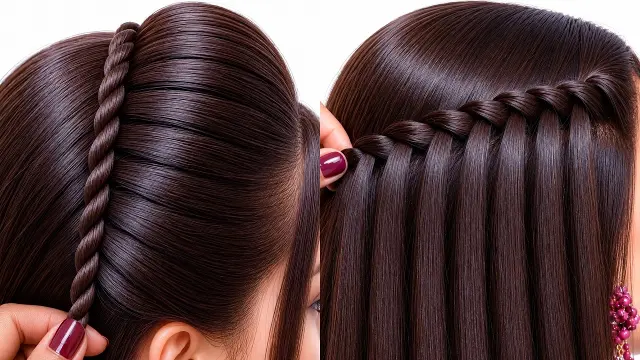
 Different Hairstyle Tutorial for Parties and Everyday Looks
#Braided Ponytail
1 ideas
Different Hairstyle Tutorial for Parties and Everyday Looks
Get new #Braided Ponytail ideas by email
Every Thursday: the week's best ideas, with the newest from #Braided Ponytail.
Related tags
Braided Ponytail: Styles, Techniques and Tips
A braided ponytail is exactly what it sounds like and rather more than that: a ponytail whose tail is a braid. The hair is gathered at the back of the head, secured, and then the loose length is plaited instead of hanging free. It solves a small everyday problem — hair that swings into your face or catches on your collar — while looking deliberate, which is why it turns up on school mornings and at weddings with the same ease.
Where it comes from
Braiding is one of the oldest ways humans have handled long hair, and versions of it appear across Africa, Asia, Europe and the Americas, often carrying social meaning: age, marital status, region, celebration. The braided ponytail as a distinct style sits at the meeting point of two practical traditions — the gathered ponytail, and the plait. Neither was invented by any single culture, and today the look belongs to everyone. What changes is the detail: how tight the braid sits, where it starts, and what holds it.
The main styles
Read more
The simplest form is a single braid falling from a ponytail band at the crown — clean, quick, and forgiving. From there the variations multiply.
- A Dutch braid ponytail has the sections crossed under rather than over, so the braid sits proud of the hair like a raised spine.
- A French braid ponytail begins at the hairline and gathers hair as it travels back, giving a sculpted look along the head.
- A fishtail uses two sections with thin strands woven between them for a softer, flatter texture.
- A bubble or segmented ponytail is not braided at all in the strict sense but uses small bands along the tail to create a series of rounded shapes.
- A low wrapped ponytail skips the braid, or uses one only as a base, and hides the hair tie under a strand of your own hair.
You can also braid all the way to the ends, or stop partway and leave a fan of loose hair below the tie — a small choice that makes a big difference to how formal the result reads.
What beginners should know
Start on hair that is brushed smooth, with no tangles hiding at the nape. A little leave-in conditioner or a light styling cream helps short hairs lie flat and keeps the braid from turning fuzzy. Keep the three sections distinct as you work; the commonest beginner mistake is letting them merge, which produces a braid that twists instead of plaiting. Practise on dry hair first, then try damp hair, which holds shape better and gives a tighter result.
Practical tips
Anchor the ponytail firmly but not painfully — a tight band worn all day can pull at the scalp. If your hair is slippery, a small amount of texture spray at the base gives the band something to grip. Braid slightly looser than feels right; braids shorten as they tighten, and the tail will look fuller if you resist pulling hard. Finish with a clear elastic, wrap a thin strand around it if you want the tie hidden, and smooth the crown with a soft brush and a touch of serum rather than your palms, which only adds frizz.
Once you can manage a basic three-strand braid, the rest is variation. Try one new version at a time, and let the imperfect ones be practice rather than failure.
#Braided Ponytail: frequently asked questions
How do I start a braided ponytail if I've never done one before?
Begin by brushing the hair completely smooth so nothing is hiding tangles at the nape, then gather it where you want the ponytail to sit and secure it firmly but comfortably. Work a small amount of leave-in conditioner or light styling cream through the tail so shorter hairs lie flat, then divide the tail evenly and plait it downward. Practise on dry hair first, since damp hair holds shape better once you feel confident.
What do I need to make a braided ponytail?
You need something to anchor the ponytail, a soft brush, and a small elastic to finish the braid. A little leave-in conditioner or styling cream helps keep the plait neat, and a texture spray at the base gives slippery hair something for the band to grip. Optional extras are a thin strand of your own hair to wrap over the tie and a touch of serum for smoothing the crown.
Which style of braided ponytail should I choose?
It depends on how formal you want the result to look and how much time you have. A single braid falling from a band at the crown is the quickest and most forgiving, while a Dutch or French version sits raised against the head and reads more sculpted. A fishtail gives a softer, flatter texture, and a bubble ponytail with small bands along the tail is easier than plaiting if you are short on practice.
How do I keep a braided ponytail from going fuzzy during the day?
Anchor the band firmly without pulling painfully at the scalp, and avoid tugging the braid tight as you work, since braids shorten as they tighten and a looser plait looks fuller. Smooth the crown with a soft brush and a little serum rather than your palms, which only add frizz. If your hair is very slippery, a small amount of texture spray at the base helps the band hold.
What is the most common mistake people make with a braided ponytail?
Letting the sections merge as you work is the usual culprit, which produces a twist rather than a plait. Keep each strand distinct and separate them again whenever they start to blend. The other frequent error is braiding too tightly, which strains the scalp and leaves the tail looking thinner than it needs to.
Can a braided ponytail work for a party as well as everyday wear?
Yes, and the difference is mostly in the finish rather than the technique. Braiding all the way to the ends reads cleaner and more formal, while stopping partway and leaving a fan of loose hair below the tie softens the look for casual days. Hiding the tie under a wrapped strand of your own hair instantly makes it feel more deliberate.
Videos come from YouTube and posts from Instagram; titles and summaries are our own. All rights belong to their creators.