 Quick Brain Teaser To Crack The Number Pattern
#Brain Teaser
2 ideas
Quick Brain Teaser To Crack The Number Pattern
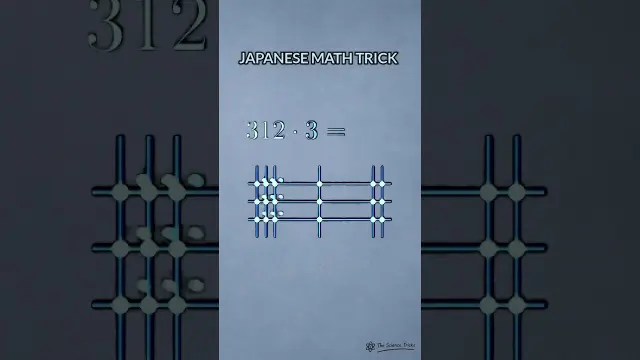 Mind-Blowing Japanese Math Trick for Quick Calculation
Get new #Brain Teaser ideas by email
Every Thursday: the week's best ideas, with the newest from #Brain Teaser.
Related tags
Brain Teasers and Logic Puzzles
Brain teasers are short puzzles designed to make you think in a different way. They can be questions, visual riddles, number patterns, word tricks, or simple logic problems. The goal is not just to find an answer, but to slow down, look carefully, and notice possibilities you might miss at first glance.
These puzzles have long been part of everyday entertainment and learning. You may find them in newspapers, puzzle books, classrooms, games, and casual conversations. Some are based on mathematics, some on language, and some on pure logic. Others depend on a clever twist in wording or an unexpected assumption. That variety is what makes brain teasers so appealing: they can feel easy at first, then suddenly require a fresh approach.
Common types of brain teasers
- Logic puzzles: These ask you to draw conclusions from clues and eliminate impossible answers.
- Number puzzles: These use patterns, sequences, or simple arithmetic to challenge your reasoning.
- Word riddles: These play with spelling, meaning, and double interpretations.
- Visual puzzles: These rely on shapes, symmetry, counting, or spatial awareness.
- Trick questions: These often hide a misleading assumption and reward careful reading.
Read more
What makes a good brain teaser
A good brain teaser is clear, fair, and surprising. It should give you enough information to solve it, even if the solution is not obvious. The best ones make you pause and reconsider your first instinct. They often reward observation more than speed.
If you are new to them, start with short puzzles that have one main idea. Do not rush to the first answer that comes to mind. Read the question slowly, because many brain teasers work by using ordinary words in an unusual way. Sometimes the challenge is not calculation, but interpretation.
How to approach one
When you are stuck, try these simple habits:
- Re-read the puzzle and look for hidden assumptions.
- Break the problem into smaller parts.
- Write down the information you know.
- Try a few examples instead of guessing.
- Ask yourself whether the puzzle is about logic, language, or pattern recognition.
- Look for what is not being said as well as what is.
It also helps to stay relaxed. A brain teaser is meant to be playful, not stressful. If you step away for a moment, you may return with a clearer view.
Why people enjoy them
Brain teasers are popular because they make thinking feel like a game. They can sharpen attention, encourage flexible thinking, and give a satisfying sense of discovery when the pieces finally fit together. They are also easy to share, which makes them a fun way to spark conversation with friends, family, or coworkers.
For beginners, the main tip is simple: be curious. Do not assume the puzzle is trying to trick you in a complicated way. Often the answer is hidden in a small detail, a simple pattern, or a shift in perspective. Once you start looking that way, brain teasers become much easier to enjoy.
Videos come from YouTube and posts from Instagram; titles and summaries are our own. All rights belong to their creators.