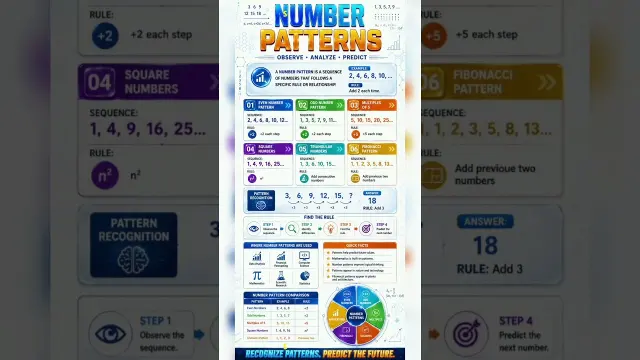
 How To Find The Secret Rule In Mathematical Number Sequences
#Number Patterns
13 ideas
How To Find The Secret Rule In Mathematical Number Sequences
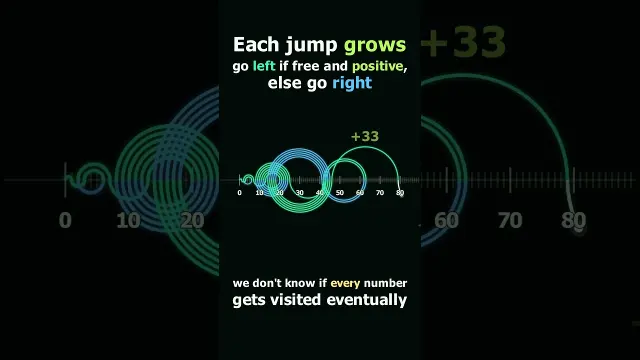 Visualizing Recamán Sequence As Geometric Arcs
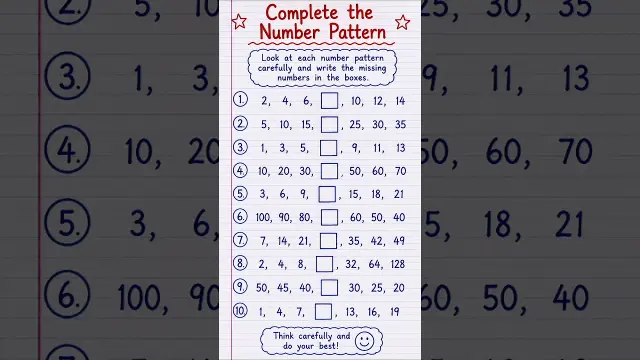 Daily Math Practice Puzzle To Complete Number Sequences
 Connecting Shape Patterns To Number Sequences In Sixth Grade Math
 Fourth Grade Math Tutorial On Continuing Number Patterns
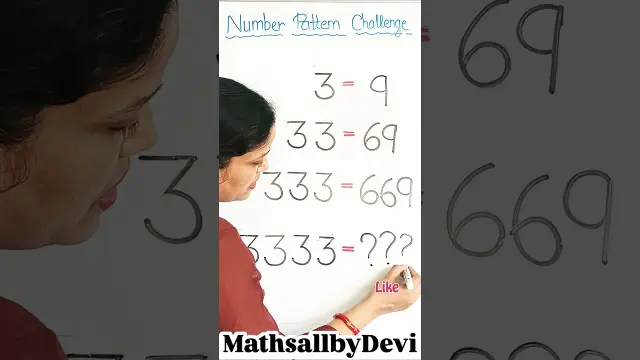 Challenging Number Series And Sequence Puzzle
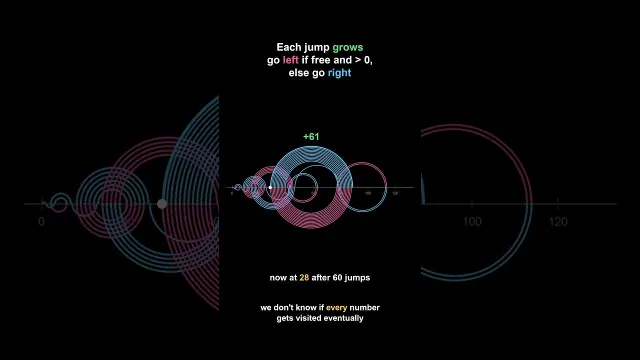 Recamán's Sequence Visualized Through Mathematical Rules
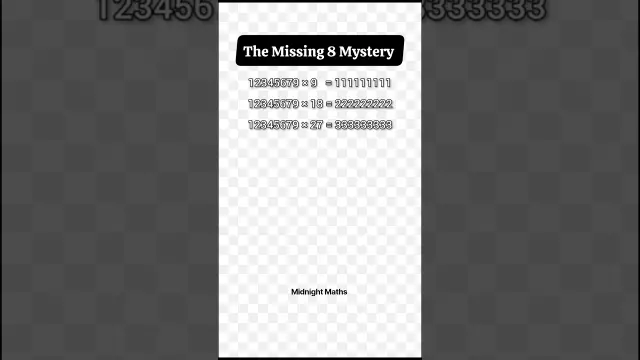 Discovering Mathematical Tricks With Repeating Number Patterns
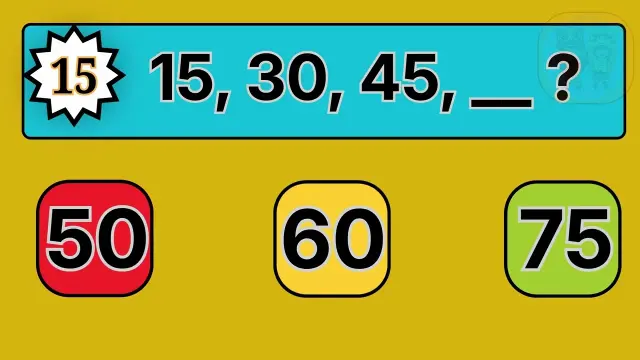 Interactive Number Pattern Quiz For Kids
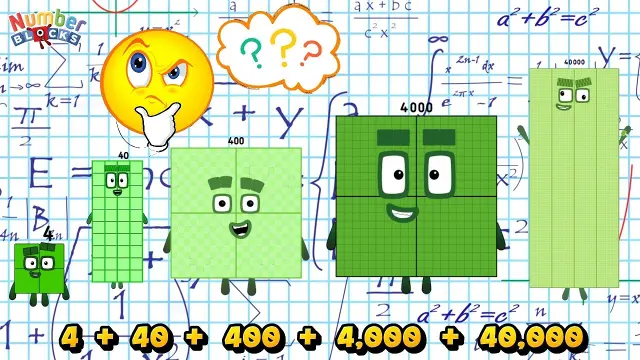 Numberblocks Addition With Big Numbers and Patterns
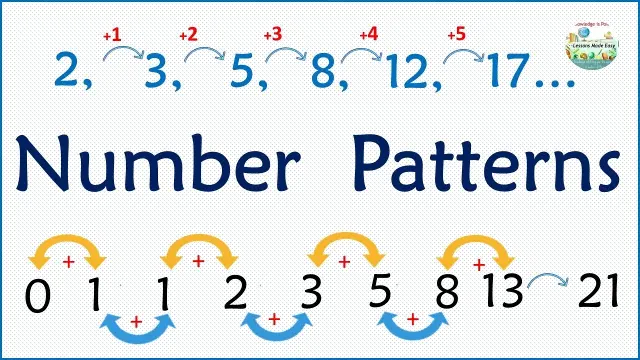 Comprehensive Guide To Arithmetic And Geometric Number Patterns
 Quick Brain Teaser To Crack The Number Pattern
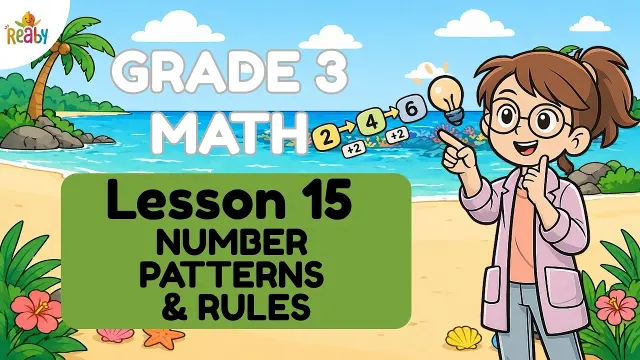 Third Grade Lesson On Identifying Number Patterns And Rules
Get new #Number Patterns ideas by email
Every Thursday: the week's best ideas, with the newest from #Number Patterns.
Related tags
Number Patterns and How to Spot Them
What number patterns are
Number patterns are sequences of numbers that follow a rule. That rule may be very simple, such as counting up by the same amount, or it may be more complex, such as alternating between two steps or repeating a cycle. Once you understand the rule, you can predict what comes next.
People use number patterns in maths, puzzles, games, coding, and everyday problem-solving. They help you notice order, build calculation skills, and understand how numbers relate to one another. Learning to spot patterns is also a useful first step toward algebra, because it encourages you to look for structure instead of memorising individual answers.
Common kinds of number patterns
Read more
Some patterns are easy to recognise because they change in a regular way.
- Counting patterns: 1, 2, 3, 4, 5
- Skip-counting patterns: 2, 4, 6, 8, 10 or 5, 10, 15, 20
- Repeating patterns: a sequence of numbers that follows the same cycle again and again
- Increasing or decreasing patterns: numbers grow larger or smaller by the same amount
- Alternating patterns: the rule switches between two steps, such as adding 2 and then adding 3
- More advanced patterns: differences between terms may change in a consistent way
Some patterns are shown with shapes, dots, or pictures rather than numbers alone. In those cases, you may count how many items appear in each step and look for the rule behind the growth.
How to work out the rule
If you want to extend a number pattern, start by comparing nearby terms.
- Look at the difference between each number and the one before it
- Ask whether the same amount is being added or subtracted
- Check whether the pattern repeats in groups
- Notice if the numbers are doubling, halving, or using another clear process
- See whether odd and even positions behave differently
If the rule is not obvious straight away, write the numbers in a row and test a few simple ideas. Sometimes the pattern is based on counting by twos, threes, or fives. Other times it may be a pattern of differences, where the gaps between numbers also form a pattern.
Tips for beginners
A good way to learn number patterns is to say the sequence out loud and write the next few terms yourself. Start with short patterns before moving to longer ones. If you are unsure, ask yourself what changes each time and whether that change stays the same.
It also helps to use visual aids. Drawing dots, blocks, or lines can make a pattern easier to see, especially when the numbers grow quickly. When you solve a pattern, explain the rule in words, not just with numbers. That makes it easier to check whether your answer is correct.
Why number patterns matter
Number patterns train you to notice structure, which is useful in many areas of maths. They support mental arithmetic, help with problem-solving, and make it easier to predict and organise information. Once you become comfortable with simple sequences, you can begin to explore more complex patterns with confidence.
Videos come from YouTube and posts from Instagram; titles and summaries are our own. All rights belong to their creators.