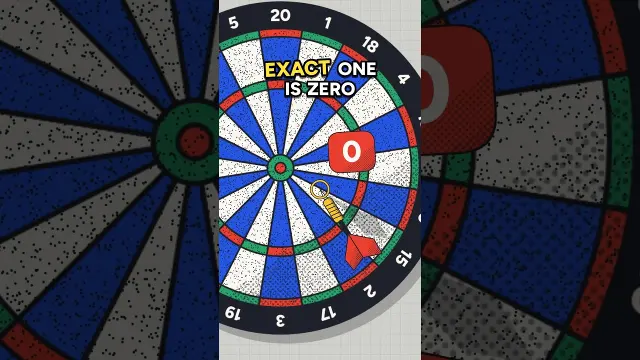
 Why a dart can hit a point with zero probability
#Brainteaser
2 ideas
Why a dart can hit a point with zero probability
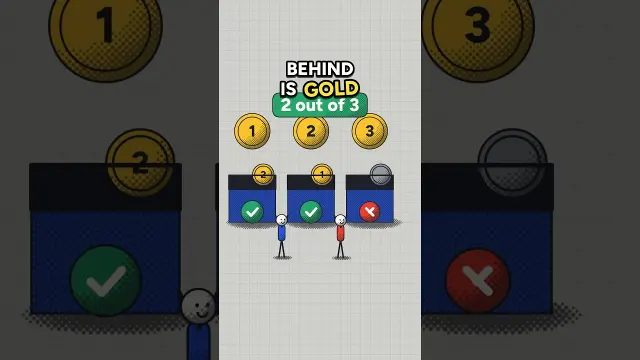 A gold-coin puzzle with a two-thirds probability result
Get new #Brainteaser ideas by email
Every Thursday: the week's best ideas, with the newest from #Brainteaser.
Related tags
Brainteasers: Friendly Guide to Puzzles That Make You Think
A brainteaser is a small puzzle built to trip up the way you normally think. The answer is rarely buried in complicated maths — it is usually sitting right in front of you, waiting for you to look from a slightly different angle. That little jolt of "oh, of course" is the whole point.
Where they come from
Riddles and trick questions are old companions to storytelling: many cultures have long traditions of posing word puzzles to each other, sometimes as entertainment and sometimes as a test of wit. Logic puzzles, matchstick puzzles and paper-folding puzzles grew up alongside them, often borrowed from mathematics and from the simple habit of asking "what if" about something ordinary — a coin, a match, a closed door. The modern brainteaser is just the latest version of that game.
The main kinds
Read more
- Riddles and wordplay: the trick lives in the wording, a double meaning, or a pun.
- Lateral thinking puzzles: you have to abandon the obvious path and approach sideways.
- Logic puzzles: a set of clues, a grid, and a single arrangement that satisfies everything.
- Mathematical puzzles: small numbers, big surprises, such as questions about probability or infinity.
- Visual and hands-on puzzles: matchsticks, coins, folded paper, drawings that refuse to behave.
Why people enjoy them
A brainteaser gives you a complete little problem with a clean ending, which is rare and rather restful. Many people treat a few minutes of puzzling as a pleasant way to slow down, and solving one brings a satisfaction that is out of all proportion to its size. You do not need any special knowledge to start — only patience and a willingness to be wrong for a while.
How to begin
- Read the puzzle twice. Most people solve it on the second reading, having skimmed a crucial word the first time.
- Say it out loud in your own words. Rewording often loosens the knot.
- List the assumptions you made without noticing. A brainteaser usually lives in one of them.
- Try a smaller version: fewer coins, three people instead of ten, a simpler shape.
- Draw it. Paper is not cheating; it is thinking.
- Work backwards from a possible answer and see whether it holds.
- Give yourself a time limit, then look at the solution. There is no shame in it, and you will recognise the trick next time.
A gentle warning
Some puzzles are clever, and some are just unfair — resting on a wording trick or a piece of trivia you could not have guessed. A good brainteaser is one where the answer, once you see it, feels inevitable rather than arbitrary. When a puzzle makes you groan instead of smile, you are allowed to put it down. Collect the ones that teach you a new way of looking; those keep paying off long after the answer is forgotten.
#Brainteaser: frequently asked questions
What exactly is a brainteaser?
It is a compact puzzle built to disrupt the way you normally think, rather than to test heavy calculation. The solution tends to be hiding in plain sight, waiting for you to look from a different angle, and the sudden 'oh, of course' moment is the reward. Most are solved in a few minutes of focused attention.
Do I need any special knowledge or equipment to start?
No — patience and a willingness to be wrong for a little while are the only real requirements. A pencil and some paper genuinely help, since sketching is a form of thinking rather than cheating. Everything else you already carry with you.
Which kind of brainteaser should I pick first?
Choose by what you enjoy: wordplay and riddles if you like language, logic grids if you prefer order and deduction, hands-on puzzles with coins or matchsticks if you think with your fingers. Lateral thinking puzzles suit people who enjoy being deliberately misled. Trying one of each quickly shows you where your taste lies.
What are the most common mistakes people make when solving one?
Skimming the wording is the big one, so read the puzzle a second time before giving up. The other frequent slip is carrying an assumption you never noticed making — a brainteaser usually lives inside exactly that assumption. Refusing to draw, reword, or work backwards from a guess costs solvers a lot of time.
What should I do when I get completely stuck?
Say the puzzle out loud in your own words, since rewording often loosens the knot, and try a smaller version with fewer pieces or people. Working backwards from a possible answer is a good way to test whether it holds. Setting yourself a time limit and then reading the solution is fine — you will recognise the trick next time.
Are all brainteasers fair?
Some are clever and some lean on a wording trick or obscure trivia you could not reasonably have guessed. A good one makes the answer feel inevitable once you see it; if a puzzle only makes you groan, you are allowed to set it aside. Keep the ones that teach you a new way of looking, because those stay useful long after you forget the answer.
Videos come from YouTube and posts from Instagram; titles and summaries are our own. All rights belong to their creators.