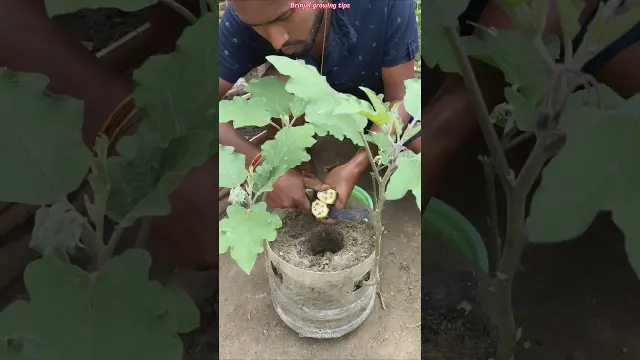
 Brinjal Care: Pruning, Organic Compost and Banana Stem Mulch
#Brinjal
1 ideas
Brinjal Care: Pruning, Organic Compost and Banana Stem Mulch
Get new #Brinjal ideas by email
Every Thursday: the week's best ideas, with the newest from #Brinjal.
Related tags
Brinjal: A Guide to the Aubergine
Brinjal is a glossy, mild-fleshed fruit that most of the world cooks as a vegetable. The name travels widely: brinjal across South Asia, aubergine in Britain and France, eggplant in North America and Australia, berinjela in Portuguese, melongene in the Caribbean. All of them point to the same plant, Solanum melongena, a member of the nightshade family alongside the tomato, pepper and potato.
Where it comes from
The plant is native to South and Southeast Asia, where it has been cultivated for a very long time and where the greatest diversity of shapes and colours still exists. From there it spread through the Middle East, North Africa and the Mediterranean, and later to the Americas. Because it has travelled so far and so long, it has been folded into an unusually wide range of cuisines — from Indian curries and pickles to Greek moussaka, Middle Eastern baba ganoush, Italian parmigiana, Chinese stir-fries and Thai curries.
The main kinds
Read more
Brinjals vary far more than supermarket shelves suggest.
- Large, dark purple globe brinjals: meaty and mild, good for roasting, grilling and baking.
- Long, slender Asian varieties, often purple or green: fewer seeds, thinner skin, quick to cook.
- Small round varieties: firm and less bitter, suited to stuffing and pickling.
- White and striped types: creamier flesh, common in some regional cuisines.
Choosing and preparing
Look for brinjals that feel heavy for their size, with smooth, shiny skin and a fresh green calyx. Dull, wrinkled skin or soft spots mean they are past their best. They keep for a few days in a cool place, though not in the refrigerator if you can avoid it, since cold damages the texture.
The flesh browns quickly once cut, so use it promptly or hold it in lightly salted water. Salting sliced brinjal for a short while draws out water and tames any bitterness, and it helps the flesh absorb less oil when fried. Brinjal behaves like a sponge in the pan, so it is worth cooking it with a little patience: seal the surface first, or roast it whole until the skin chars and the inside collapses into a soft, smoky pulp.
Growing your own
Brinjal wants warmth, sun and a long growing season. Start seeds indoors while the weather is still cool, then move plants out once nights are reliably mild. They grow well in beds or large containers, needing steady watering and a sunny sheltered spot. Pinching out the growing tips encourages a bushier plant, and staking helps heavy-fruited varieties stay upright.
Watch for the usual nightshade visitors — aphids, whitefly and flea beetles — and inspect the undersides of leaves regularly. Harvest while the skin is still glossy; a dull, bronze tinge usually means the fruit has been left too long and the seeds have turned woody.
A note on cooking
Brinjal takes kindly to strong flavours: garlic, cumin, coriander, miso, tomato, yoghurt, sesame and olive oil. Cook it thoroughly rather than barely — it is at its best when the flesh is completely tender and translucent.
Videos come from YouTube and posts from Instagram; titles and summaries are our own. All rights belong to their creators.