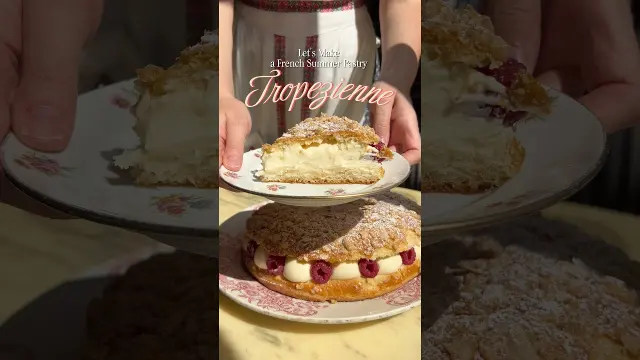
 Traditional French tarte tropézienne made in a Parisian kitchen
#Brioche
1 ideas
Traditional French tarte tropézienne made in a Parisian kitchen
Get new #Brioche ideas by email
Every Thursday: the week's best ideas, with the newest from #Brioche.
Related tags
Brioche: Soft Enriched Bread from French Baking
Brioche is a soft, enriched bread known for its tender crumb, golden crust, and gently sweet flavor. It belongs to the family of yeasted doughs, but unlike lean breads, it is made with ingredients such as butter, eggs, milk, and sometimes sugar. These enrichments give brioche its characteristic richness and delicate, almost cake-like texture, while still keeping it in the world of bread.
What brioche is
Brioche is a traditional French bread that sits somewhere between bread and pastry. It is usually light, airy, and tender, with a fine crumb and a shiny, burnished top. The dough is supple and rich, and when made well, it tears into soft strands rather than crumbling.
Because the dough contains a high amount of fat, brioche is more delicate to handle than plain bread dough. It also tends to be less sturdy, which is why it is often baked in molds or tins, or shaped into small rolls and buns.
Read more
Where it comes from
Brioche has long been associated with French baking, especially the rich egg-and-butter doughs of classic European cuisine. Over time, it became a staple in bakeries, patisseries, and home kitchens, valued both for everyday enjoyment and for special occasions.
It has many regional and household variations, but the essential idea remains the same: a bread dough enriched with butter and eggs to create a softer, richer result than a standard loaf.
Common kinds and uses
Brioche can take many forms, including:
- Loaves for slicing and serving at breakfast or tea
- Small buns or rolls for sweet or savory fillings
- Braided or shaped breads for decorative presentation
- Ring-shaped versions for festive tables
- Tart and pastry bases where a rich dough is wanted
It is often eaten plain, toasted, or lightly spread with butter, jam, or honey. It also works well for French toast, bread pudding, and sandwich-style uses where a soft, slightly sweet bread is welcome.
What beginners should know
If you are new to brioche, the first thing to know is that the dough often feels sticky and soft at the beginning. That is normal. The richness that makes brioche delicious also makes it more challenging than a basic bread dough.
A few practical tips can help:
- Be patient with mixing and kneading, since the dough needs time to become smooth and elastic
- Allow enough rising time, as enriched doughs can ferment more slowly
- Chill the dough if needed to make shaping easier
- Use gentle handling to keep the texture light
- Bake until the crust is deeply golden for the best flavor and structure
How to enjoy it
Brioche is at its best when it is fresh, but it also improves in many simple uses once lightly toasted. Its mild sweetness pairs well with fruit preserves, cream, chocolate, or savory fillings such as cheese and cured meats. If you bake it at home, remember that brioche is as much about texture as flavor: the goal is a soft, rich crumb with a delicate finish.
Whether you enjoy it as a breakfast loaf, an elegant bun, or a simple slice with jam, brioche is one of those classic breads that feels both comforting and refined.
#Brioche: frequently asked questions
What is brioche, and how is it different from ordinary bread?
Brioche is a French yeasted bread made richer with butter, eggs, and milk, which gives it a tender, fine crumb and a lightly sweet flavor. It still behaves like bread rather than cake, but the extra fat and egg make the dough softer, more fragile, and slower to rise than a plain lean loaf. That richness is also why it is usually baked in tins or shaped into small rolls that hold their form.
What do I need to start making brioche at home?
You need the usual bread basics plus the enrichments: flour, yeast, salt, eggs, milk, and a generous amount of soft butter, with sugar if you want a sweeter result. A stand mixer saves a lot of effort because the dough is sticky and needs long, gentle kneading, and a loaf tin or bun mold helps support it in the oven. Mostly, though, you need patience — enriched dough takes its time.
Which kind of brioche should I choose?
Pick the shape based on how you plan to serve it: a loaf for slicing at breakfast or tea, small buns when you want to fill them sweet or savory, and a braided or ring form when it is going on a festive table. A rich dough also works well as a base for tarts and pastries where you want a tender, buttery crust.
How should I store brioche so it stays good?
Keep it wrapped or in a sealed container at room temperature and eat it within a short time, since its high butter and egg content means it dries out and stales faster than a plain loaf. Warmed or lightly toasted, a slightly older brioche comes back to life nicely. Slices also freeze well if you want to save some for later.
What are the most common mistakes when making brioche?
The usual culprits are adding all the butter at once and kneading it in too early, which makes the dough greasy and hard to bring together, and giving up on kneading before the dough turns smooth and elastic. Rushing the rise is another frequent problem, because enriched dough ferments more slowly and needs the time. If shaping feels difficult, chilling the dough briefly makes it far easier to handle.
What can I make with leftover or day-old brioche?
Its soft, slightly sweet crumb makes it excellent for French toast, bread pudding, and sandwiches where you would normally use a soft white bread. It also takes well to simple toppings — jam, honey, cream, chocolate, or a savory filling like cheese. Toasting a slice first brings back much of the texture it loses after baking day.
Videos come from YouTube and posts from Instagram; titles and summaries are our own. All rights belong to their creators.