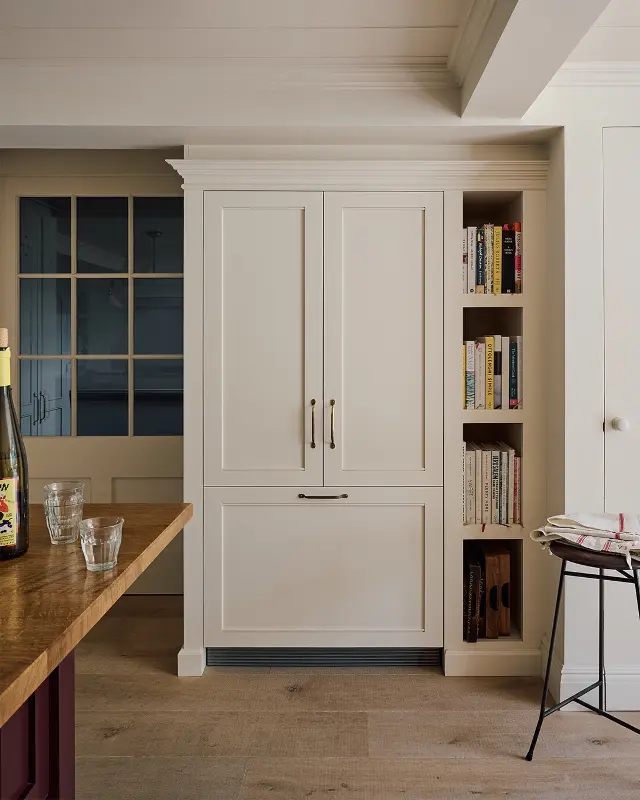
 Kitchen Renovation Advice: Matching Appliances With Your Cabinets
#Cabinetry
2 ideas
Kitchen Renovation Advice: Matching Appliances With Your Cabinets
Get new #Cabinetry ideas by email
Every Thursday: the week's best ideas, with the newest from #Cabinetry.
Related tags
Cabinetry: A Guide to Built-In Storage and Style
Cabinetry is the fitted furniture built into a room to store things and to hold the surfaces we work on. It is the reason a kitchen feels calm or cluttered, and the reason a hallway can swallow coats, shoes and bags without looking crowded. Unlike a freestanding cupboard, cabinetry is designed for a particular space, fixed to the walls or floor, and usually made to measure.
The craft is old. Joiners and cabinetmakers were building fitted cupboards, dressers and linen presses long before the fitted kitchen existed as we know it. What changed over the last century is scale: storage moved from a few pieces of furniture in a room to continuous runs of units planned as a single system. The fundamental idea, though, has not shifted. Good cabinetry is joinery first and decoration second.
What cabinetry is made of
Most cabinets combine a stable core with a visible face. Carcasses are commonly built from manufactured boards, which stay flat and resist movement, while doors and drawer fronts may be solid timber, veneered board, laminate or painted board. Solid timber is beautiful and repairable but moves with the seasons. Manufactured boards are more predictable and often more affordable. Neither is automatically better; what matters is how well the piece is put together.
Read more
Look at the parts you cannot see. Thicker shelves sag less. Drawer runners that feel smooth when loaded will last. Edges should be sealed properly, because water finds its way into unsealed board. Hinges and drawer boxes are the moving parts most likely to fail first, so it is worth choosing those carefully rather than spending the whole budget on the door face.
Doors, drawers and layout
The most common door styles are flat slab fronts, which give a clean modern line; shaker-style frames with a recessed centre panel, which suit both traditional and contemporary rooms; and raised or beaded panels, which read as more formal. Handles, push-to-open mechanisms and routed finger pulls all change the feel of the same cabinet, so decide the door style and the opening method together.
Layout matters more than finish. Think about what you reach for most and put it between hip and shoulder height. Deep cupboards are convenient for bulky items and awkward for everything else. Corner space is the classic place where storage is lost, so plan it deliberately with carousels, angled fronts or open access.
Practical advice for beginners
- Measure the space properly, including skirting boards, pipes and uneven walls; old rooms are rarely square.
- Decide your storage by contents, not by appearance: list what has to go inside before choosing the shape of the units.
- Ask how the cabinets are fitted to the wall, especially for tall units.
- Keep a small amount of the finish or paint for touch-ups later.
- If you are painting existing cabinetry, preparation decides the result far more than the paint itself.
Well-planned cabinetry quietly disappears into the room and simply makes daily life easier. Start with how you live, then choose the materials and surfaces that support it.
#Cabinetry: frequently asked questions
How do I start planning cabinetry for a room?
Begin with how you live in the space rather than with finishes: list what actually has to be stored, then decide the shapes and positions of the units around those contents. Measure the room carefully, including skirting boards, pipes and uneven walls, since older rooms are rarely square. Only once the layout works should you choose door styles and surfaces.
Should I choose solid timber or manufactured board?
Manufactured boards are stable, predictable and often more affordable, which makes them a sensible choice for carcasses that need to stay flat. Solid timber is beautiful and repairable but moves with the seasons, so it needs a bit more tolerance in the design. Neither is automatically better — what really matters is how well the piece is put together.
Which door style and opening method should I pick?
Flat slab fronts give a clean modern line, shaker frames with a recessed panel sit comfortably in both traditional and contemporary rooms, and raised or beaded panels read as more formal. Handles, push-to-open mechanisms and routed finger pulls change the character of the same cabinet just as much as the front does. Decide the door style and the opening method together rather than one after the other.
How do I care for fitted cabinetry so it lasts?
Wipe surfaces with a damp cloth rather than soaking them, and dry up spills promptly, since water finds its way into any edge that is not properly sealed. Keep a small amount of the original finish or paint for touch-ups, and check hinges and drawer runners now and then so small problems are fixed before they spread. If you plan to repaint existing cabinets, thorough preparation matters far more than the paint itself.
Where do people usually go wrong with cabinetry?
The most common misstep is choosing units by appearance before thinking through contents, which leaves deep cupboards full of awkward gaps and corners where storage disappears. Another is spending the whole budget on the door face while settling for cheap hinges and drawer boxes, which are the parts most likely to fail first. Sketchy measuring and unclear fitting methods for tall units also cause trouble later.
How can I get more usable storage out of a kitchen or hallway?
Put whatever you reach for most between hip and shoulder height, and reserve deep cupboards for bulky items only. Plan corners deliberately with carousels, angled fronts or open access instead of leaving them as dead space. Continuous runs of units planned as one system usually beat a collection of separate pieces.
Videos come from YouTube and posts from Instagram; titles and summaries are our own. All rights belong to their creators.