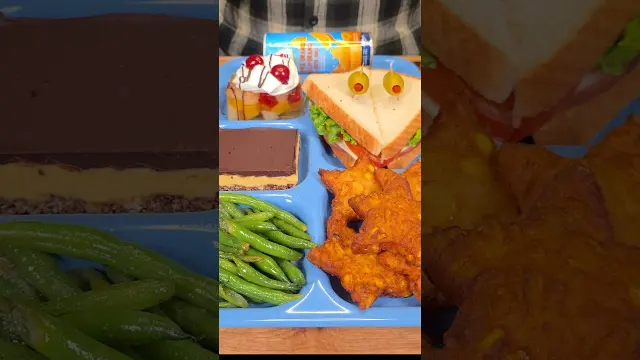
 Preparing A Delicious Rush Of School Cafeteria Lunch
#Cafeteria Food
1 ideas
Preparing A Delicious Rush Of School Cafeteria Lunch
Get new #Cafeteria Food ideas by email
Every Thursday: the week's best ideas, with the newest from #Cafeteria Food.
Related tags
Cafeteria Food: The Everyday Art of Shared Dining
Cafeteria food is the food served in a cafeteria: a self-service or counter-service dining room where a large number of people eat the same meal at roughly the same time. The word itself comes from the Spanish "cafetería", a coffee house, but the modern meaning drifted towards something more collective — a room built around trays, a serving line and shared tables rather than a menu you order from. You will find the same idea under many names: canteen, refectory, mess hall, dining hall, staff restaurant.
The form is old. Communal eating halls are found in monasteries, universities and military barracks long before industrialisation, and the factory canteen grew out of the need to feed a workforce within a short break. What all of these have in common is a simple arithmetic: many mouths, limited time, limited equipment, one kitchen.
How a cafeteria is organised
Most cafeterias follow one of a few service patterns. In a traditional line, you walk past a counter and pick a main dish, a side and a dessert as you go. In free-flow service, separate stations offer different things — a hot counter, a salad bar, a soup pot — and you wander between them. Some places use pre-portioned trays, others let you serve yourself from large vessels, and some combine a fixed daily menu with a small choice.
Read more
Behind the counter, the kitchen usually works in batches. Dishes are chosen for how well they hold: braises, stews, roasted vegetables, grain salads, soups and bakes survive a warm holding cabinet far better than anything crisp or delicate. That is why cafeteria menus lean towards the sturdy and the forgiving — and why the best ones still manage variety within that constraint.
Styles you will meet
- School and university dining, where the goal is a balanced, familiar meal that a tired person will actually eat.
- Workplace canteens, often built around a rotation of a few hot mains plus lighter options.
- Hospital and care catering, where texture, temperature and dietary variation matter a great deal.
- Institutional and community kitchens: shelters, event halls, retreats and volunteer-run meal services.
If you are new to it
Start with the constraint, not the recipe. Decide how many people you are feeding, how long the food must sit, and what equipment you have. Build menus around one pot of something that improves with time, one fresh element for contrast, and one thing that needs no work at serving time. Season generously — food eaten in a busy room at a slightly lower temperature tastes flatter than food tasted in a kitchen.
Keep hot food properly hot and cold food properly cold, cool leftovers quickly, and label everything. These habits matter more than any single recipe.
Finally, remember what makes a cafeteria pleasant is rarely the food alone: a clean tray line, a readable menu, a place to sit. Fed calmly, people forgive a lot.
#Cafeteria Food: frequently asked questions
What exactly is cafeteria food?
It describes a style of service more than a cuisine: food cooked in one kitchen and served to a large group at roughly the same time, usually from a counter, a line or a set of stations. The defining feature is collective eating under real constraints — many people, a short window, limited equipment. The same format turns up as a canteen, dining hall, staff restaurant or community meal service.
How should I start planning a cafeteria-style meal?
Start with the constraint rather than the recipe: settle how many people you are feeding, how long the food has to sit before the last person eats, and what equipment you actually have. Then build the menu around one dish that improves with time, one fresh element for contrast, and one thing that needs no work at serving time. This shape keeps the meal manageable when the room fills up.
Which kinds of dishes hold up best on a serving line?
Choose forgiving dishes: braises, stews, soups, bakes, roasted vegetables and grain salads all survive a warm holding cabinet far better than anything crisp or delicate. The trap is building a menu you would happily cook at home, where everything reaches the table at its peak. In a cafeteria the dish has to be good at minute one and still decent much later.
How do I stop the food tasting flat by the time it's eaten?
Season more generously than you would in a home kitchen, because food eaten in a busy room and at a slightly lower temperature reads as duller than food tasted while cooking. Pair heavy, slow-cooked things with something sharp or crunchy added late. A small fresh element does more for a tray than another hot main.
What mistakes do people make when feeding a crowd?
One common slip is planning the menu before checking the equipment and the timing, which leaves you improvising at the worst moment. Another is chasing variety with delicate dishes that collapse under holding, when a smaller number of sturdy dishes served well is more satisfying. It's also easy to forget the room itself — a clear tray line, a menu people can actually read and enough places to sit affect how the meal is received as much as the cooking does.
Is cafeteria food different in a school than in a workplace canteen?
The format is similar but the goal shifts. School dining is usually built around a balanced, familiar meal that a tired person will genuinely eat, while workplace canteens tend to run a rotation of a few hot mains alongside lighter options. Institutional and community kitchens add their own emphasis, since they may be serving a much wider range of needs and expectations.
Videos come from YouTube and posts from Instagram; titles and summaries are our own. All rights belong to their creators.