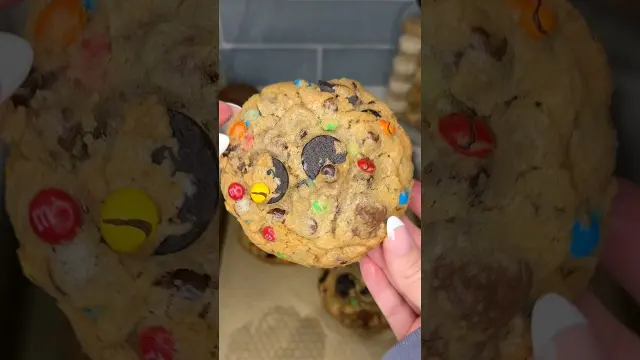
 Loaded Chocolate Chip Cookies With Oreos and Peanut Butter Cups
#Candy Cookies
1 ideas
Loaded Chocolate Chip Cookies With Oreos and Peanut Butter Cups
Get new #Candy Cookies ideas by email
Every Thursday: the week's best ideas, with the newest from #Candy Cookies.
Related tags
Candy Cookies: A Guide to Baking With Sweets
Candy cookies are cookies that take their character from sweets rather than from chocolate chips or dried fruit. Chunks of chocolate bar, fudge, nougat, caramel, jelly sweets or marshmallows go into the dough, get pressed into the surface, or are hidden in the middle as a molten centre. They sit somewhere between a proper baking project and a way of using up the odds and ends in a sweet tin, which is a large part of their charm: the method is straightforward and the variations are almost endless.
What counts as a candy cookie
The category is loose. At its simplest it means a drop cookie dough with chopped sweets folded through it. At its most elaborate it means a stuffed cookie with a soft centre, or a plain biscuit base topped with melted chocolate and scattered sweets. There is no single tradition behind them; they come from home kitchens where whatever was in the cupboard went into the mixing bowl, and they belong to the same family as the traybake and the refrigerator cookie.
Choosing sweets that behave
Read more
Not every sweet bakes well, and this is where most disappointments begin.
- Chocolate-covered items work beautifully: they melt into pockets and set again as the cookie cools.
- Firm caramels and fudges are excellent, but cut them small so they soften rather than turn into a single sticky mass.
- Marshmallows disappear if they sit on the surface. Bury them inside the dough, or add them in the last few minutes of baking.
- Gummy and jelly sweets generally do not survive the oven. They swell, slump and go hard. Use them in no-bake cookies or as a decoration on cooled biscuits instead.
- Hard sugar candies can be crushed and used as a topping, but keep them off the baking parchment directly, as they weld themselves to it.
Preparing the sweets
Chop everything into pieces roughly the size of a chocolate chip, or a little larger. A mix of sizes gives a better texture than uniform cubes. If you are using a soft or sticky sweet, toss the pieces in a spoonful of the flour from your recipe before folding them in; this stops them clumping and sinking. Coating dried fruit or nuts the same way is a habit worth keeping.
A dependable base
A plain brown-sugar dough handles additions well: butter, sugar, an egg, flour and a little raising agent, with a pinch of salt. Brown sugar keeps the crumb soft and gives a caramel note that suits most sweets. Keep the dough fairly stiff so the pieces stay suspended, chill it for half an hour before shaping, and leave space between the balls on the tray, since the sweets make the cookies spread unevenly.
Baking and keeping
Bake until the edges are set and the centres still look slightly underdone; they firm up as they cool, and the sweets continue to soften in the residual heat. Let them sit on the tray for a few minutes before moving them. Store in a single layer, or with parchment between the layers, because the melted sweets will stick. Most are best within a few days, and the dough itself freezes well, shaped into balls and baked from frozen with a couple of extra minutes in the oven.
#Candy Cookies: frequently asked questions
How do I make candy cookies for the first time?
Start with a simple brown-sugar drop cookie dough and fold in chopped sweets roughly the size of a chocolate chip. Keep the dough fairly stiff, chill it briefly, and space the balls well apart on the tray so the melting pieces don't make them spread into each other. Bake until the edges are set while the middles still look a touch underdone, since they finish setting as they cool.
Which sweets work best in cookies and which should I avoid?
Chocolate-covered sweets, firm caramels and fudge are the most reliable, because they melt into pockets and set again as the cookie cools. Gummy and jelly sweets tend to swell, slump and harden in the oven, so save them for no-bake cookies or for decorating cooled biscuits. Marshmallows need burying inside the dough or adding near the end, otherwise they simply vanish on the surface.
Why do my sweets sink to the bottom or clump together?
Sticky or soft pieces stick to each other and to the dough, so they drop instead of staying suspended. Toss the chopped sweets in a spoonful of the flour from your recipe before folding them in, and keep the dough on the stiff side. Chilling the dough before shaping also helps everything hold its place.
How should I store candy cookies so they don't stick together?
Let them cool completely on the tray first, then store them in a single layer, or stack them with parchment between the layers, because the melted sweets stay tacky. They are usually at their best within a few days. If you want them fresh for longer, freeze the shaped dough balls instead and bake them from frozen, allowing a little extra time.
What can I do with the odds and ends left in a sweet tin?
Candy cookies are ideal for this: chop whatever you have into mixed sizes, since a range of textures beats uniform cubes, and fold it through a plain dough or press it into the tops before baking. Crushed hard sweets make a good topping, but keep them off the parchment directly as they weld themselves to it. You can also use up scraps as a decoration on cooled biscuits rather than baking them.
Videos come from YouTube and posts from Instagram; titles and summaries are our own. All rights belong to their creators.