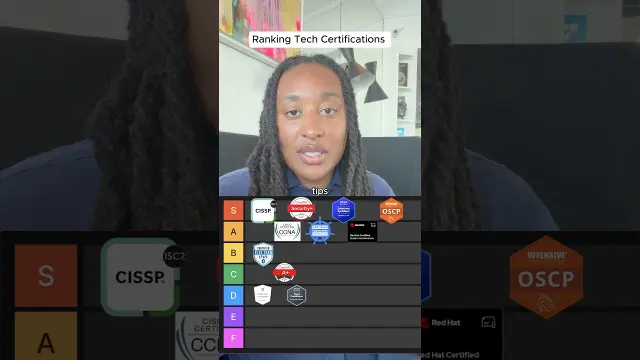
 Honest Tech Certification Tier List: Which Ones Are Worth Paying For
#Certification Ranking
1 ideas
Honest Tech Certification Tier List: Which Ones Are Worth Paying For
Get new #Certification Ranking ideas by email
Every Thursday: the week's best ideas, with the newest from #Certification Ranking.
Related tags
How Certification Rankings Work and How to Judge Them
A certification ranking is an attempt to sort credentials by how much they are worth to the people who earn them. The idea sounds simple, but it hides a harder question: worth to whom? A ranking that makes sense to a hiring manager, a training provider and a career changer can look completely different, because each is measuring something else. Understanding what a ranking is actually measuring is the whole skill.
What a ranking is built from
Every ranking rests on a set of criteria, and most disagreements about rankings are really disagreements about those criteria. The usual ingredients are:
- Recognition: whether employers in the field recognise the credential at all.
- Depth: how much verified knowledge or hands-on work the exam demands.
- Difficulty and prerequisites: whether you need existing experience before you can even sit it.
- Maintenance: whether the certification expires or requires continuing education.
- Cost and access: exam fees, training materials, and whether you can retake an attempt.
- Portability: whether it is tied to a single vendor's products or travels across employers.
Read more
A ranking that weights recognition heavily will favour well-established, broadly known credentials. One that weights difficulty will favour narrow, demanding ones. Neither is wrong, but they answer different questions.
Vendor-neutral and vendor-specific
Most certifications in technical fields fall into two families. Vendor-specific credentials test fluency with one company's products, and they tend to be valued by employers who run those products. Vendor-neutral credentials test concepts that outlast any single product line, and they tend to age more slowly. A sensible career usually mixes both: neutral foundations first, then specifics that match the work you actually want.
There is also a difference between entry-level credentials that signal willingness to learn and advanced ones that confirm years of practice. Rankings often blur the two together, which flatters beginners and undervalues specialists.
Where rankings mislead
Rankings are frequently compiled from survey responses, search traffic or the interests of whoever published them. Popularity is not the same as usefulness, and a credential can be highly ranked simply because it is expensive, heavily marketed or required by a large employer. Treat any list as a starting point for your own research rather than a verdict.
Reading a ranking for your own case
Start with the job postings in your region and field, and note which credentials appear repeatedly for roles you would genuinely take. Ask people already doing that work what they hold and what it changed for them. Then weigh the cost against the realistic return: time away from hands-on practice is usually the largest expense, not the exam fee.
Practical advice for beginners
- Learn the material before you chase the certificate; the exam should confirm knowledge, not replace it.
- Check what the credential requires to stay valid before you commit.
- Prefer one credential you can use immediately over several you merely collect.
- Keep a record of what you built and tested while studying, since practical evidence often speaks louder than the badge itself.
Used that way, a certification ranking becomes a map rather than a leaderboard.
#Certification Ranking: frequently asked questions
What is a certification ranking actually measuring?
It is sorting credentials by how much they are worth to the people who earn them, and the criteria behind that sorting decide everything. Typical ingredients include how widely employers recognise the credential, how demanding the exam is, whether it must be maintained, and whether it travels across employers. Two rankings can disagree simply because they weight those ingredients differently, so read the criteria before the order.
Should I go for a vendor-specific or a vendor-neutral certification?
Vendor-specific credentials show fluency with one company's products and tend to be valued where those products are used. Vendor-neutral ones test concepts that outlast any single product line and generally age more slowly. A practical path is to build neutral foundations first, then add specifics that match the work you actually want to do.
How do I tell whether a highly ranked certification is worth it for me?
Start with job postings in your own region and field and note which credentials keep appearing for roles you would genuinely take. Then ask people already doing that work what they hold and what it changed for them. Weigh the time away from hands-on practice against the realistic return, since that usually costs more than the exam itself.
Do I need prior experience before I can take a ranked certification?
It depends on the credential: some are entry-level signals of willingness to learn, while others assume years of practice and gate the exam behind prerequisites. Rankings often blur these tiers together, which flatters beginners and undervalues specialists. Check the stated prerequisites and the level of work expected rather than trusting the position on a list.
What does it take to keep a certification valid?
Many credentials expire or require continuing education, renewal fees, or periodic re-examination, and others stay valid indefinitely. Confirm the maintenance terms before you commit, because an ongoing obligation changes the real value of the badge. It is easy to collect credentials you then have to keep feeding.
What are the common mistakes people make with certification rankings?
Treating a list as a verdict rather than a starting point is the biggest one, especially since rankings are often built from survey responses, search traffic, or the interests of whoever published them. Popularity is not usefulness, and a credential can rank highly just because it is expensive, heavily marketed, or required by a large employer. The other frequent mistake is studying for the badge instead of learning the material, when the exam should confirm knowledge rather than replace it.
Videos come from YouTube and posts from Instagram; titles and summaries are our own. All rights belong to their creators.