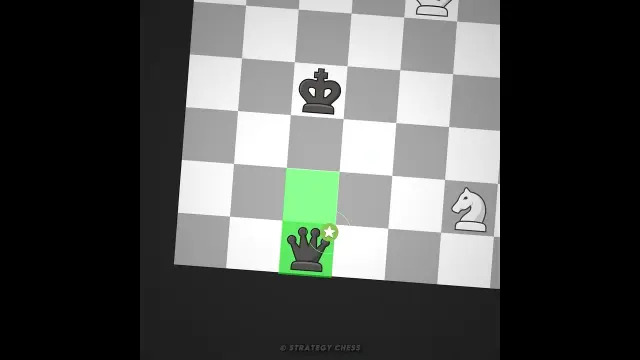
 Chess Endgame Lesson on Underpromotion and Skewers
#Chess Endgame
1 ideas
Chess Endgame Lesson on Underpromotion and Skewers
Get new #Chess Endgame ideas by email
Every Thursday: the week's best ideas, with the newest from #Chess Endgame.
Related tags
Chess Endgame: A Guide to Winning with Few Pieces
The endgame is the final phase of a chess game, when most of the pieces have been traded off and only a handful remain on the board. There is no official move number where it begins; players recognise it by the character of the position. Queens are usually gone, the board feels open, and the king — a liability in the middlegame — becomes an active fighting piece that can march forward and join the attack.
Why the endgame matters
Many games are not decided by brilliant combinations but by small technical advantages converted patiently at the end. A single extra pawn, a better placed king or a more active rook can be enough to win. Because the position is simpler, mistakes are also more costly: a careless king move or a wasted tempo can turn a win into a draw in a way that rarely happens earlier in the game.
The main kinds of endings
Read more
Endgames are usually grouped by the material left on the board. Pawn endings revolve around promotion races and the geometry of the king. Rook endings are the most common in practice, and they reward precise technique. Bishop and knight endings depend heavily on whether the pawns sit on light or dark squares. Queen endings are volatile, full of perpetual checks and sudden tactical tricks. Mixed endings — a rook against a bishop, for example — often hinge on whether the weaker side can build a fortress.
Basic ideas worth learning first
A few concepts carry most of the practical value for beginners. The rule of the square tells you whether a lone king can catch a running pawn. The opposition describes the duel of kings over a key square, and it decides a great many pawn endings. Zugzwang is the situation where any move you make worsens your position — often the point of a subtle king manoeuvre. Distant passed pawns and outside passed pawns are classic winning assets, because they pull the defending king away from the action. In rook endings, placing the rook behind a passed pawn is almost always sensible, and cutting off the enemy king along a rank or file is a standard technique.
Practical advice
Study the simplest positions first: king and pawn against king, then basic checkmates such as king and queen or king and rook against a lone king. These are the foundation for everything else, and they appear in real games far more often than beginners expect.
Learn a handful of theoretical draws as well as wins. Knowing how to hold a draw with a lone king against a pawn, or how to defend a difficult rook ending, saves half a point as surely as a clever win gains one.
Train calculation rather than memorisation. Endgames reward the habit of counting moves and visualising short variations accurately. Set up a few pieces on a board and play the position out against a partner or an engine, trying to win it and then trying to defend it. Finally, be patient. Converting an endgame is a slow business: improve your king, restrict your opponent's pieces, create a second weakness, and only then push the pawn. Rushing is the most common reason a winning endgame slips away.
#Chess Endgame: frequently asked questions
What exactly is a chess endgame, and how do I know when I've reached one?
It's the last phase of the game, when most pieces have been exchanged and only a few remain on the board. No official move count marks the start — you recognise it by the feel of the position: the queens are usually gone, the board looks open, and the king stops hiding and becomes a piece you can march into the action. If your king can safely step toward the centre, you're probably there.
What should a beginner study first in endgames?
Start with the smallest positions: king and pawn against king, then the elementary checkmates with a queen or a rook against a lone king. These look trivial but turn up in real games far more often than people expect. Learn the drawing techniques alongside the winning ones, because saving a lost position is worth as much as converting a won one.
Which kind of endgame should I concentrate on?
Rook endings deserve the most attention, since they occur more often than any other type in practice and reward clean technique. After that, pawn endings are worth learning properly because the ideas — the geometry of the king, the duel over a key square — carry over into everything else. Bishop and knight endings matter too, but mostly for understanding which squares your pawns sit on.
How do I convert a small advantage without throwing it away?
Be patient and work in stages: bring your king closer, restrict the opponent's pieces, and create a second weakness before pushing a pawn. Rushing is the most common reason a winning endgame drifts into a draw. Also learn to spot zugzwang, where the opponent would rather pass but cannot, because that is often the thread that turns a quiet position into a win.
What mistakes do players make most often at this stage?
Careless king moves and wasted tempi, mainly — in a simplified position a single slip can flip a win into a draw in a way that would rarely happen earlier. Another frequent error is trading into an endgame without checking whether the resulting position is actually better. Placing a rook in front of a passed pawn instead of behind it is a classic practical mistake too.
What's the best way to practise endgame technique?
Set up a few pieces on a board and play the position out — first trying to win it, then resetting and trying to defend it. Doing both sides teaches you where the real difficulties lie far better than reading about them. An engine or a partner works equally well; the point is to calculate and count moves accurately rather than memorise lines.
Videos come from YouTube and posts from Instagram; titles and summaries are our own. All rights belong to their creators.