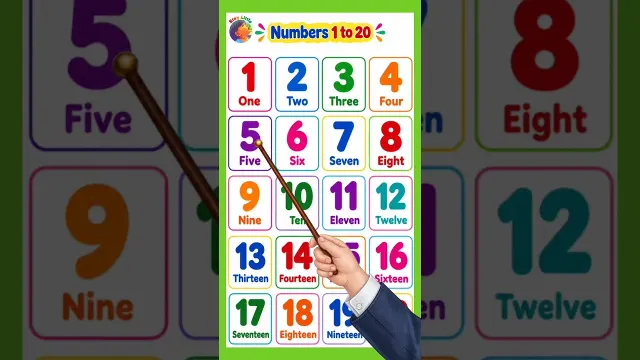
 Fast Counting From One to Twenty for Children
#Childrens Songs
1 ideas
Fast Counting From One to Twenty for Children
Get new #Childrens Songs ideas by email
Every Thursday: the week's best ideas, with the newest from #Childrens Songs.
Related tags
A Guide to Children's Songs for Singing Together
Children's songs are the short, singable pieces passed between adults and children — lullabies, nursery rhymes, counting songs, action songs and singing games. Most are anonymous and old, carried along by oral tradition rather than written by anyone in particular, which is why the same melody turns up in different countries with different words. What they share is a shape built for young ears and young voices: a small range, plenty of repetition, a steady beat and rhymes that are easy to remember.
Where they come from
Many began as ordinary working songs, street rhymes, prayers or bedtime tunes and only later became "for children". Others were made up on the spot by parents and carers and survived because a child asked for them again. Because they live in families and playgrounds rather than books, they change constantly: names get swapped, verses get added, words drift into local dialect. There is no single correct version of most of them.
The main kinds
Read more
- Lullabies, slow and soft, usually sung at bedtime or while a baby is settling.
- Action songs and fingerplays, where hands and body do what the words say.
- Counting songs, which build numbers in or count down to nothing.
- Singing games and circle games, sung while moving, skipping or choosing partners.
- Cumulative songs, where each verse adds a line to the one before.
- Nonsense and tongue-twisting rhymes, played for the sound rather than the meaning.
- Songs tied to a season, a festival or a family tradition.
What beginners should know
You do not need a good voice. A child recognises the voice they know, not the pitch, and a quiet, steady, slightly slow version is easier to join in with than a polished one. Start with songs you already remember from your own childhood — they come back faster than you expect, and the small gaps tend to fill themselves in.
Sing the same songs often. Repetition is the point, not a failure of imagination: it is how a child learns the words, predicts the next line and eventually sings alone. Keep sessions short and stop while it is still fun.
Practical tips
- Pair a song with a gesture, a bounce or a clap so a child who cannot yet speak can take part.
- Put the child's name into the words; it turns a shared song into theirs.
- Use songs to mark routine moments — tidying, washing hands, putting on shoes — and the routine becomes easier to move through.
- Follow the child's choice. If they ask for the same song five times, sing it five times.
- Let silence and mistakes happen. A forgotten line is an invitation for the child to supply it.
- If you are singing in a second language, keep the gestures big and the words few.
Above all, children's songs are a way of being together rather than a performance. The version you sing, however imperfect, is the one that will be remembered.
#Childrens Songs: frequently asked questions
I can't really sing — how do I start with a child anyway?
Start anyway, because the child is listening for the voice they know rather than for accuracy. Keep it quiet, steady and a little slower than feels natural so it is easy to join in. Pick something you half-remember from your own childhood and let the forgotten lines fill themselves in as you go.
What do I actually need before I begin?
Nothing beyond your voice and a bit of willingness to look silly. Gestures, claps, bounces and a lap to sit on do more than any equipment. If you are singing in a second language, big movements and few words will carry you further than perfect pronunciation.
Which kind of song suits which moment?
Match the song's shape to what is happening: something slow and soft for settling, something with actions for a wriggly child who needs to move, and something repetitive for a routine like tidying or washing hands. Counting and cumulative songs work well when you want the child to stay with you until the end. Seasonal and family songs are worth keeping for the occasions that come round again.
How do I stop the same song becoming boring?
It probably won't, because repetition is how a child learns to predict the next line and eventually sing it alone. You can keep it fresh by dropping the child's name into the words, adding a new verse, or letting a line go missing so they can supply it. Short sessions that end while it is still fun do more than long ones.
What are the common mistakes people make?
Treating it as a performance: correcting the child, rushing the tempo, or worrying about singing in tune. Another is filling every silence, when a pause is exactly what invites a child to jump in. And stopping too late — a session that has gone stale is harder to bring back than one that ended early.
Any ideas for making songs part of the day rather than a special activity?
Attach a particular song to a particular transition, so the song itself starts to signal what comes next. Let the child choose, and if they want the same one again, give it to them again. Singing while you walk, wait or tidy turns it into something ordinary rather than something performed.
Videos come from YouTube and posts from Instagram; titles and summaries are our own. All rights belong to their creators.