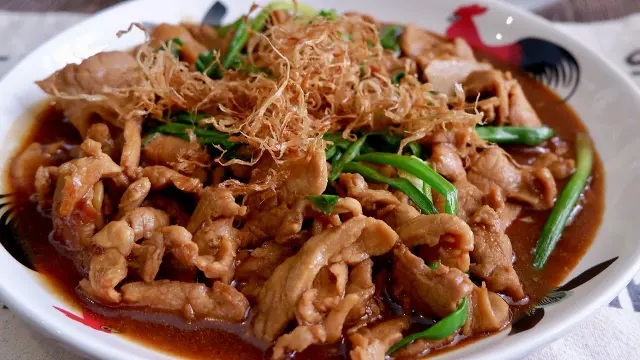
 Stir-Fried Ginger and Spring Onion Pork, Remade
#Chinese Cooking
1 ideas
Stir-Fried Ginger and Spring Onion Pork, Remade
Get new #Chinese Cooking ideas by email
Every Thursday: the week's best ideas, with the newest from #Chinese Cooking.
Related tags
A Beginner's Guide to Chinese Cooking at Home
Chinese cooking is one of the world's great culinary traditions, and one of the most rewarding to learn. It is less a single cuisine than a family of regional kitchens, each shaped by local climate, farming and history. What ties them together is a shared philosophy: balance flavours, respect texture, and cook with heat and speed so that ingredients arrive at the table tasting of themselves.
The main regional styles
Most Chinese food writing groups cooking into a handful of broad regional traditions. You don't need to memorise them, but knowing roughly what each leans toward helps you understand a recipe.
- Northern cooking favours wheat — noodles, dumplings, flatbreads — along with robust braises and vinegary, garlicky flavours.
- Sichuan and nearby kitchens are known for chilli and the tingling numbness of Sichuan pepper, used together in layered, aromatic dishes.
- Eastern coastal cooking, around the lower Yangtze, tends toward freshwater fish, shellfish, braises and a gentle sweetness.
- Southern cooking, especially Cantonese, prizes freshness, steaming and quick stir-frying with restrained seasoning.
Read more
Techniques worth learning first
Three methods will carry you a long way.
Stir-frying uses high heat, a little oil and constant motion. The goal is to cook food fast so it browns lightly and stays crisp rather than steaming in its own moisture. Prepare everything before the pan gets hot, because there is no time to chop once you start.
Steaming is gentler and very forgiving. A bamboo or metal steamer over simmering water cooks fish, dumplings and vegetables without added fat, and keeps their flavour clean.
Red-braising — simmering in soy sauce, sugar, aromatics and water until the liquid reduces to a glaze — is the slow, deep-flavoured counterpart to the wok.
Stocking your pantry
You can cook a great deal with a small shelf of basics: light and dark soy sauce, rice wine or a dry sherry, rice vinegar, sesame oil, cornflour, sugar, garlic, ginger and spring onion. Chilli oil and dried mushrooms are worth adding when you can find them. Buy these in small quantities from an Asian grocer if you have one nearby; they keep well and cost far less than you might expect.
Practical habits
Cut ingredients into even, bite-sized pieces so they cook at the same rate. Read a recipe through once before starting — Chinese recipes move quickly and reward preparation. Taste as you go, and adjust salt and sweetness at the end rather than the beginning.
Above all, cook the dishes you actually like eating. Repetition teaches you far more than variety, and a single stir-fry made a dozen times will teach you more about heat and timing than a dozen recipes made once.
Videos come from YouTube and posts from Instagram; titles and summaries are our own. All rights belong to their creators.