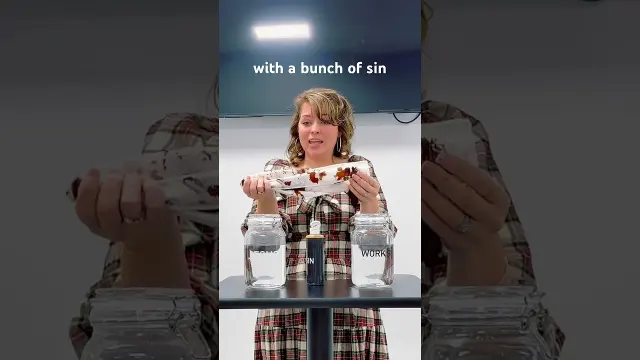
 Jesus and Works Object Lesson for Kids
#Christian Object Lesson
1 ideas
Jesus and Works Object Lesson for Kids
Get new #Christian Object Lesson ideas by email
Every Thursday: the week's best ideas, with the newest from #Christian Object Lesson.
Related tags
Christian Object Lessons: Teaching Faith with Everyday Things
A Christian object lesson is a way of teaching a spiritual truth through a physical thing. You hold up something ordinary — a seed, a lamp, a piece of rope, a jar of water — and let the object carry the idea. Instead of explaining a truth in the abstract, you let people see it, touch it, and turn it over in their hands. Long after the words fade, the picture tends to stay.
Where the idea comes from
Teaching with objects is as old as Scripture. The prophets acted out their messages; Jesus constantly pointed at what was around him — a mustard seed, a lost coin, a lamp on a stand, bread, a vine, a fig tree. The parables work precisely because the hearer already knows the everyday thing, and the familiar becomes the doorway to the unfamiliar. An object lesson simply takes that instinct and makes it deliberate: one truth, one item, one clear connection.
What a good object lesson does
Read more
It gives an abstract idea a shape. Children especially grasp the difference between "God forgives" and a label peeled off a jar and dropped into water. But adults remember it too, because the picture gives the mind something to return to.
Common kinds
- Transformation lessons: something changes state — water turning cloudy then clear, a crumpled paper smoothed out, a seed becoming a sprout.
- Contrast lessons: two items set side by side, one heavy and one light, one clean and one stained.
- Container lessons: what goes in shapes what comes out — a cup, a balloon, a jar.
- Tool lessons: everyday equipment used for its purpose, like a compass, a torch, a key, a rope.
- Action lessons: the listener does something — builds, tears, ties, carries — and feels the point in their hands.
If you are new to this
Start with one idea you actually want people to remember, then look for an object that carries it naturally rather than forcing a connection. Keep it short; an object lesson is a doorway, not the whole building. Practise it aloud once before you teach, because the timing of the reveal matters as much as the item. Speak the application plainly — say what the object has to do with the truth, since a picture left unread can be misread.
Match the object to your group. Very young children need something they can safely handle and a single idea; older groups can handle a small twist or a question. Keep the item genuinely ordinary — a kitchen item or a piece of string will do more work than something elaborate.
A word of care
Keep any lesson safe: no fire, sharp objects, open flames, or anything that could be swallowed when children are present. And keep the focus where it belongs. The object is a servant of the message, not the message itself — the moment people remember the trick and forget the truth, the lesson has done half its work. Choose the thing, show it plainly, and let it point beyond itself.
#Christian Object Lesson: frequently asked questions
How do I start a Christian object lesson if I've never taught one before?
Begin with the single truth you want people to carry home, then go looking for an everyday item that already carries it — a seed for growth, a lamp for guidance, a jar for what fills a life. Resist the urge to build a clever demonstration first and find a message to attach to it afterward; the object should serve the point, not the reverse. Try it out loud once on your own before you teach it, since the moment you reveal or use the object matters as much as the item itself.
What do I actually need to prepare for one?
Far less than you might expect — a kitchen item, a piece of string, or a cup of water will often do more work than something elaborate or store-bought. What you do need is a clear one-sentence statement of the truth, a plan for when the object appears in your talk, and a plain explanation at the end of what the object had to do with the message. Keeping it short is part of the preparation: the lesson is a doorway into the idea, not a full talk on its own.
Which kind of object lesson should I choose?
Think about what the truth looks like in motion. If the point is change, use a transformation lesson where something shifts state; if the point is comparison, set two things side by side; if the point is influence or overflow, work with a container; if the point is purpose, use a tool for its intended job. Action lessons, where the listener builds, ties, or carries something, suit groups who learn best by doing.
How do I keep an object lesson safe and appropriate for children?
Choose only things children can handle safely and comfortably — nothing involving fire, open flames, sharp edges, or anything small enough to swallow. Since very young children do best with one simple idea and something they can touch, keep the item plain and the explanation brief. For older groups you can add a question or a small twist, but safety of the object comes before cleverness of the illustration.
What are common mistakes people make with object lessons?
The biggest is forgetting to say what the object has to do with the truth — an unread picture can be misread, and people may walk away with the wrong idea or none at all. Another is letting the demonstration become the main attraction, so the group remembers the trick and loses the message. Overcomplicating the item, or forcing a connection that doesn't come naturally, are close behind.
Where does the idea of teaching with objects come from?
It runs through Scripture: the prophets acted their messages out, and Jesus repeatedly pointed at ordinary things around him — a mustard seed, a lamp, bread, a vine — so that a familiar object became the doorway to an unfamiliar truth. An object lesson simply makes that instinct deliberate and simple: one truth, one item, one clear connection between them.
Videos come from YouTube and posts from Instagram; titles and summaries are our own. All rights belong to their creators.