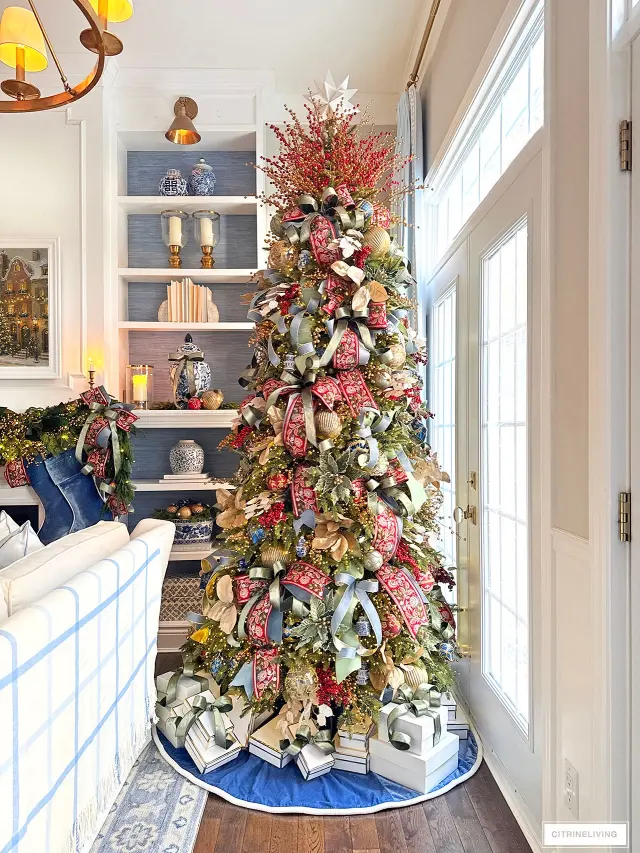
 Vintage-inspired colourful Christmas tree with ribbons and ornaments
#Christmas Decorating
3 ideas
Vintage-inspired colourful Christmas tree with ribbons and ornaments
Get new #Christmas Decorating ideas by email
Every Thursday: the week's best ideas, with the newest from #Christmas Decorating.
Related tags
Christmas Decorating: A Guide to Classic Holiday Style
Christmas decorating is the practice of dressing a home for the winter holidays: the tree, the doorway, the mantel, the table, the windows. It borrows from older midwinter customs, when people brought evergreen branches indoors to mark the darkest weeks of the year, and it took on its modern shape over the following centuries as decorated trees, glass ornaments and small lights became part of family life. What has stayed constant is the idea behind it — turning a house into a place that feels warm, welcoming and a little bit special for a few weeks.
Where the pieces come from
Much of what we use now began as simple, local materials. Evergreen boughs, holly, ivy, mistletoe and dried fruit were the original decorations long before shop-bought ornaments existed. Candles on trees gave way to strings of small electric lights, which made decorating safer and far more flexible. Glass baubles, paper stars, straw figures and wooden toys each grew out of a particular craft tradition, which is why a mixed collection of ornaments tends to look richer than a single matching set.
Choosing a colour scheme
Read more
Deciding on a palette first makes every later choice easier. A few directions that never date:
- Traditional red and green, often warmed with gold, brass or deep berry tones.
- Winter white and silver, with pale wood and soft textures for a quieter, calmer feeling.
- Vintage multicolour, where bright mismatched baubles, ribbon and tinsel are worn proudly.
- Natural and rustic, built on linen, kraft paper, dried oranges, pinecones and twine.
- A single-colour scheme, such as all red or all gold, which reads as deliberate even with few decorations.
The main areas to dress
Most homes have four or five natural focal points. The tree is the centre; the mantel or a shelf is a second; the front door or porch greets everyone; the dining table carries the celebration itself; and small touches on windowsills, stair rails or a hallway mirror tie the rest together. You do not need all of them. Two done well will feel more festive than six done hastily.
What beginners should know
Start with the tree and the lights, then live with the room for a day before adding more. Lights usually look best layered inward rather than wrapped only around the outside, and warm white bulbs are easier to live with than cool ones. When you hang ornaments, larger pieces go inside and lower down, smaller ones towards the top, and breaking up an even spread of colour keeps the eye moving. Ribbons, garlands and greenery add shape and scent cheaply.
Practical notes
Keep real greenery away from heat sources and top up the water in a cut tree daily. Check that cables are undamaged and do not overload sockets. Store decorations by category in labelled boxes, keep the fragile pieces wrapped, and note what you did not use this year — that is the easiest way to refine your collection over time.
Above all, decorate for the people who will sit in the room, not for a photograph. A home that looks slightly handmade, with a few things made or inherited, is the one guests remember.
#Christmas Decorating: frequently asked questions
How do I start decorating for Christmas if I’m a beginner?
Begin with the tree and the lights, then step back and see how the room feels before adding anything else. After that, bring in a few extra layers like garlands, ribbons, or greenery so the space feels complete without becoming crowded.
What decorations do I really need for a festive Christmas home?
You only need a few key pieces to create a strong holiday feel. A tree, lights, and one or two focal areas such as a mantel, doorway, or table are usually enough to make a home feel warm and seasonal.
Which Christmas decorating style should I choose?
Choose a style that matches the mood you want in the room, whether that is classic red and green, soft winter white, rustic natural textures, or a bright vintage mix. A clear colour palette helps everything feel intentional, even if your decorations are simple or collected over time.
How can I make Christmas decorations look more polished and less cluttered?
Use a few repeating colours or materials so the room feels connected. It also helps to place larger ornaments deeper in the tree, keep smaller pieces higher up, and avoid trying to fill every surface at once.
How do I care for real greenery and Christmas lights safely?
Keep fresh branches and trees away from heat sources and check that the water stays topped up if you have a cut tree. For lights, look over the cables before using them and avoid plugging too many things into the same socket.
What are some good Christmas decorating ideas for a dining room or kitchen?
A table centrepiece, a simple garland, and a few touches on shelves or windows can make a kitchen or dining room feel festive without getting in the way. Natural materials like greenery, dried fruit, candles, and ribbon work especially well in these spaces.
Videos come from YouTube and posts from Instagram; titles and summaries are our own. All rights belong to their creators.