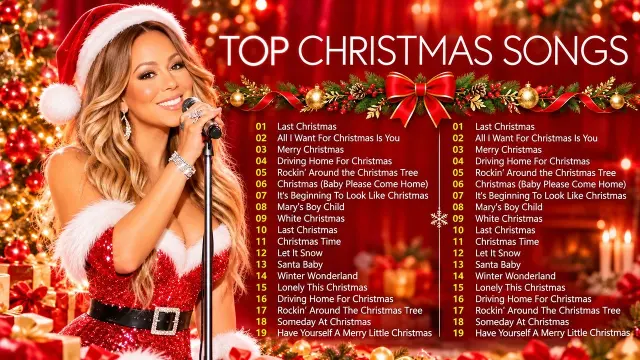
 Christmas Song Playlist With Mariah Carey and Ariana Grande
#Christmas Music
3 ideas
Christmas Song Playlist With Mariah Carey and Ariana Grande
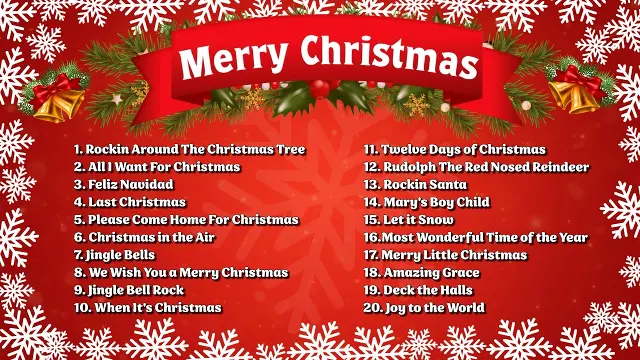 Top 50 Christmas Songs Playlist With Lyrics for Singing Along
 Classic Christmas Songs Played Against a Cozy Fireside
Get new #Christmas Music ideas by email
Every Thursday: the week's best ideas, with the newest from #Christmas Music.
Related tags
Christmas Music: Carols, Classics and How to Enjoy Them
Christmas music is the soundtrack of the winter holidays: songs written to be sung, played and shared in the weeks around Christmas. Some are centuries-old hymns sung in churches, some are cheerful songs about snow, sleighs and family gatherings, and some are quiet instrumental pieces that simply make a room feel warmer. What they share is a purpose — they mark a season and bring people together, whether around a piano, in a choir stall or in a kitchen while something bakes in the oven.
Where it comes from
The oldest layer is religious. Christmas hymns grew out of church liturgy, and the carol as we know it — a strophic song, often with a refrain everyone can join — took shape in Europe during the medieval period. Carols were originally danced as well as sung, and many were tied to the streets and the fields rather than the altar. Later centuries collected and revived them, which is why so many traditional carols sit somewhere between folk song and hymn.
A second layer is popular song. From the early twentieth century onward, songwriters began writing new holiday songs for stage, radio and recordings, mixing winter imagery with warmth, nostalgia and a little humour. These became the standards we now hear everywhere in December.
Read more
The main kinds
- Traditional carols and hymns: "Silent Night", "O Come, All Ye Faithful", "Hark! The Herald Angels Sing" — steady, singable, often in four parts.
- Popular holiday standards: mid-century songs about snow, homecoming and goodwill, usually in a warm, crooning style.
- Choral and orchestral arrangements: carols dressed up for large forces, lovely for concerts and quiet evenings.
- Instrumental and background music: piano, strings, jazz combos and bell choirs, ideal for cooking, wrapping presents or working.
- Children's songs and novelty numbers: short, repetitive and funny, built for singing along badly and happily.
- Folk and regional traditions: wassailing songs, mumming tunes and local carols that never left their own county.
What beginners should know
You do not need training to take part. Most carols were written for untrained voices in rooms without microphones, so they sit comfortably in the middle of the range. Learn the melody first and let the words follow; the refrains repeat, and that is the point. If you are singing in a group, listen more than you project, breathe at the ends of phrases, and don't worry about the harmony until the tune feels automatic.
If you are building a playlist, think about shape rather than a pile of favourites. Open with something quiet, let a few familiar songs carry the middle, and place your liveliest pieces where people will actually be standing up. Mix voices with instruments, and old recordings with new ones — the contrast is part of the pleasure.
Finally, keep some of it for yourself. A single carol played late at night, when the house is finally still, is one of the small, reliable joys of the year.
#Christmas Music: frequently asked questions
Do I need any musical training to sing Christmas carols?
Not at all. Carols were written to be sung by ordinary people in ordinary rooms, so the melodies sit comfortably in a normal vocal range and the refrains are meant to be picked up by ear. Learn the tune first and let the words settle in afterward — listening is more useful than projecting when you sing in a group.
What do I need to put together a Christmas music playlist?
Mostly just a sense of shape rather than a long list of favorites. Start with something quiet, let a few familiar songs carry the middle, and save the liveliest pieces for when people are likely to be up and moving. Blending voices with instruments, and older recordings with newer ones, keeps the whole thing from feeling flat.
Which kind of Christmas music should I choose for my evening?
It depends on what the room is doing. Instrumental arrangements on piano, strings or jazz suit cooking, wrapping gifts or working in the background, while choral and orchestral versions carry a concert or a quiet evening. Traditional carols work best when people want to sing, and novelty songs are for the loud, silly part of the gathering.
What are common mistakes people make with holiday music?
The usual one is playing only loud, upbeat songs from the first minute, which leaves nowhere to go and tires everyone out. Another is treating the music as pure background and losing the quiet moments that make the season feel warm. A little restraint and a deliberate mix of tempos does more than volume.
How can I keep Christmas music feeling special through the whole season?
Vary what you listen to — alternate old carols with popular standards and instrumental pieces so nothing becomes wallpaper. Keep some of it for yourself as well: a single carol played late at night, once the house is still, is one of the small reliable pleasures of the year.
Can I enjoy Christmas music if I don't celebrate the holiday religiously?
Yes. The tradition has two layers — church hymns and later popular songs about winter, homecoming and goodwill — and the second layer is broadly about warmth and company rather than doctrine. Many people come to carols simply as beautiful, singable music tied to a season.
Videos come from YouTube and posts from Instagram; titles and summaries are our own. All rights belong to their creators.