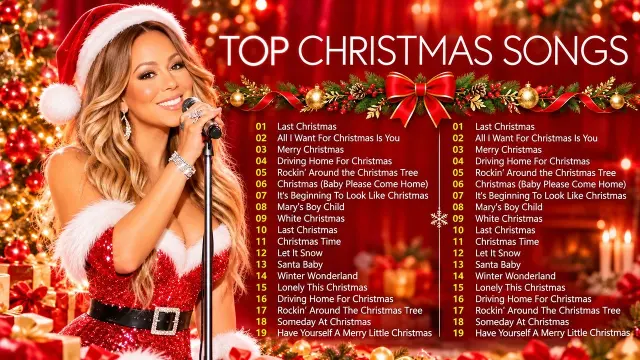
 Christmas Song Playlist With Mariah Carey and Ariana Grande
#Christmas Songs
2 ideas
Christmas Song Playlist With Mariah Carey and Ariana Grande
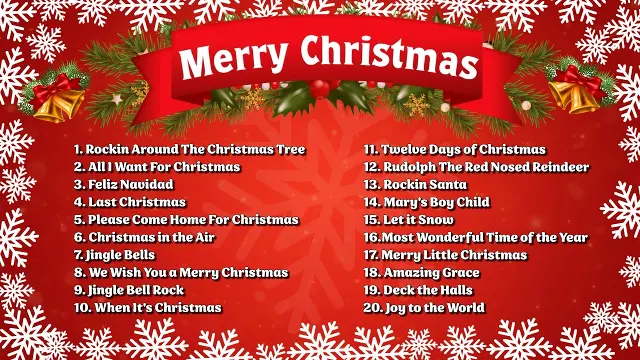 Top 50 Christmas Songs Playlist With Lyrics for Singing Along
Get new #Christmas Songs ideas by email
Every Thursday: the week's best ideas, with the newest from #Christmas Songs.
Related tags
Christmas Songs: A Guide to Carols and Holiday Music
Christmas songs are the soundtrack of the season: melodies that return every year and feel familiar within a few notes. They cover a wide range, from sacred carols sung in church to playful winter pop, and they share one thing — they are made for singing together.
Where the tradition comes from
The oldest layer is the carol. Carols began as simple songs tied to dancing and celebration, and over the centuries they settled into the Christmas repertoire, mixing religious storytelling with folk melody. Many were carried by oral tradition long before anyone wrote them down, which is why versions differ from village to village and family to family. Later, the nineteenth century brought a revival of interest in carol singing, and the practice of going door to door, gathering in a hall, or singing at a school concert took hold. Alongside that, a separate stream of popular holiday songs grew out of theatre, radio and recording, bringing us the warm, nostalgic numbers that play in shops and kitchens today.
The main kinds
Read more
- Carols: strophic songs, often in four parts, telling the Christmas story. Think of the ones everyone knows by heart.
- Popular holiday standards: smooth, jazzy, mid-century in feel, usually about winter, homecoming and goodwill rather than religion.
- Folk and regional songs: local tunes in regional languages, often with dance rhythms and refrains for joining in.
- Novelty and children's songs: short, funny, easy to remember, built for clapping and repetition.
- Instrumental winter music: bells, strings and choir pieces that set atmosphere without words.
What beginners should know
You do not need a trained voice to sing Christmas songs. Most carols sit comfortably in a middle range and are written to be sung by untrained crowds, so the melody is usually easy to hold. Pick a handful of favourites and learn the first verse properly rather than skimming ten songs. Listen to a few versions of the same carol to hear how phrasing changes, then choose the one that suits your voice.
Practical tips for singing together
- Start lower than you think. Groups tend to drift upward as enthusiasm rises, and a comfortable starting note keeps the last verse singable.
- Breathe at the ends of phrases, not in the middle of a line; carols are written with natural breathing places.
- If you sing in a group, listen more than you project. Blend matters more than volume.
- Harmony is optional. A confident melody line holds everything together; add a second part only once the tune is secure.
- Learn the words of the refrains. The verses carry the story, but the chorus is where everyone joins in.
Whether you sing in a choir, around a table, or alone while cooking, these songs work because they are simple, repeatable and shared. Learn a few well and they will stay with you for decades.
#Christmas Songs: frequently asked questions
How do I start learning Christmas songs if I have never really sung before?
Begin with a small handful of carols you already recognize, and learn the first verse properly instead of skimming through many songs at once. Listen to several recordings of the same tune to hear how phrasing shifts, then settle on the version that fits your voice. No trained voice is required — most carols are written for untrained crowds and sit in a comfortable middle range.
Do I need an instrument or a choir to enjoy singing Christmas songs?
Not at all. Carols were carried by oral tradition long before they were written down, and they are built to survive being sung unaccompanied around a table or in a kitchen. A group, a piano or a recording can help keep everyone together, but none of it is a requirement — a confident melody line is enough on its own.
Which kind of Christmas song should I choose for a particular occasion?
Match the mood to the moment: carols suit a church service or a school concert, folk and regional songs work well when you want everyone to join in, and the smooth popular holiday standards fit background music at home or in a shop. Novelty and children's songs are ideal when there are small children who want to clap and repeat. Instrumental winter music is a good choice when you want atmosphere without anyone singing.
What is the best way to keep a song in memory from one year to the next?
Learn a few songs thoroughly rather than many halfway — the ones you know well enough to sing without the words stay with you for decades. Pay particular attention to the refrains, since the verses carry the story but the chorus is where everyone joins in. Singing them repeatedly through the season, alone or with others, is what fixes them in memory.
What mistakes do groups make when singing carols together?
The most common one is starting too high; enthusiasm pushes the pitch upward and the last verse becomes unsingable, so begin lower than feels natural. Singers also tend to break for breath in the middle of a line when the melody already has breathing places at the ends of phrases. In a group, projecting louder rarely helps — listening and blending matters more than volume, and a second harmony part should wait until the melody is secure.
Videos come from YouTube and posts from Instagram; titles and summaries are our own. All rights belong to their creators.