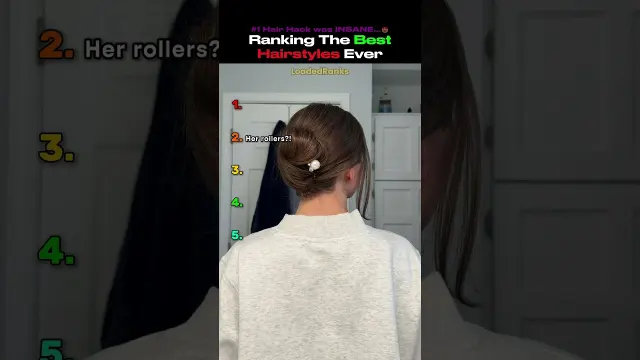
 Testing Popular Hairstyles: French Braid, Claw Clip and Roller Bun
#Claw Clip
1 ideas
Testing Popular Hairstyles: French Braid, Claw Clip and Roller Bun
Get new #Claw Clip ideas by email
Every Thursday: the week's best ideas, with the newest from #Claw Clip.
Related tags
Claw Clip Guide: Styles, Sizes and How to Wear Them
A claw clip is a hair accessory built around a simple idea: two hinged jaws, lined with interlocking teeth, that shut around a section of hair and hold it in place. Most have a small metal spring at the hinge and a pair of handles you squeeze to open them. Because the grip is spread across many teeth rather than concentrated in one tight band, a claw clip holds hair with fairly gentle, even pressure — which is a large part of why people reach for one when they want a style off the neck without pulling.
Where it comes from
The claw clip grew out of the long tradition of decorative hair hardware — combs, barrettes and slides that hold hair by gripping it rather than tying it. The plastic spring-loaded version most of us picture became a household object in the late twentieth century, when moulded plastics made it cheap and colourful enough to sell everywhere. It has never really gone away since, and it moves easily between everyday use and evening styling, which is unusual for something so functional.
The main kinds
Read more
Claw clips come in a few broad families:
- Mini and small clips, for half-up styles, fine sections, bangs or holding a braid in place.
- Medium clips, the everyday workhorse, good for a twist at the back of the head.
- Large and jumbo clips, for thick or long hair and for full updos.
- Octopus clips, with long, curved teeth and a rounder jaw, designed to gather a lot of hair at once.
- Materials and finishes, from matte and tortoiseshell-effect plastics to acetate and metal, in shapes running from plain rectangles to rounded and sculptural forms.
Styles worth knowing
The French twist is the classic: gather the hair low at the back, twist it upward, then fold the ends down and clamp the whole thing. A half-up style simply takes the top section, twists or braids it, and clips it above the crown. For a looser look, gather everything into a low bun and open the clip over the bun rather than the scalp. Twisting first gives the clip something to grip; hair left smooth and straight can slide straight out of the jaws.
Practical tips for beginners
Match the clip to the amount of hair — an oversized clip on fine hair will slip, and an undersized one on thick hair will not close. Brush the section smooth before twisting, and keep the jaws away from the scalp so the teeth are not pressing on your head. Textured or slightly second-day hair holds far better than freshly washed, silky hair; a little dry shampoo at the roots helps. Take the clip out before you sleep and ease it open rather than pulling it free, so you avoid snagging. If a clip leaves a crease, dampen the area briefly and let it dry.
Once you know your size and your twist, a claw clip becomes one of the quickest ways to put your hair up — and one of the kindest to it.
#Claw Clip: frequently asked questions
How do I use a claw clip for the first time?
Start by gathering the hair you want to put up, then twist it gently before clamping. Twisting gives the teeth something to hold onto, because hair left smooth and straight slides right out of the jaws. Open the clip with the handles, set it over the gathered section, and release so the teeth close around the twist.
What size claw clip should I choose?
Match the clip to how much hair you are putting up rather than to the look alone. A mini or small clip suits half-up styles, bangs and fine sections, a medium one handles an everyday twist, and large or jumbo sizes are meant for thick, long hair and full updos. An oversized clip on fine hair will slip, while one that is too small on thick hair simply will not close.
Which kind of clip is best for thick or long hair?
A large or jumbo clip, or an octopus clip with its long curved teeth and rounder jaw, since those are shaped to gather a lot of hair at once. If your hair is very heavy, keeping the style low at the back of the head spreads the weight more comfortably than piling it high. It also helps to twist the length first so the bulk is compact enough to grip.
How do I keep a claw clip from slipping out?
Textured or slightly second-day hair holds far better than freshly washed, silky hair, so a little dry shampoo at the roots can make a real difference. Brush the section smooth, twist it, and make sure the jaws sit over the hair rather than pressing into the scalp. Choosing the right size for your hair thickness matters just as much as the technique.
How should I care for my hair when wearing claw clips?
Take the clip out before you sleep, and ease it open rather than pulling it free so you avoid snagging strands. The spread-out grip of the teeth means the pressure is gentle and even, which is why the clip is a good option when you want hair off your neck without pulling. If you notice a crease afterwards, dampen the area briefly and let it dry.
What are common mistakes people make with claw clips?
The most frequent ones are picking a clip that is the wrong size for the amount of hair and clamping smooth, untwisted hair that slides loose. Setting the teeth too close to the scalp is another easy mistake, as it makes the clip uncomfortable rather than secure. A bit of twist and a little texture solve most of these problems.
Videos come from YouTube and posts from Instagram; titles and summaries are our own. All rights belong to their creators.