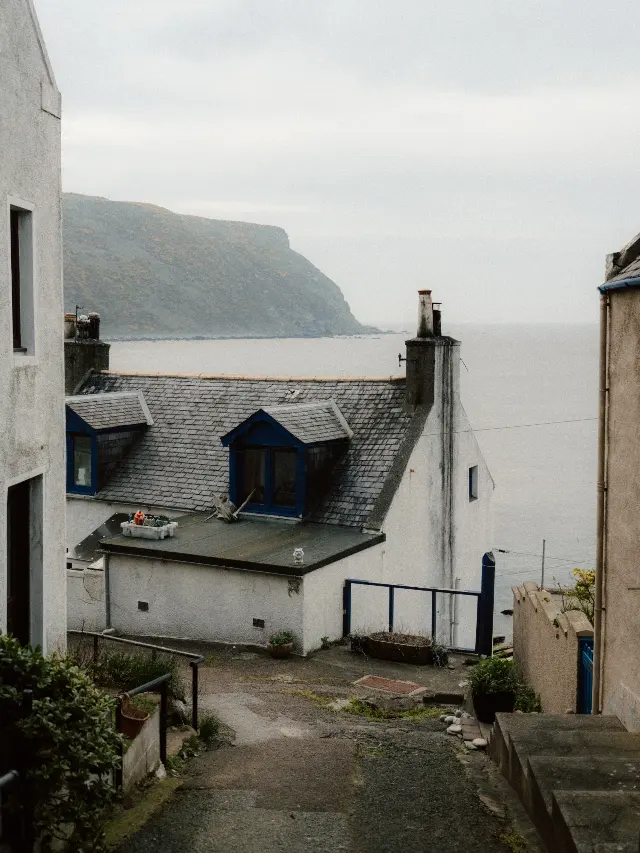
 A Photo Collection from Gardenstown on Scotland's East Coast
#Coastal Village
1 ideas
A Photo Collection from Gardenstown on Scotland's East Coast
Get new #Coastal Village ideas by email
Every Thursday: the week's best ideas, with the newest from #Coastal Village.
Related tags
Coastal Village Guide: Life Where Land Meets Sea
A coastal village is a settlement shaped by two forces at once: the sea that feeds it and the land that shelters it. Almost everything about such a place — where the houses sit, how the streets bend, what people do in the morning — can be read as an answer to the question of how to live beside water that is generous one day and dangerous the next.
What Makes a Coastal Village
Most grew where a natural harbour offered protection: a bay tucked behind a headland, a river mouth, a gap between rocks. Fishing families built close to the boats, and the boats needed shelter more than the houses needed a view. That is why so many old coastal villages turn their backs to the sea, with narrow lanes running down to a quay rather than along the shore. Others began as something else entirely — a ferry crossing, a small port for trade, a cluster around a lighthouse or a lifeboat station — and only later became places people came to look at.
A World of Variations
Read more
Coastal villages differ enormously, and the differences usually follow climate and geology.
- Northern fishing villages often huddle low and tight against wind, with steep roofs, thick walls and small windows.
- Mediterranean villages climb hillsides in whitewashed steps, with shutters against the midday glare and shade-heavy alleys.
- Fjord and loch settlements sit where the water is deep and the land steep, often reachable mainly by boat.
- Island villages carry their own rhythm, tied to tides, ferries and whatever the crossing allows.
Reading the Architecture
Look for the working buildings, not just the pretty ones. Net lofts, boat sheds, smokehouses, ice houses, winches and slipways tell you what the village lived on. Houses often reuse what was nearest: stone from the cliffs, timber from shipwrecks, slate from a local quarry. Storm shutters, raised doorsteps and drainpipes that lead away from the wall are small pieces of practical wisdom earned over generations.
The Rhythm of the Tide
Life here keeps time differently. Tides decide when a boat can leave, when a slipway is usable, when the rocks appear. Weather arrives faster on an open coast, and fog can close a harbour without warning. If you spend a few days, you'll notice the village emptying and filling with the tide rather than the clock.
Visiting With Care
These are homes, not sets. Park where you don't block a launch, keep out of private quays, and ask before photographing people at work. Buy something local if you can — it's the most direct way of saying thank you. Children and dogs near working boats and wet slipways need a hand held; seaweed-covered stone is far more slippery than it looks, and cliff edges crumble.
If You Want to Photograph It
Go early, when the light is low and the harbour is busy. Look for repeated shapes — stacked lobster pots, rows of roofs, mooring lines — and let the sea be part of the frame rather than a backdrop. And put the camera down for a while. A coastal village rewards the person who simply sits on the wall and watches the water do its work.
#Coastal Village: frequently asked questions
What exactly is a coastal village, and how is it different from a seaside resort?
A coastal village is a small settlement whose shape and daily life were formed by working the sea — harbours, boats, fishing, ferries or a lifeboat station — rather than by holidaymaking. A resort is built around visitors, with promenades and hotels facing the water; a village usually turns its back to the sea and faces its quay, because shelter mattered more than a view.
How do I choose which kind of coastal village to visit?
Start with the landscape you actually enjoy rather than a list of places: northern fishing villages are compact and wind-battered, Mediterranean ones climb hillsides in whitewashed terraces, and fjord or island settlements are reached mainly by boat and run on ferry and tide timetables. Think about whether you want walkable lanes, dramatic cliffs, or somewhere quiet where the harbour is the whole attraction, then pick the coast that matches.
How do I photograph a coastal village well?
Go early while the light is low and the harbour is actually being used, and look for repeating shapes — stacked pots, roof lines, mooring ropes — with the water woven into the picture instead of sitting behind it as scenery. Then stop shooting for a while; the place reveals its best details to someone who sits and watches rather than hurries from viewpoint to viewpoint.
What mistakes do visitors usually make in a working coastal village?
The common ones are treating private quays and slipways as public viewpoints, parking where a boat needs to launch, and photographing people mid-work without asking. The other frequent slip is underestimating the ground: wet, seaweed-covered stone is much slicker than it looks, cliff edges give way, and children or dogs near working boats need a hand held.
How can I visit a coastal village in a way that actually helps the community?
Remember that these are homes rather than film sets, so keep to public paths, stay off private piers, and ask before pointing a camera at anyone working. Spending money locally — a meal, something made nearby — is the simplest and most direct way of saying thank you for being welcome.
Videos come from YouTube and posts from Instagram; titles and summaries are our own. All rights belong to their creators.