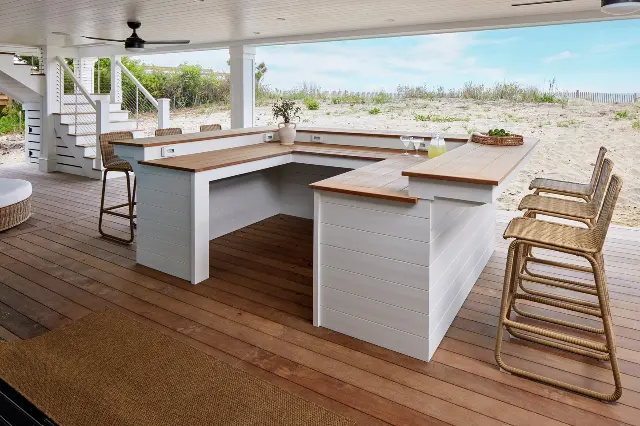
 Why Every Custom Beach Home Wants a Bar, From Morning Coffee to Cocktails
#Cocktails
1 ideas
Why Every Custom Beach Home Wants a Bar, From Morning Coffee to Cocktails
Get new #Cocktails ideas by email
Every Thursday: the week's best ideas, with the newest from #Cocktails.
Related tags
Cocktails: A Beginner's Guide to Mixing at Home
A cocktail is a drink made by combining a spirit or wine with other ingredients — citrus, sugar, bitters, herbs, sodas, juices — to create something more balanced than any of its parts. The word has been in English for a couple of centuries, and its exact origin is disputed; what matters more is the idea behind it: measured mixing rather than guesswork.
Where it comes from
Mixing drinks with sugar, water and bitters goes back to the punch bowls of the 17th and 18th centuries, when spirits travelling on ships were softened with citrus and spice. From those large-format bowls came the single-serving drink, and from there the bartender's craft grew into a profession with its own repertoire. The twentieth century gave cocktails their golden ages and their lean years, and today the tradition sits comfortably alongside a strong interest in low-alcohol and alcohol-free versions of the same drinks.
The main families
Read more
Most classic recipes fall into a few loose groups:
- Built drinks, assembled directly in the glass over ice, like a highball or a gin and tonic.
- Stirred drinks, chilled with ice and strained, usually clear and spirit-forward, like a martini or a Manhattan.
- Shaken drinks, agitated to chill fast and add texture, like a daiquiri or a margarita.
- Sours, built on the trio of spirit, citrus and sweetener, sometimes finished with egg white for a soft foam.
- Long drinks and fizzes, lengthened with soda or ginger beer.
- Frozen and blended drinks, thick with ice and fruit.
The idea of balance
A good drink is rarely about a single ingredient. Think in terms of strong, sweet, sour and aromatic, and adjust one against another. Too sharp? A little syrup. Too sweet? A squeeze of lemon. Too strong or too thin? More spirit, or more ice. Recipes are starting points, not laws — your own palate decides when a drink is right.
What beginners should know
Start with a small set of tools: a shaker, a strainer, a jigger for measuring, a long spoon and a sharp knife. Measuring properly matters more than any gadget; free-pouring is a skill you earn later, and consistency is what lets you taste a change and know what caused it.
Use plenty of ice. Cold is an ingredient, and a drink that sits warm tastes flat. Fresh citrus juice makes a noticeable difference over bottled, and quality matters in drinks with few components — a three-ingredient cocktail has nowhere to hide.
Practical tips
Chill your glasses, and chill the spirits you plan to serve neat or stirred. Add the cheapest ingredient — ice — generously, and the expensive one carefully. Taste as you go, and write down what you changed so you can repeat a good result.
If you serve alcohol, offer something equally considered without it: a citrus-and-soda spritz, a shrub, a good tonic. Pace yourself, keep water nearby, eat something, and never pressure anyone to drink. A well-made cocktail is a pleasure to be savoured slowly, not a test of endurance.
#Cocktails: frequently asked questions
How do I get started making cocktails at home?
Begin with a handful of tools rather than a full bar setup: something to shake with, a strainer, a measuring jigger, a long spoon and a good knife. Measure your ingredients instead of pouring by eye at first, because repeating a drink exactly is what teaches you what each change does. Pick one or two simple recipes you enjoy and make them until they feel easy before expanding.
What equipment and ingredients do I really need?
The essentials are modest — a shaker, a strainer, a jigger and a long spoon will cover most classic drinks. For ingredients, fresh citrus juice, a sweetener such as syrup, and a bottle or two of spirit take you a long way. Plenty of ice matters as much as any tool, since a warm drink tastes dull and flat.
Which type of cocktail should I choose?
It depends on what you feel like drinking: built and long drinks are light and refreshing, stirred drinks are strong and spirit-forward, and shaken drinks are brighter with a softer texture. Sours balance spirit with citrus and sweetness, while frozen versions are thick and fruit-driven. Try one family at a time and notice which style suits your taste.
How do I fix a drink that doesn't taste right?
Think in terms of strong, sweet, sour and aromatic, and adjust one against the others. If it's too sharp, add a touch of syrup; if it's too sweet, squeeze in more lemon or lime; if it tastes thin or weak, add more spirit or more ice. Taste as you go and note what you changed so you can repeat it later.
What are common beginner mistakes?
The most frequent ones are guessing at quantities, skimping on ice, and using bottled juice where fresh would make a real difference. Another is overcomplicating things — a drink with only a few components has nowhere to hide, so quality matters more there. Chill your glass and your spirits too, since cold is genuinely part of the recipe.
How can I serve cocktails at a gathering, including for guests who don't drink?
Offer something equally considered without alcohol — a citrus and soda spritz, a shrub, or a good tonic — so nobody feels like an afterthought. Keep water within reach, have food out, and let people set their own pace without pressure. A well-made drink is meant to be sipped slowly and enjoyed, not treated as a challenge.
Videos come from YouTube and posts from Instagram; titles and summaries are our own. All rights belong to their creators.