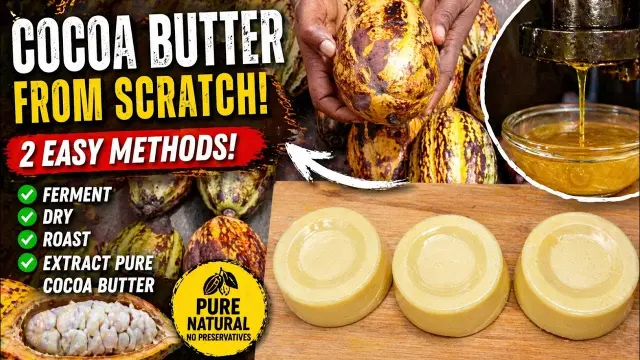
 How to Make Pure Cocoa Butter from Scratch Using Fresh Cocoa Pods
#Cocoa Butter
1 ideas
How to Make Pure Cocoa Butter from Scratch Using Fresh Cocoa Pods
Get new #Cocoa Butter ideas by email
Every Thursday: the week's best ideas, with the newest from #Cocoa Butter.
Related tags
Cocoa Butter: A Complete Guide to the Ingredient
Cocoa butter is the natural fat found inside the cocoa bean, the seed of the cacao tree. It is what gives chocolate its smooth, melting texture, and it is also one of the most loved ingredients in homemade body care. Understanding where it comes from and how it behaves makes it much easier to work with, whether you are tempering chocolate or whipping up a balm.
What it is and where it comes from
Cacao trees grow in warm, humid climates near the equator, where their pods are harvested and split open to reveal the beans. The beans are fermented and dried, then roasted and ground. Grinding releases a dark, oily paste called cocoa liquor, and pressing that paste separates the fat from the solid mass. The fat is cocoa butter; the leftover solids become cocoa powder. Because it is pressed rather than chemically extracted, cocoa butter is a simple, single-ingredient fat.
At room temperature it is firm, creamy in colour and smells faintly of chocolate. One of its most useful qualities is how it melts: solid until it reaches roughly body temperature, then turning to a light oil. That behaviour is why it feels pleasant on the skin and why it matters so much in chocolate making.
Read more
The main kinds
- Raw or unrefined cocoa butter is pressed and left largely as it is. It keeps a warm, yellowish tint and a strong chocolate aroma, which is lovely in balms but can be overpowering in delicate products.
- Refined or deodorised cocoa butter has been filtered and treated to remove colour and scent. It is pale and almost neutral, so it suits recipes where you want other fragrances to lead.
- Food-grade and cosmetic-grade versions are sold separately. Use food-grade for anything you eat, and never assume that a cosmetic product is safe to cook with.
Ways it is used
In the kitchen it appears in chocolate, ganache, and homemade confectionery, where its melting point and setting behaviour do most of the work. In skin care it is the base of body butters, lotion bars, lip balms and salves. Hair care recipes use small amounts to add weight and softness to dry, coarse or textured hair.
What beginners should know
Melting is the step to get right. Use gentle, indirect heat, such as a bowl set over a pan of simmering water, and never let it overheat or come near a direct flame. Stir as it melts, and remove it from the heat as soon as it is liquid.
Cocoa butter sets firm, so a little goes a long way. In balms and lotion bars it is usually combined with a softer oil to keep the finished product spreadable. Try a small batch first and adjust the ratio to your taste.
Because it is rich and fairly heavy, many people prefer it on the body, hands, feet and lips rather than the face. Test any new recipe on a small patch of skin before using it widely, and keep handmade products in a cool, dark place.
Finally, expect variation. Cocoa butter is a natural product, so colour and scent differ from batch to batch. That is not a flaw, just part of the charm.
#Cocoa Butter: frequently asked questions
What do I need to start working with cocoa butter at home?
You mainly need the cocoa butter itself plus a gentle way to melt it, such as a heatproof bowl set over a pan of simmering water, and a spoon or spatula for stirring. A small mould or clean jar for the finished balm or bar helps, and a softer oil like a liquid carrier oil is useful for keeping the result spreadable. Starting with a small batch means you can adjust the texture without wasting much.
Should I choose raw or refined cocoa butter?
Raw cocoa butter keeps its warm yellowish colour and strong chocolate aroma, which is charming in lip balms and body bars but can dominate a delicately scented recipe. Refined cocoa butter is pale and nearly neutral, so it lets other fragrances and colours lead. Pick raw for character, refined for control, and make sure you buy food-grade only for anything you plan to eat.
How do I melt cocoa butter without ruining it?
Use indirect heat, keeping the butter in a bowl above simmering water rather than over a flame, and stir as it softens. Pull it off the heat the moment it turns liquid, since overheating dulls the aroma and can make the finished product grainy. Patience here matters more than speed.
Why did my cocoa butter balm turn out too hard?
Cocoa butter sets very firm on its own, so it usually needs to be softened with a liquid oil to stay spreadable. A balm that feels like a candle is a sign the cocoa butter was too dominant, not that anything went wrong. Melt it again, work in a little more soft oil, and note the ratio you liked for next time.
How should I store handmade cocoa butter products?
Keep them in a cool, dark place, since warmth softens the bars and light fades the natural colour and scent over time. A cupboard away from the stove or a sunny windowsill is usually enough. Small jars with tight lids also keep dust and moisture out.
Can I use cocoa butter on my face?
It is rich and fairly heavy, so most people prefer it on the body, hands, feet and lips rather than the face. If you want to try it on facial skin, patch-test a small area first before applying it more widely. The same advice applies to any new recipe you make, since everyone's skin responds differently.
Videos come from YouTube and posts from Instagram; titles and summaries are our own. All rights belong to their creators.