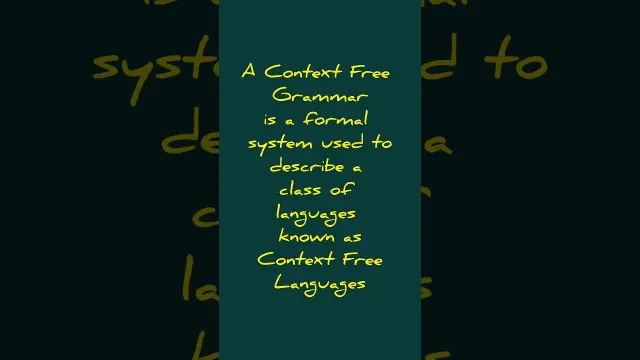
 Quick Introduction to Context Free Grammar in Compiler Design
#Coding
4 ideas
Quick Introduction to Context Free Grammar in Compiler Design
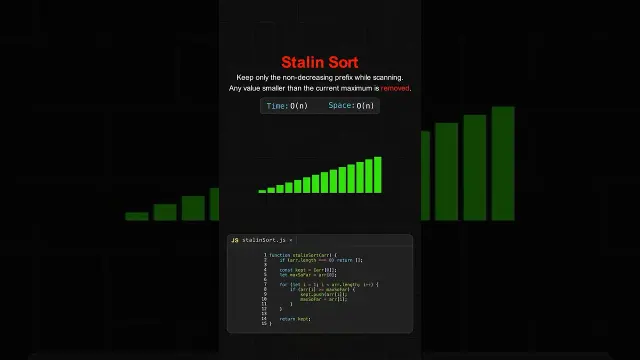 Implementing the Brutal Stalin Sort Algorithm in JavaScript
 What Is an Algorithm Explained Through Real World Examples
 Beginner Python Programming Explained Visually With Notebooks
Get new #Coding ideas by email
Every Thursday: the week's best ideas, with the newest from #Coding.
Related tags
Coding: A Beginner’s Guide to Writing Code
Coding, also called programming, is the process of giving instructions to a computer in a language it can understand. Those instructions can make a website respond, a game move, an app store data, or a device behave in a useful way. At its core, coding is about breaking a problem into small steps and expressing those steps clearly.
Computers do not understand human language in the same way people do, so programmers use programming languages such as Python, JavaScript, Java, C++, and many others. Each language has its own rules and is suited to different kinds of tasks. Some are often chosen for web development, some for data work, some for mobile apps, and some for systems programming. The good news is that once you learn the basic ideas in one language, many of those ideas carry over to others.
What coding is used for
Coding is used in many everyday places, often without you noticing it. It helps power websites, mobile apps, online forms, digital games, smart devices, and tools that organize information. It also supports automation, which means letting a computer handle repetitive tasks that would take a person much longer to do by hand.
Read more
At a simple level, coding is about:
- storing and changing data
- making decisions based on conditions
- repeating actions with loops
- taking input and producing output
- connecting different parts of a program together
Common styles and approaches
Different kinds of projects call for different ways of coding. A few common ideas are worth knowing:
- Procedural programming: you write a series of steps in order, like following a recipe.
- Object-oriented programming: you group data and behavior into objects, which can help organize larger programs.
- Functional programming: you focus on combining functions and using them in clear, predictable ways.
- Event-driven programming: the program responds to actions such as clicks, key presses, or messages.
You do not need to master all of these at once. Many beginners start by learning one language and one style, then build from there.
What beginners should know
If you are just starting out, focus on the basics rather than trying to learn everything at once. The most useful early ideas are variables, data types, conditionals, loops, functions, and simple debugging. Variables store information. Conditionals help a program choose between options. Loops repeat actions. Functions let you reuse a set of instructions.
It also helps to get comfortable with mistakes. Errors are a normal part of coding. Debugging is the process of finding and fixing those mistakes, and it is one of the most important skills a programmer develops.
Practical tips for learning
- Start with small projects, such as a calculator, a to-do list, or a simple game.
- Practice regularly, even for short sessions.
- Read other people’s code to see how ideas are put together.
- Type code yourself instead of only watching tutorials.
- Change examples and see what happens.
- Ask clear questions when you get stuck.
Coding becomes much easier when you treat it as a skill built through repetition. The more you practice reading, writing, and testing code, the more natural the logic will feel.
Videos come from YouTube and posts from Instagram; titles and summaries are our own. All rights belong to their creators.