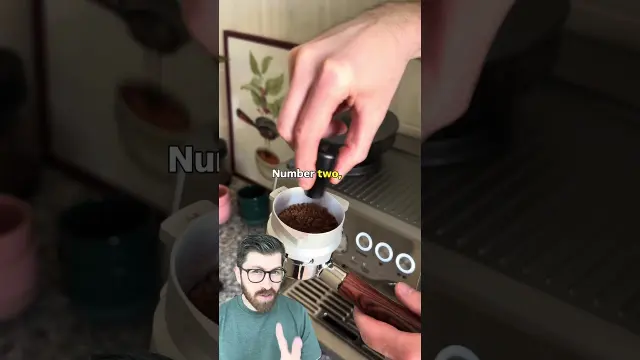
 Reducing Spraying and Channelling on the Barista Express
#Coffee Grinding
1 ideas
Reducing Spraying and Channelling on the Barista Express
Get new #Coffee Grinding ideas by email
Every Thursday: the week's best ideas, with the newest from #Coffee Grinding.
Related tags
Coffee Grinding: A Beginner's Guide to Better Brews
Grinding is the step between a roasted bean and a cup of coffee, and it shapes the result more than most people expect. A whole bean keeps its aromatics locked inside; once it is broken open, the surface area exposed to air and water multiplies enormously, and the fragile oils and gases that carry flavour begin to escape within minutes. That is why freshly ground coffee smells so much more intense than the same coffee ground an hour earlier, and why grinding just before brewing is one of the simplest improvements you can make at home.
What grinding actually does
Coffee is extracted when hot water dissolves soluble compounds from the grounds. Finer grounds expose more surface, so water pulls flavour out faster; coarser grounds slow the process down. Grind too fine for your method and the water struggles through, over-extracting bitterness and astringency. Grind too coarse and it flows through too quickly, leaving a thin, sour, underdeveloped cup. Matching grind to brewing method is therefore the first thing to get right.
Grind sizes by method
Read more
There is no universal setting, only ranges that suit each brewer.
- Coarse, like sea salt: French press and cold brew, where long contact time needs slow extraction.
- Medium-coarse to medium: drip machines, Chemex and other pour-over cones.
- Medium-fine: cone-shaped pour-over drippers and some single-cup brewers.
- Fine, like table salt: Moka pots and espresso, where water is pushed through under pressure in seconds.
Espresso is the least forgiving: small changes in grind shift the flow noticeably, which is why espresso drinkers adjust almost daily as beans age.
Burr versus blade
Blade grinders chop unevenly, producing a mix of dust and boulders, so the cup tastes simultaneously bitter and weak. Burr grinders crush beans between two abrasive surfaces and give a far more consistent particle size, which matters most for espresso and pour-over. Conical and flat burr grinders are the two common designs; both are a worthwhile upgrade, and hand burr grinders are a practical, quiet option for smaller quantities.
Practical tips
Buy whole beans and grind the amount you need, ideally within minutes of brewing. Keep beans in an airtight container away from light and heat, and grind in short pulses or a steady rhythm rather than letting the machine run hot. As beans age they release gas and need a slightly finer setting for the same result, so expect to adjust over the weeks after a bag is opened. Clean the grinder regularly, since stale oils clinging to the burrs taint later batches.
Finally, taste is the only reliable test. If a cup is harsh and drying, go coarser; if it is weak and sharp, go finer. Small, single adjustments, one cup at a time, will teach you more than any chart.
Videos come from YouTube and posts from Instagram; titles and summaries are our own. All rights belong to their creators.