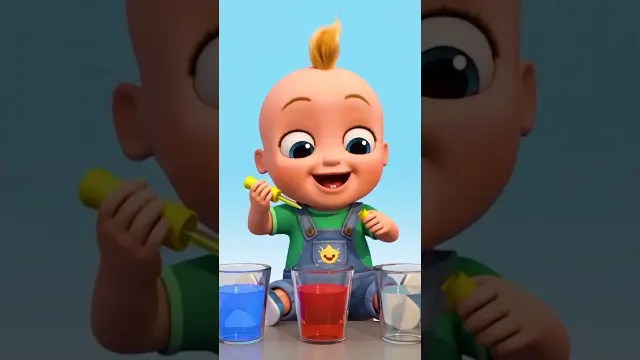
 Color Recognition Learning Game with Water for Toddlers
#Color Recognition
1 ideas
Color Recognition Learning Game with Water for Toddlers
Get new #Color Recognition ideas by email
Every Thursday: the week's best ideas, with the newest from #Color Recognition.
Related tags
Color Recognition for Young Children
Color recognition is the ability to notice, name, and match colors in the world around you. It is one of the first visual skills children begin to develop, and it often appears through everyday play, pictures, objects, clothing, and nature. Learning colors helps a child sort, compare, describe, and pay attention to details, which supports language and early thinking skills.
What color recognition means
At its simplest, color recognition is understanding that red is different from blue, yellow from green, and so on. A child may first learn to point to a color when asked, then later name it, and eventually use it in speech and sorting games. Some children learn color words quickly, while others need repeated practice over time. That is completely normal.
Color recognition is usually learned alongside other skills such as shape recognition, size comparison, counting, and vocabulary. You can help by keeping the experience relaxed and playful rather than turning it into a test.
Read more
How children learn colors
Children often learn colors best through repetition and real objects. They may notice a bright ball, a cup, a flower, or a piece of clothing and begin to connect the visual color with the name. Seeing the same color in different places helps the idea become clearer. For example, a child can learn that a banana, a toy truck, and a drawing may all share the same yellow.
Simple experiences are often the most effective:
- Sorting blocks, buttons, crayons, or toys by color
- Naming colors during daily routines
- Pointing out colors in books, food, clothes, and nature
- Playing matching games with cards or objects
- Asking gentle questions like “Can you find something red?”
Common ways to practice
There are many easy and low-pressure ways to build color recognition. Water play, painting, collage, and stacking toys can all be useful because they let a child explore colors with their hands and eyes at the same time. Crafts can also help, especially when you ask a child to choose one color or find several items of the same color.
Try these ideas:
- Use a single color for a short matching game
- Choose two colors at first, then add more later
- Repeat the color name naturally during play
- Mix touch, sight, and movement, such as finding a colored object across the room
- Keep sessions brief if a child loses interest
What beginners should know
Some children confuse similar colors at first, and that is a normal part of learning. They may also remember one favorite color very well before learning others. A child does not need to learn colors in any fixed order. Focus on a calm, encouraging approach and use clear, consistent color words.
If you are helping a young child, remember that color recognition grows best when it is part of everyday life. The goal is not perfect performance, but steady familiarity. With time, patience, and play, colors become something the child can notice, name, and enjoy with confidence.
Videos come from YouTube and posts from Instagram; titles and summaries are our own. All rights belong to their creators.