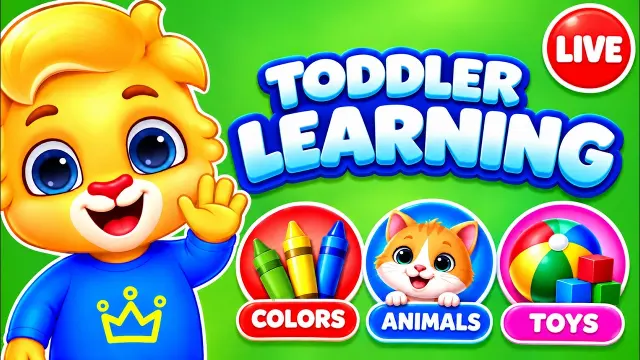
 Live Toddler Learning Session with Colors, Numbers, and First Words
#Colors and Shapes
1 ideas
Live Toddler Learning Session with Colors, Numbers, and First Words
Get new #Colors and Shapes ideas by email
Every Thursday: the week's best ideas, with the newest from #Colors and Shapes.
Related tags
Colors and Shapes for Early Learning
Colors and shapes are some of the first ideas children learn to notice in the world around them. They help with early language, observation, sorting, drawing, and the ability to describe what they see. Before a child can read or count confidently, they often begin by naming a red ball, a round plate, or a blue square. These everyday observations build a foundation for later learning.
What colors and shapes are
Colors are the visual qualities we use to describe how things look, such as red, yellow, green, or purple. Shapes are the forms objects take, such as circles, squares, triangles, and rectangles. Some shapes are simple and easy to recognize at a glance, while others are more complex and appear in patterns, pictures, or objects with many sides.
Children usually start with the most familiar colors and basic shapes. Over time, they learn to compare, match, and classify them. This can happen through play, drawing, puzzles, building blocks, books, and everyday conversations.
Read more
Why they matter
Learning colors and shapes supports many early skills:
- naming and vocabulary
- attention and memory
- sorting and matching
- visual awareness
- early math thinking
- hand-eye coordination
When a child picks out a blue cup or fits a triangle into a shape sorter, they are doing more than identifying an object. They are learning to notice differences, make choices, and connect words with what they see.
Common ways children learn them
Many children learn best through repeated, simple experiences. You can help by using colors and shapes naturally throughout the day. Point out a round apple, a square tile, or a yellow shirt. Talk about what you both see without turning it into a test.
Helpful activities include:
- sorting toys by color or shape
- looking for circles, squares, and triangles in the home
- drawing basic shapes together
- using blocks, beads, or puzzles
- reading picture books that repeat color and shape words
- asking simple questions like “Which one is red?” or “What shape is this?”
Tips for beginners
Start small and keep things familiar. A young child does not need to learn every color or shape at once. Begin with a few that are easy to tell apart, then repeat them often in different settings.
It also helps to stay consistent with names. If you are teaching a shape, use the same word each time. For example, a shape may look different in different colors or sizes, but it is still a circle if it has a round outline.
A gentle approach
Some children learn to name colors and shapes quickly, while others need more time. That is completely normal. The goal is not speed, but confidence. Focus on simple repetition, playful practice, and everyday language. When learning feels calm and familiar, children are more likely to notice, remember, and enjoy it.
Videos come from YouTube and posts from Instagram; titles and summaries are our own. All rights belong to their creators.