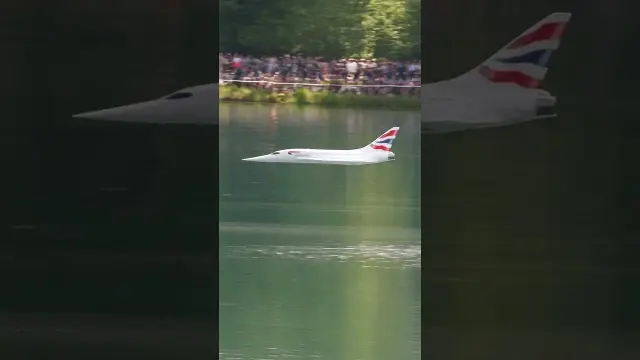
 Concorde Supersonic Airliner RC Scale Model Flight
#Concorde
1 ideas
Concorde Supersonic Airliner RC Scale Model Flight
Get new #Concorde ideas by email
Every Thursday: the week's best ideas, with the newest from #Concorde.
Related tags
Concorde: the Supersonic Airliner
Concorde was a supersonic passenger aircraft, designed to fly faster than the speed of sound while carrying travelers in comfort. It became one of the most recognisable achievements in aviation, admired for its sleek shape, narrow fuselage, and pointed nose. Even people who know little about aircraft often recognise Concorde at a glance.
What Concorde was
Concorde was built as a high-speed airliner for long-distance travel. Its purpose was simple: to reduce flying time dramatically on certain routes. Instead of treating speed as a military advantage, Concorde brought it into commercial aviation and made it part of the passenger experience. That made it unusual, and it gave the aircraft a special place in aviation history.
The name itself became synonymous with elegance, engineering, and modernity. For many people, Concorde represented the idea that air travel could be both practical and extraordinary.
Read more
Where it came from
Concorde was developed through an international collaboration between European aviation partners. It emerged during a period when designers and engineers were exploring the possibilities of supersonic flight for civilian use. Creating such an aircraft required solving difficult problems involving heat, noise, fuel use, cabin layout, and aerodynamic stability.
Its design was shaped by those demands. The long, slender body, delta wing, and characteristic drooping nose were all part of making the aircraft work at very high speeds while still allowing pilots to see clearly during takeoff and landing.
What made it distinctive
Concorde stood apart from conventional airliners in several ways:
- It flew faster than the speed of sound.
- It had a highly distinctive silhouette.
- It carried fewer passengers than many other airliners.
- It was designed with a strong emphasis on streamlined aerodynamics.
The experience of flying on Concorde was also different. The cabin was smaller and more intimate than that of many large jetliners, and the aircraft was associated with a sense of occasion. Because of its speed and rarity, it became a symbol of luxury as well as technology.
Main features and design ideas
Concorde’s shape was not just beautiful; it was functional. Supersonic flight creates very different aerodynamic conditions from ordinary jet travel, so every part of the aircraft had to be carefully considered. Its delta wing helped with stability at high speed, while the drooping nose improved visibility for the flight crew during the lower-speed phases of a journey.
For aviation enthusiasts, Concorde is often admired for the balance of engineering and style. It is a reminder that an aircraft can be both highly technical and visually striking.
What beginners should know
If you are just learning about Concorde, start with a few simple ideas:
- It was a passenger aircraft, not a military jet.
- Its main claim to fame was speed.
- Its design was created around the challenges of supersonic travel.
- It became an icon because it was rare, advanced, and instantly recognisable.
Concorde also helps explain a broader truth about aviation: every aircraft is a compromise between speed, comfort, efficiency, range, and safety. Concorde pushed the idea of speed further than most commercial aircraft ever did.
Why it still fascinates people
Concorde remains fascinating because it combines ambition with elegance. It belongs to the history of engineering, but it also lives in the imagination. For many people, it stands for a time when aircraft design felt bold and visionary, and when flying could seem as much about wonder as about getting from one place to another.
#Concorde: frequently asked questions
What made Concorde different from ordinary airliners?
Concorde was a passenger aircraft built to cruise faster than the speed of sound, which turned long-haul flying into something much shorter than travellers were used to. Its slim fuselage, delta wing and pointed nose made it instantly recognisable on the ground and in the air, and it carried fewer passengers in a smaller, more intimate cabin. That combination of speed and rarity is what gave it the sense of occasion people still associate with it.
Why does Concorde look so different from other planes?
Every distinctive feature of Concorde came from the demands of supersonic flight rather than from styling alone. The delta wing gave stability at very high speed, while the drooping nose let the crew see the runway clearly during the slower takeoff and landing phases. The narrow body reduced drag, so the shape that looks so elegant is really a set of engineering compromises worked out in metal.
How do I get started with a Concorde project, such as a model or display piece?
Begin by deciding what the finished piece is for: a flying scale model, a static display, or a decorative craft, since each one asks for different materials and levels of detail. Read the instructions or plans all the way through first, lay out everything you need before you cut or glue anything, and work on a clean, well-lit surface. Keeping the nose shape and wing profile faithful to the original matters most, because those are what make the aircraft recognisable.
Which kind of Concorde project should I choose?
If you want something to build and fly, a lightweight scale model rewards patience and careful balance; if you mainly want the iconic silhouette on a shelf or in a room, a static model or paper craft is quicker to finish and easier to display. Think about the space you have, the tools you are comfortable using, and how much time you want to give it. A simpler kit finished well usually looks better than an ambitious one abandoned halfway.
How should I care for a finished Concorde model?
Keep it out of direct sunlight and away from damp, since fading and warping are the usual culprits in long-term damage. Dust it gently with a soft brush rather than a wet cloth, and handle it by the base or stand instead of the nose and wing tips. Store flying models with the wings supported so they don't gradually bend out of shape.
What mistakes do beginners make with Concorde models and crafts?
The most common slip is rushing the assembly and adding too much glue or paint, which spoils the clean lines that define the aircraft. Another is ignoring balance and weight distribution, which matters greatly on anything meant to fly, and skipping a test fit before committing to a final position. Taking it slowly and dry-fitting parts first solves most of these problems before they happen.
Videos come from YouTube and posts from Instagram; titles and summaries are our own. All rights belong to their creators.