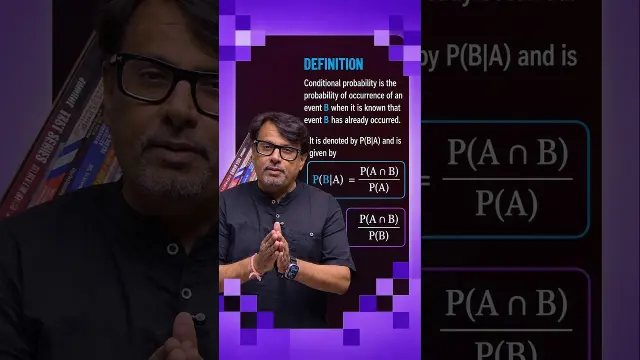
 How to find conditional probability with an example
#Conditional Probability
3 ideas
How to find conditional probability with an example
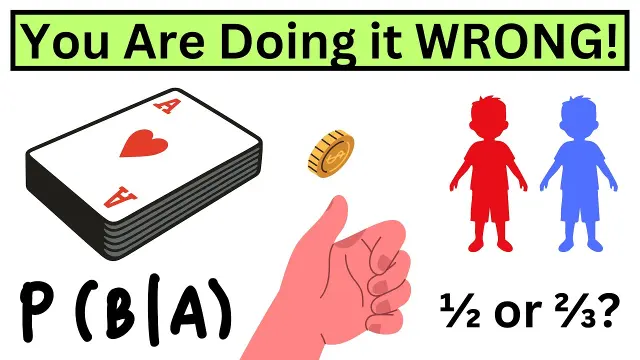 A step-by-step method for tackling probability questions
 Working Through a Probability Problem Without Shortcuts
Get new #Conditional Probability ideas by email
Every Thursday: the week's best ideas, with the newest from #Conditional Probability.
Related tags
Conditional Probability: A Beginner's Guide
Conditional probability is the branch of probability that asks a narrower question than usual. Instead of "how likely is this?" it asks "how likely is this, given that something else is already true?" The extra knowledge reshapes the space of possibilities, and the answer changes with it.
What the idea actually says
Every probability question has a background of possible outcomes. Conditioning means setting aside the part of that background the new information rules out, and measuring what remains. If you know that a card drawn from a deck is red, the chance it is a heart is no longer one in four: only red cards are still in play, and half of those are hearts.
In notation this is written with a vertical bar. P(A|B) reads "the probability of A given B". The defining relationship is that the probability of A given B equals the probability of both events happening together, divided by the probability of the condition. The condition itself must have a real chance of occurring, otherwise the division has no meaning.
Read more
Where intuition goes wrong
The most common error is swapping the two sides of the bar. The chance of a symptom given an illness, and the chance of an illness given a symptom, are different numbers, and confusing them leads to badly mistaken conclusions. A test that is wrong in only a small share of cases can still produce a positive result that is more likely wrong than right, when the condition being tested for is rare. That reversal feels counterintuitive, and it is worth working through slowly until it stops feeling that way.
- The condition is knowledge, not an action: it narrows the world rather than changing it.
- Base rates dominate outcomes, so start by asking how common the condition is in the first place.
- Independence is a special case: two events are independent when knowing one tells you nothing about the other.
Ways to work a problem
Two habits cover most situations. A two-way table lists outcomes by two characteristics at once, and reading a row or a column against its total gives the conditional probability almost by eye. A tree diagram splits a process into stages, each branch labelled with its chance; a conditional probability is then the label on a later branch, read after following the path that leads to it.
Reversing a conditional, going from the probability of A given B to the probability of B given A, needs the rule that combines the condition's overall rate with the rates in each case. Draw it as a tree with the two cases as the first split, and the arithmetic becomes bookkeeping rather than guesswork.
For beginners
Write down what is known before calculating anything, and name the condition out loud. Check whether the question asks for "both" or for "given", because they are not the same thing. And when an answer feels surprising, test it on a small invented population, a hundred or a thousand imaginary cases, where the counts are visible. Concrete numbers expose a reversed conditional far faster than a formula does.
#Conditional Probability: frequently asked questions
How do I start solving a conditional probability problem?
Begin by naming what is already known, then ask what is left possible after that information is taken into account. It often helps to restate the question in plain language as "the chance of this, given that this is true" before doing any calculation.
What information do I need before I can calculate conditional probability?
You need the condition itself to have a real chance of happening, plus enough information to describe the overlap between the two events. A two-way table or a tree diagram usually makes the known pieces easier to see and count.
Should I use a table or a tree diagram for a conditional probability question?
A table is useful when you are comparing two categories and want to read chances from rows or columns. A tree diagram works well when the problem happens in stages, because each branch shows how the earlier condition changes what comes next.
What is the biggest mistake people make with conditional probability?
A common mistake is reversing the condition and the event, which gives a very different answer. Another frequent error is ignoring how common the starting condition is, even though base rates can strongly affect the result.
How can I check whether my answer to a conditional probability problem makes sense?
Try imagining a small, concrete set of cases and see whether your answer matches the counts you would expect. If the result feels surprising, double-check that you used the correct "given that" part and did not treat the two events as interchangeable.
Videos come from YouTube and posts from Instagram; titles and summaries are our own. All rights belong to their creators.