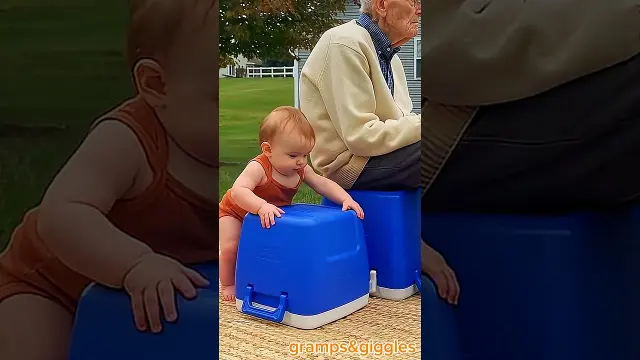
 Baby Copying Grandpa Stretching His Back
#Copycat
1 ideas
Baby Copying Grandpa Stretching His Back
Get new #Copycat ideas by email
Every Thursday: the week's best ideas, with the newest from #Copycat.
Related tags
Copycat: Why We Copy the People We Love
Every family knows the scene: someone stretches, sighs and reaches for the ceiling, and a small person beside them does exactly the same. The copy is imperfect, slightly exaggerated, and completely sincere. We call it being a copycat, usually with affection — and behind that teasing word sits one of the quiet engines of human learning.
What the word means
"Copycat" is an old English coinage, joining the idea of copying to the cat, an animal long used in English as a mild insult. It began as a children's taunt, the rhyme-and-sing-song accusation traded on playgrounds, and it still carries that tone: half scolding, half delighted. To copy someone is to notice them closely enough to reproduce them, which is why the accusation so often comes with a grin.
Imitation as a way of learning
Read more
Long before children can explain anything, they borrow it. A baby who copies a yawn or a wave is practising the strange business of being a person, matching another body with their own. Later come the borrowed phrases, the copied walk, the sudden interest in a grown-up's hobby. Imitation is not laziness or a lack of imagination; it is the scaffolding that imagination is later built on. Watch two people talking and you will see it in adults too, postures settling into the same shape, laughter arriving in the same moment. We mirror each other without deciding to.
The many faces of copying
The same impulse wears very different clothes. In the kitchen, a cook sets out to recreate a favourite dish from memory, working backwards from taste. In crafts, someone studies a finished object and works out how it was made. In writing and music, imitation is part of an honest apprenticeship — copying a style closely is how a maker discovers what feels like their own hand. Children copy friends, siblings and heroes. And in nature, harmless trickery runs the other way: insects and birds that look like something they are not, using resemblance as a defence.
What beginners should know
If you want to learn by copying, choose examples you genuinely admire and stay with them long enough to notice the small decisions — the seam, the seasoning, the sentence that does not quite end where you expected. Copying well is an act of attention, not of theft. It also helps to name what you are doing: borrowed, studied, and then changed. And when you are on the other side of it, remember that being copied is usually a compliment with clumsy manners.
A few practical notes
- Copy to understand, then alter something deliberately, so the work becomes yours.
- Let children imitate freely; it is how they practise confidence.
- Praise the noticing behind a copy, not only the result.
Mostly, being a copycat is a sign of affection. We copy the people we watch most closely, and we watch most closely the people we love.
#Copycat: frequently asked questions
Why do young children copy everything the adults around them do?
Imitation lets a child try on a behaviour before they have any words for it — a stretch, a wave, a favourite phrase. Matching another person's body and voice is how they practise the whole business of being someone. It comes out of close attention rather than mischief, which is why it so often arrives with a grin.
Does copying someone else's work count as stealing?
Copying well is an act of attention, and it is how most people learn a craft, a recipe or a way of writing. What keeps it honest is naming what you borrowed and then changing something deliberately so the piece becomes yours. It only turns sour when a close copy is passed off as entirely your own.
How do I pick what to copy when I'm learning something new?
Choose examples you actually admire rather than ones that are simply easy or everywhere. Then stay with a single piece long enough to catch the small decisions — the seam, the seasoning, the sentence that doesn't end where you expected. Those details are the real lesson; the finished object is only the surface.
What should I do when someone copies my work?
Being copied is usually a compliment with clumsy manners — it means someone looked closely enough to want the same thing. A calm word about where the idea began often settles it without a fight. Keep your energy on the next piece rather than on policing the last one.
How can I encourage a child who imitates other people constantly?
Let them imitate freely and praise the noticing behind the copy, not just the result — ask what they spotted in the person they were following. Pointing out that they borrowed, studied and then changed something gives them language for what they're already doing. Copying confidently is how they build the confidence to stop copying.
Videos come from YouTube and posts from Instagram; titles and summaries are our own. All rights belong to their creators.