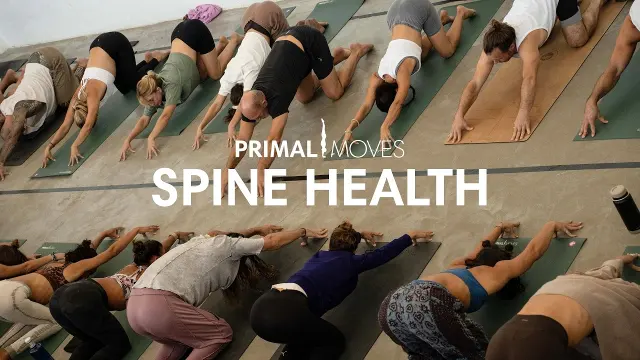
 Primal Moves Conditioning Session Focused on Spine Health
#Core Conditioning
1 ideas
Primal Moves Conditioning Session Focused on Spine Health
Get new #Core Conditioning ideas by email
Every Thursday: the week's best ideas, with the newest from #Core Conditioning.
Related tags
Core Conditioning: A Beginner's Guide to Stability
Core conditioning is the practice of training the muscles that wrap around your trunk and hips to keep your spine steady while your arms and legs move. It is sometimes assumed to be the same thing as abdominal training, but the two aims are different: the point of core work is not to make one muscle visible, it is to build the ability to hold position and transfer force. The core includes the deeper abdominal layers, the obliques, the muscles running along the spine, the glutes, the diaphragm and the pelvic floor. They work as a group, so training them as a group makes sense.
Where it comes from
Structured core training grew out of two places: rehabilitation, where practitioners needed safe ways to help people regain control of their trunk after injury, and athletic preparation, where coaches noticed that strength in the limbs was wasted if the middle of the body could not hold its shape. Pilates and yoga contributed much of the vocabulary — controlled breathing, slow tempo, deliberate alignment — that most modern core programmes still borrow. Over time the ideas moved from clinics and sports halls into general fitness, which is why the same handful of exercises turn up everywhere.
Main kinds of core work
Read more
- Stability and anti-movement work: planks, side planks, carries and dead-bug style drills that train the trunk to resist folding or twisting.
- Rotational work: controlled twists and chopping patterns that build the ability to turn through the middle of the body.
- Flexion and extension work: classic curling and arching movements for the front and back of the trunk.
- Unstable-surface training: work on a ball or balance pad, useful once basic control is in place.
- Flow and movement-based training: sequences where you move through positions on hands and feet, linking the core to the shoulders and hips.
- Breathing-led work: slow, deliberate breathing drills that teach you to manage pressure in the trunk.
What beginners should know
Start with the skill of bracing: a gentle, steady tension through the middle of the body, not a hard hold of the breath. If you cannot breathe while you hold a position, the position is too difficult. Quality beats quantity — a short set of slow, well-controlled repetitions will teach you more than a long set of rushed ones.
Practical tips
Keep sessions short and frequent; the core responds well to regular, modest doses rather than occasional long ones. Learn an exercise on the floor before adding speed, load or instability. Include the back and the hips, not only the front. Rest between sets, stop when control starts to fade, and back off any movement that produces sharp or lasting pain. Finally, treat core work as part of a broader routine that includes walking, whole-body strength and mobility — the trunk is at its best when it has something to support.
#Core Conditioning: frequently asked questions
What is core conditioning actually training?
It trains the group of muscles wrapping around your trunk and hips so your spine stays steady while your arms and legs move. That group includes the deeper abdominal layers, the obliques, the spinal muscles, the glutes, the diaphragm and the pelvic floor, which is why it makes sense to work them together rather than in isolation.
Is core conditioning the same as abdominal training?
They are related but not the same thing. Abdominal training tends to aim at making a particular muscle visible, while core work aims at holding position and transferring force between the upper and lower body. You can have a strong-looking midsection and still struggle to keep your trunk stable under load.
How do I start if I'm completely new to it?
Begin with the skill of bracing: a gentle, steady tension through the middle of the body rather than a hard hold of the breath. A useful check is whether you can keep breathing while you hold a position — if you can't, the position is too hard for now. Slow, well-controlled repetitions teach more than fast or lengthy ones.
Which kind of core work should I choose?
It depends on what you want the trunk to do. Anti-movement drills such as planks and carries build the ability to resist folding or twisting, rotational work builds turning through the middle, and breathing-led drills teach you to manage pressure in the trunk. Unstable surfaces and flow-style sequences are best added once basic control is already there.
What do I need to get started with core work?
Very little — floor space and enough room to lie down and move your limbs freely are the main requirements. Balls, balance pads and other props are optional extras that make sense later, once you can hold the basic positions with good control. Learning a movement on the floor first is the usual route before adding speed, load or instability.
What are the most common mistakes people make?
Rushing the repetitions, holding the breath, and training only the front of the body while ignoring the back and hips are the usual ones. Long, occasional sessions also tend to work less well than short, regular ones, and pushing on once control starts to fade undoes the point of the exercise. Stop when the quality drops, and back off anything that produces sharp or lasting pain.
Videos come from YouTube and posts from Instagram; titles and summaries are our own. All rights belong to their creators.