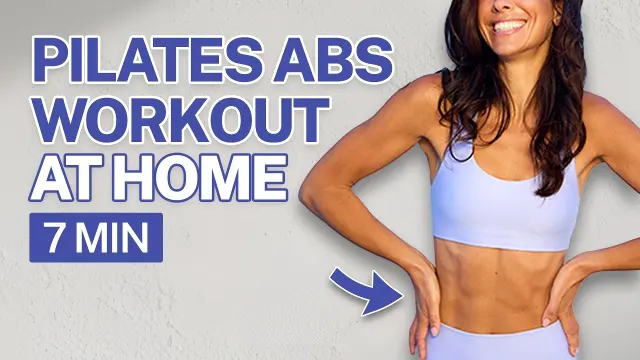
 Seven-Minute Pilates Abs Workout for Beginners at Home
#Core Training
1 ideas
Seven-Minute Pilates Abs Workout for Beginners at Home
Get new #Core Training ideas by email
Every Thursday: the week's best ideas, with the newest from #Core Training.
Related tags
Core Training: A Beginner's Guide to Strength From the Inside
"Core" is a word that gets used loosely, often as a polite synonym for abs. In practice it describes a whole cylinder of muscle around the middle of your body: the abdominals at the front, the obliques at the sides, the deep muscles running along the spine, the diaphragm on top and the pelvic floor underneath. They are not there to look good in a mirror. Their job is to hold the trunk steady while your arms and legs do something else, and to manage the pressure inside your abdomen as you breathe and move.
Where it comes from
Training the trunk deliberately is not new. Gymnastics and yoga have worked with controlled, braced positions for a very long time. Physiotherapists developed many of the exercises now seen in gyms while helping people rebuild control after injury. Pilates built an entire method around the idea that movement quality begins at the centre. Modern strength and sports coaching borrowed from all of these, and the phrase "core training" became a way of grouping work that was never purely about sit-ups.
What it is for
Read more
Almost everything you do passes through the trunk. Lifting a bag, pushing a door, carrying a child, walking downhill, standing still for a long time: the core keeps the spine from being the weak link in each of those moments. That is why athletes train it alongside the big lifts, and why it is often included in rehabilitation and in gentle movement classes.
The main kinds of work
Most exercises fall into a few patterns. Anti-extension work, such as a front plank or a dead bug, teaches you to resist your lower back arching. Anti-rotation work, like pressing a band away from your chest while refusing to twist, or reaching out an arm and the opposite leg in a bird dog, resists turning. Anti-lateral flexion resists leaning sideways, as in a side plank or carrying a weight in one hand. Alongside these sit the slower, breath-led sequences of Pilates and yoga, and simple loaded carries, where you walk with weight and the trunk quietly works to keep you upright.
There are two broad approaches to the breath. One is bracing: a firm, all-around tension in the trunk as you exert force. The other is hollowing or drawing in: a gentler engagement of the deep abdominal wall while you keep breathing. Different teachers prefer different cues, and the honest answer is that both have a place.
If you are starting out
Begin with positions you can hold comfortably rather than with speed or repetitions. Learn what a neutral spine feels like, lying on your back with the natural curve of your lower back intact, before you try to flatten anything. Keep breathing; holding your breath hides whether you are actually in control. Quality beats quantity, and short, frequent sessions do more than one long one.
Stop if you feel sharp pain, numbness or tingling, and get proper guidance if you are pregnant, recovering from surgery or managing a back problem. Aim for steadiness you can carry into real movement, because that is the point of the whole thing.
Videos come from YouTube and posts from Instagram; titles and summaries are our own. All rights belong to their creators.