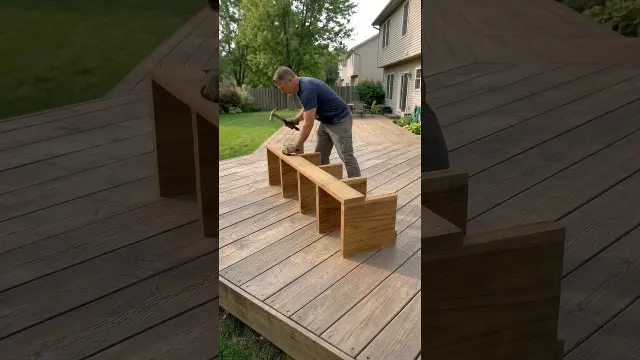
 Creative DIY Wooden Corner Shelf Project for Home Decor
#Corner Shelf
1 ideas
Creative DIY Wooden Corner Shelf Project for Home Decor
Get new #Corner Shelf ideas by email
Every Thursday: the week's best ideas, with the newest from #Corner Shelf.
Related tags
Corner Shelves: Space-Saving Style for Every Home
What a corner shelf is
A corner shelf is a shelf designed to fit into the meeting point of two walls. It makes use of space that is often left empty, turning an awkward corner into a useful and attractive part of the room. Corner shelves can be wall-mounted, freestanding, built into cabinetry, or made as part of a larger storage system.
They are used for both practical storage and decoration. In a kitchen, they can hold small dishes or jars. In a bathroom, they may keep toiletries tidy. In a living room or bedroom, they can display books, plants, framed photos, candles, or other objects you want to keep visible.
Common styles and materials
Read more
Corner shelves come in many styles, from simple and modern to decorative and traditional. The best choice usually depends on the room and the look you want to create.
- Wooden corner shelves are warm and versatile, and they work well in many interiors.
- Metal shelves often feel slimmer and more industrial or contemporary.
- Glass shelves create a light, delicate effect and can suit small spaces.
- Floating corner shelves have a clean look because their fixings are hidden.
- Tiered corner shelves offer several levels for storage or display.
- Freestanding corner units can add more capacity when wall mounting is not possible.
The material should suit the room. For example, moisture-resistant materials are important in bathrooms and kitchens, while a more decorative finish may suit a living area.
How to use them well
A corner shelf works best when it matches the scale of the space. A very large shelf can overwhelm a small corner, while a tiny shelf may look lost in a larger room. Before choosing one, think about what you want it to hold and how much visual weight it will add to the room.
A few practical tips can help:
- Keep the shelf style consistent with nearby furniture or fixtures.
- Avoid overcrowding it, especially if you want it to look calm and tidy.
- Use baskets or small containers if you need to corral loose items.
- Leave some open space so the arrangement feels balanced.
- Make sure wall-mounted shelves are fixed securely and can support the intended weight.
For beginners
If you are new to corner shelving, start simple. A single shelf can be enough to test how the space works. Measure the corner carefully, paying attention to wall angles, height, and clearance around doors, windows, or radiators. This helps you avoid choosing a shelf that looks right in theory but is awkward in practice.
If you enjoy DIY, corner shelves are a popular project because they can be made in straightforward shapes from wood or other suitable materials. Even a basic shelf can look polished with careful sanding, neat joints, and a finish that suits the room.
A useful finishing touch
Corner shelves are one of the easiest ways to add function without taking up much floor space. They help you organise small things, show off pieces you love, and make use of areas that might otherwise feel forgotten. With the right shape, material, and placement, a corner shelf can feel both practical and decorative for years to come.
#Corner Shelf: frequently asked questions
How do I get started with a corner shelf?
Begin by measuring the corner itself rather than the wall around it, since walls are rarely perfectly square and the angle decides which shelf shapes will actually sit flush. Then decide what the shelf is for — a few jars, a plant, books — because that shapes how deep and how sturdy it needs to be. Starting with a modest arrangement is the easiest way to see how the corner behaves before adding more.
What should I consider when choosing the material?
Match the material to the room rather than only to the look: bathrooms and kitchens stay damp, so moisture-resistant finishes matter far more there than in a living room or bedroom. Wood feels warm and suits most interiors, metal reads slim and contemporary, and glass keeps a small corner feeling light. Also think about weight — a shelf meant for books or dishes needs stronger fixings than one holding a candle and a photo frame.
Should I choose a wall-mounted or freestanding corner shelf?
Wall-mounted and floating designs save floor space and give the cleanest look, but they depend on solid fixing points in the wall. Freestanding corner units hold more and need no drilling, which helps in rented homes or where the walls won't take weight. If the corner is narrow or heavily used for walking past, a shallow wall-mounted shelf usually works better.
How do I keep a corner shelf looking calm instead of cluttered?
Treat the shelf as a display with gaps in it — a few well-chosen pieces with breathing room between them read better than a full row of small objects. Baskets and small containers corral loose things like keys, cables or toiletries so the surface stays visually quiet. It also helps to clear the shelf occasionally and put back only what you actually want to see.
How should I care for a corner shelf?
Dust it regularly with a soft cloth before grime builds up in the corner where the two walls meet, and wipe with a barely damp cloth rather than a wet one. Dry wooden shelves promptly and avoid leaving standing water on them, especially near a bathroom or kitchen sink. Every so often, check that the fixings are still firm and that nothing heavier than intended has crept onto the shelf.
What are the most common mistakes with corner shelves?
The usual ones are ignoring scale and clearance — a shelf that overwhelms a small corner, or one placed where it clashes with a door, window or radiator. Overloading is the other frequent problem, both visually and physically, since wall fixings can only carry so much. Measuring the corner carefully and deciding what the shelf will hold beforehand prevents most of these.
Videos come from YouTube and posts from Instagram; titles and summaries are our own. All rights belong to their creators.