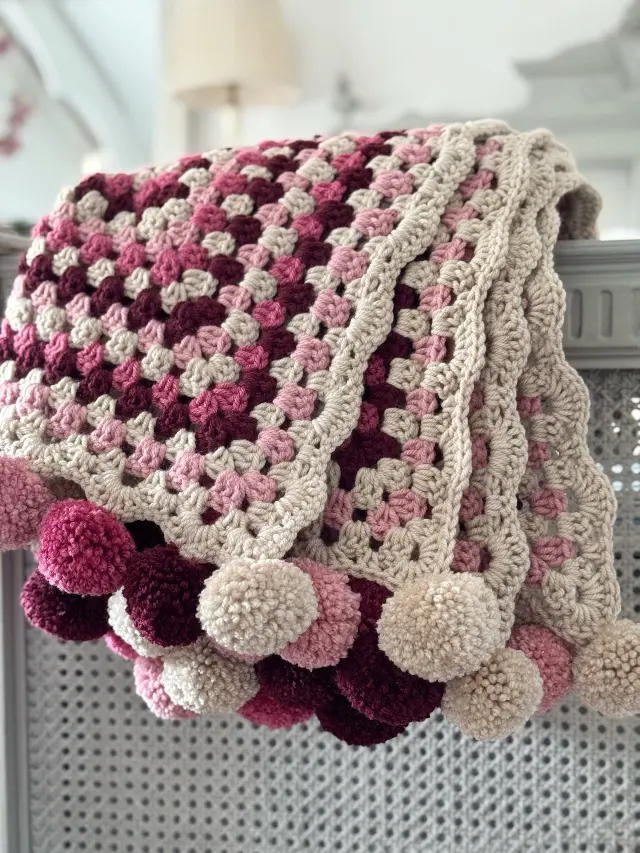
 November Crochet Roundup of Cosy Blankets and Pom-Pom Details
#Cosy Crochet
1 ideas
November Crochet Roundup of Cosy Blankets and Pom-Pom Details
Get new #Cosy Crochet ideas by email
Every Thursday: the week's best ideas, with the newest from #Cosy Crochet.
Related tags
Cosy Crochet: A Guide to Warm, Slow-Made Comfort
Cosy crochet is the softer, slower side of the craft: the part concerned less with intricate lace or wearable tailoring and more with warmth, texture and the everyday pleasure of being wrapped up in something made by hand. It is crochet worked in yarns that feel good against the skin — wool, alpaca, cotton blends, thick chenille — in stitches that build depth and squish rather than delicacy. The appeal is as much the making as the finished object: a repeated stitch, a growing fabric, an hour that passes quietly.
Where it comes from
Crochet as we know it took shape in Europe in the nineteenth century, growing out of older looped-textile and embroidery traditions; the name comes from the French word for hook. Because a single hook can form a fabric from one continuous thread, it stayed a domestic craft — cheap to begin, easy to put down, and passed on from one person to the next rather than taught in institutions. The blankets and household textiles made that way are the direct ancestors of what people now call cosy crochet.
What it is usually made of
Read more
Yarn weight matters more than almost anything else. A thick yarn with a matching large hook works up quickly and gives the dense, chunky texture most people picture; a fine yarn gives drape and detail but takes far longer. Wool and wool blends are warm and springy, cotton is crisp and washable, and synthetic yarns are hard-wearing and easy to care for. Hook sizes are marked in millimetres, and the yarn label usually suggests a range to start from.
Main kinds and styles
- Blankets and throws, from simple striped rectangles to classic granny squares, ripples and continuous joined rounds.
- Textured stitches: bobbles, puffs, post stitches and raised ribs, which give a plain piece its surface interest.
- Small comforts: hot water bottle covers, cushion covers, mug cosies, slippers, mittens and simple soft toys.
- Embellishment: pom-poms, tassels, fringed edges and contrast borders, often the detail that makes a finished piece feel complete.
What beginners should know
- Start with one stitch you can repeat comfortably, a smooth medium or chunky yarn, and a light colour so you can see your loops.
- Crochet terms differ between US and UK patterns; the same word can mean different stitches, so check which system a pattern uses before you begin.
- Count your stitches at the end of each row — most wonky edges come from a lost or added stitch at the turning point.
- Work a small practice square first to check your tension, and keep it as a reference.
- Weave in loose ends as you go rather than saving them all for the end.
Caring for what you make
Follow the yarn label: cool water, gentle washing, and drying flat and shaped rather than hanging, which stretches a heavy blanket out of shape. Fold blankets and store them with the stitch pattern flat.
The point of cosy crochet is not speed. It is the pleasure of a warm, useful thing made slowly, and of knowing how to make another.
#Cosy Crochet: frequently asked questions
How do I get started with cosy crochet if I have never held a hook?
Begin with one simple stitch you can repeat without thinking, a smooth chunky yarn and a light-coloured hook-friendly yarn so your loops stay visible. Work a small practice square first to see how your tension behaves, and keep it as a reference before moving on to a real project. A plain rectangular blanket is the friendliest first piece because it asks for nothing but the same stitch, row after row.
What do I actually need to buy before my first cosy project?
A hook in the size your yarn label suggests, one or two balls of a soft wool, cotton or chenille-style yarn, and a blunt needle for weaving in ends will carry you through most beginner projects. Add a stitch marker or a scrap of contrast yarn to hold your place at row ends. Everything else — pom-poms, tassels, fancy borders — can wait until the making itself feels comfortable.
Which kind of cosy crochet project should I choose?
Think about how much repetition you enjoy and how much time you want a project to take: thick yarn and a large hook grow into blankets and cushions quickly, while fine yarn gives drape and detail at a slower pace. Small comforts such as mug cosies, hot water bottle covers or mittens are good when you want a finished object in a sitting or two. Textured stitches like bobbles and raised ribs suit plain shapes best, where the surface does the work.
How should I wash and store the blankets and throws I make?
Follow the yarn label — usually cool water, a gentle wash, and drying flat and reshaped rather than hanging, since a heavy wet blanket will stretch out of shape on a line. Fold blankets rather than storing them on a hook, and keep the stitch pattern lying flat so textured stitches don't crush. Natural fibres benefit from being aired and folded away clean.
Why do my crochet edges come out uneven?
Most wonky edges come from a stitch lost or added at the turning point, so counting your stitches at the end of every row catches the problem early. Tension also drifts when you are tired or distracted, which is why a practice square is worth keeping as a comparison. Checking whether your pattern uses US or UK terms matters too, since the same word can mean a different stitch and quietly change the width of your fabric.
What are common mistakes beginners make with cosy crochet?
Starting with a dark, fluffy or very fine yarn makes stitches nearly impossible to see, and saving every loose end for the end turns finishing into a chore — weave them in as you go. Skipping the practice square is another common one, because tension is easiest to correct before a large piece is underway. Resting the hook too tightly is worth watching as well; cosy crochet is meant to be the slow, comfortable part of the craft.
Videos come from YouTube and posts from Instagram; titles and summaries are our own. All rights belong to their creators.