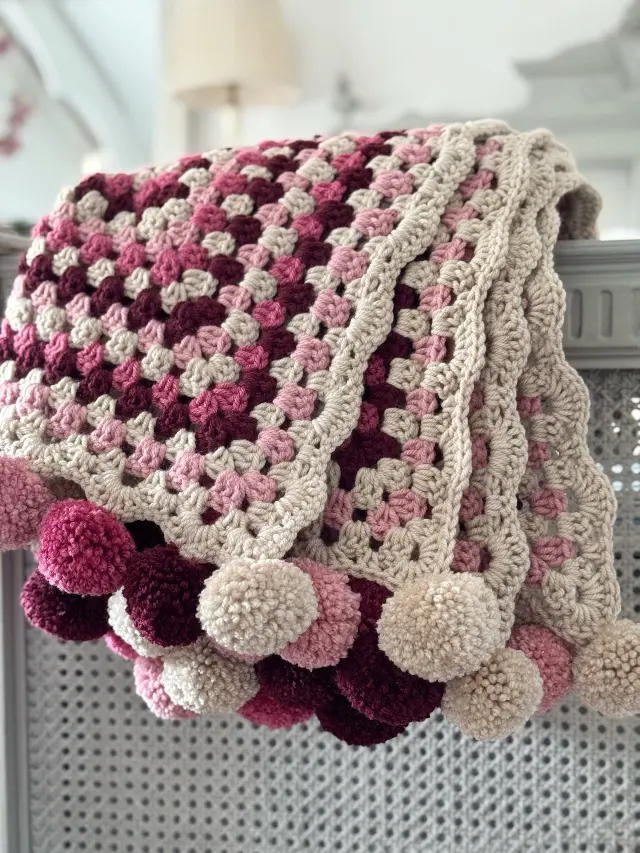
 November Crochet Roundup of Cosy Blankets and Pom-Pom Details
#Pom Poms
1 ideas
November Crochet Roundup of Cosy Blankets and Pom-Pom Details
Get new #Pom Poms ideas by email
Every Thursday: the week's best ideas, with the newest from #Pom Poms.
Related tags
Pom Poms: A Beginner's Guide to Making and Using Them
A pom pom is a soft, round ball of fluffed-up fibre, gathered tightly at its centre so that the strands fan out in every direction. It is one of the simplest things you can make with your hands, and one of the most versatile. You will find pom poms on the crown of a knitted hat, dangling from a scarf, clustered on a nursery mobile, strung into garlands for a party, or glued to the front of a handmade card. The word itself comes from the French "pompon", meaning a small ornamental tuft or ball, and versions of the idea appear in clothing and ceremonial dress across many cultures, from military headgear to traditional folk costume.
Kinds and materials
Most pom poms are made from yarn, and the yarn you choose changes everything. A smooth wool or acrylic gives a neat, dense ball with clear definition. A fluffy yarn such as mohair or alpaca produces something softer and hazier, closer to a cloud. Novelty yarns with sequins or metallic thread add sparkle but tend to shed, so they suit decorative pieces better than anything that will be washed often.
Beyond yarn, pom poms can be made from tissue paper, tulle, felt strips, fabric scraps, ribbon or raffia. Tissue and tulle versions are lighter and stiffer, which makes them popular for party decorations and gift wrapping. Fabric pom poms are heavier and hold a more sculptural shape.
Read more
Ways to make them
The traditional method needs only card. Cut two identical rings from stiff cardboard, hold them together, and wind yarn around them until the hole in the middle is nearly filled. Then slip your scissors between the two layers of card and cut all the way around the outside edge. Tie a length of strong thread tightly around the middle, between the cards, before you remove them, and fluff the ball out. The tighter that central tie, the better your pom pom will hold together.
Smaller pom poms can be wound around a fork, which is a quick way to make a batch for garlands. Plastic pom pom makers do the same job as the cardboard rings but are reusable and come in graduated sizes. Paper pom poms are made by stacking several sheets, folding them into a fan, tying the middle, and gently separating the layers one at a time.
Practical tips for beginners
Trim patiently. After the first cut, a pom pom looks uneven; roll it between your palms and trim again, working around the sphere until it looks round from every angle. Use a yarn that is not too slippery for your first attempts, and keep your winding tension even so the ball does not become lopsided. Make the tying thread longer than you think you need, because that same thread is what you will use to attach the pom pom to a hat or a garland. Finally, keep a small bag for the trimmings, since loose fibre can be reused as stuffing for small soft toys.
Once you have made a few, pom poms become a way of using up leftover yarn and odds and ends of fabric — small, forgiving projects that turn scraps into something worth keeping.
#Pom Poms: frequently asked questions
What do I need to make a pom pom, and how do I start?
You can begin with very little: some yarn, a pair of sharp scissors and something to wind the yarn around, such as a ring of stiff cardboard or a reusable pom pom maker. Wind the yarn around your form until the middle hole is nearly closed, then cut around the outer edge and tie a strong thread tightly through the centre before removing the form. The tighter that middle tie, the better the ball holds together.
Which yarn should I choose for my first pom pom?
A smooth wool or acrylic yarn is the easiest place to start, because it gives a neat, dense ball and does not slip while you wind. Fluffy fibres like mohair or alpaca make softer, cloud-like poms but are harder to control, and sparkly or sequinned novelty yarns shed, so they suit decorative pieces better than anything washed often. Choose the fibre by where the pom pom will end up, not just by how it looks in the skein.
How do I get a pom pom to look properly round instead of lopsided?
Expect it to look uneven straight after the first cut, and resist the urge to stop there. Roll the ball between your palms, trim again, and keep working around the sphere until it reads as round from every side. Keeping your winding tension even from the start is the main thing that stops a pom pom becoming one-sided.
What are the best materials for pom poms that are not made of yarn?
Tissue paper, tulle, felt strips, fabric scraps, ribbon and raffia all work well and each gives a different character. Tissue and tulle versions are lighter and stiffer, which makes them popular for parties and gift wrapping, while fabric pom poms are heavier and hold a more sculpted shape. These are made by folding and tying rather than winding, so the technique differs from yarn pom poms.
How should I care for things that have pom poms attached?
Pom poms stay tidy if you shake them out and fluff them by hand rather than combing them, and a gentle trim removes any fuzz that works loose. Items made with fluffy or sparkly yarns are best spot cleaned or washed less often, since loose fibres and metallic threads shed with agitation. Anything glued on should be treated more carefully than something sewn or tied on with its own centre thread.
What are the most common mistakes beginners make?
The usual culprits are tying the centre too loosely, winding unevenly so the ball turns out lopsided, and snipping the thread short when it is needed later for attaching the pom pom to a hat or garland. Slippery yarns and impatient trimming cause most of the rest. Kept the trimmings? They make handy stuffing for small soft toys.
Videos come from YouTube and posts from Instagram; titles and summaries are our own. All rights belong to their creators.