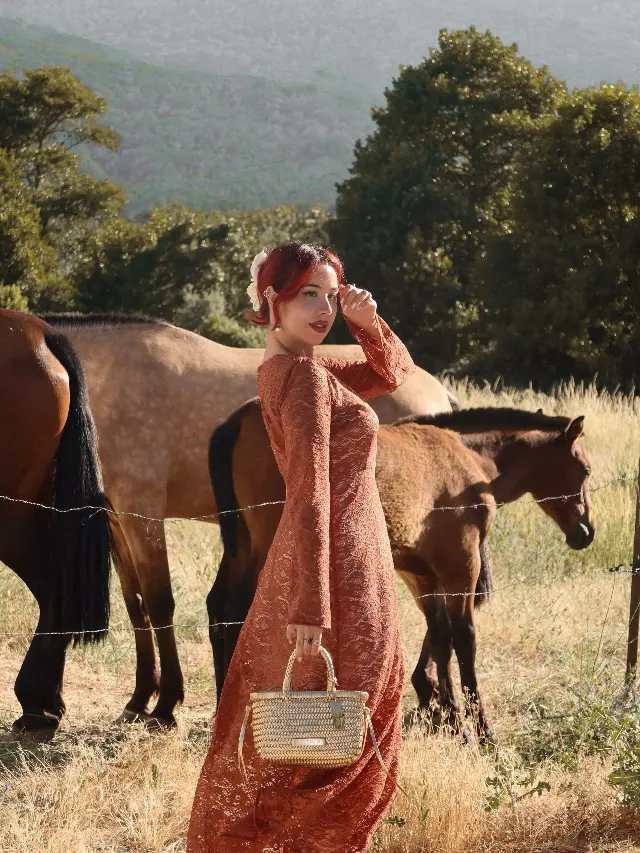
 Dusk Light and Cottage Charm in the Sierra de Gredos
#Countryside
2 ideas
Dusk Light and Cottage Charm in the Sierra de Gredos
Get new #Countryside ideas by email
Every Thursday: the week's best ideas, with the newest from #Countryside.
Related tags
The Countryside: A Guide to Rural Places and Slow Living
The countryside is the land beyond the town: fields and hedgerows, woods and dry stone walls, farmyards, lanes and small settlements where life keeps a rhythm set by weather and daylight rather than by opening hours. It is not one place but many. A coastal pasture, a mountain valley, an orchard belt and a flat fenland all count, and each looks and sounds entirely different.
What they share is space and distance. Sound travels differently where there is no traffic; at dusk you hear birds, water, a gate, the wind in a hedge. This is much of the appeal. People seek out rural places to slow down, to walk without a destination, to sleep in quiet, and to remember that food, timber, wool and water come from somewhere specific.
Reading the landscape
Rural scenery is rarely untouched nature. Almost everything you see has been shaped by farming, grazing and generations of small decisions. Hedges mark boundaries and shelter livestock. Dry stone walls, built without mortar, hold their shape through nothing but careful stacking. Terraces, ditches, pollarded trees and old tracks all tell you how a place was worked. Learning to notice these details turns a pleasant view into something legible.
Read more
Ways to spend time there
Walking is the simplest way in, whether on a long-distance path or a loop from a village. Cycling and horse riding suit wider landscapes. Many people go for the light: early mornings and late afternoons give longer shadows and softer colour, which is why painters and photographers favour them. Others come for crafts and skills — basket making, dry stone work, cheese making, beekeeping — or to garden, keep chickens, or simply sit outside. Wildlife watching rewards patience more than equipment.
What beginners should know
Plan for change. Weather in open country turns faster than in town, and a warm afternoon can end cold and wet. Take a waterproof layer, water, and a map or offline navigation, because phone signal is unreliable in many rural areas. Tell someone your route on longer walks.
Follow paths that are legally open to the public, and if a route crosses private land, stay on it. Close gates behind you unless they are clearly meant to be open. Keep distance from livestock, especially when animals have young, and never feed them. Dogs belong on a lead around farm animals and ground-nesting birds.
Leave nothing behind, and take nothing that belongs there: no picking plants, no moving stones, no lighting fires outside permitted places. Buy from local shops and farm stalls where you can; it keeps small economies alive and gives you a real taste of the region.
A note on manner
Rural life is not a performance put on for visitors. Villages are people's homes, farms are workplaces, and machinery on narrow lanes has nowhere to go. Drive slowly, greet people, ask before photographing, and accept that some things — a closed shop, a silent pub, a field left unmown — are not yours to arrange. Come curious rather than expectant, and the countryside will show you far more.
#Countryside: frequently asked questions
What actually counts as countryside, and does it matter which kind I visit?
Rural land is far more varied than a single picture of fields and hedgerows: coastal pasture, mountain valleys, orchard country and flat open farmland all belong to it and each has its own weather, wildlife and pace. Choose by what you want from the day — wide horizons for cycling, wooded lanes for sheltered walking, or a quiet valley for sitting still. The shared feature is space and distance, so any of them will give you the quiet that most people are actually after.
How do I get started if I have never really spent time in the countryside?
Start with a short walk on a public path from a village, so you can turn back easily and still have somewhere to eat or shelter. Walking is the simplest way in, and it teaches you quickly how the land is laid out and how long things take on foot. Once that feels comfortable, longer paths, cycling or riding become straightforward.
What should I take with me on a rural walk?
Take a waterproof layer, drinking water and an offline map or paper map, because open country turns cold and wet faster than a town does and phone signal often fails. Tell someone your route if you are going out for a long time. Beyond that, less is more — you are going out to notice things, not to carry equipment.
What are the most common mistakes visitors make?
The usual ones are wandering off legally open paths, leaving gates that should be shut, and getting too close to livestock, particularly when animals have young with them. Dogs need to be on a lead around farm animals and ground-nesting birds, and feeding animals is never a kindness. Another frequent slip is treating a village as scenery rather than as somebody's home, which shows in slow driving and asking before photographing.
Why does the landscape look the way it does, and how can I read it better?
Almost nothing you see is untouched nature: hedges were planted to mark boundaries and shelter livestock, walls were stacked by hand, and ditches, terraces and old tracks all record how the land was worked. Learning to spot those details turns a pleasant view into something you can actually read. It also makes clear that the scene is the product of long, small, practical decisions rather than decoration.
When is the best time to go for photography, painting or a quiet occasion?
Early morning and late afternoon give longer shadows and softer colour, which is why painters and photographers plan around them. Dusk is also when the countryside becomes most audible — birds, water, a gate, wind in a hedge — since there is no traffic to cover it. Arriving curious rather than expectant tends to give you more than any particular hour does.
Videos come from YouTube and posts from Instagram; titles and summaries are our own. All rights belong to their creators.