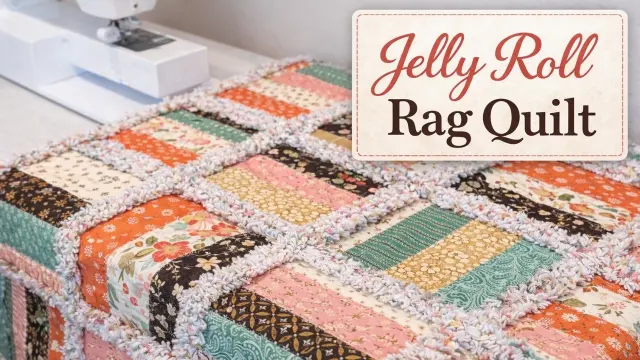
 Easy Step-by-Step Jelly Roll Rag Quilt Assembly Guide
#Cozy Crafts
1 ideas
Easy Step-by-Step Jelly Roll Rag Quilt Assembly Guide
Get new #Cozy Crafts ideas by email
Every Thursday: the week's best ideas, with the newest from #Cozy Crafts.
Related tags
Cozy Crafts: A Beginner's Guide to Making by Hand
Cozy crafts is a loose, affectionate name for the kind of making that ends in something soft, warm or comforting: a quilt to pull over your knees, a pair of thick socks, a cushion worn thin by the cat, a candle that makes the room smell like a bakery. The point is less about producing a flawless object than about the pleasure of working slowly with your hands and ending up with something you actually use.
Most of these crafts began as plain necessity. Quilts were pieced from worn-out clothing because fabric was too precious to throw away. Knitting filled long winters. Mending, darning and embroidery kept household linens in service for decades and turned the repairs into decoration. What was once thrift is now chosen leisure, but the logic holds: handmade things last, and they carry the memory of the hands that made them.
What falls under cozy crafts
- Quilting and patchwork, from simple tied quilts to pieced designs
- Knitting and crochet, especially warm accessories and blankets
- Embroidery, cross-stitch and visible mending
- Hand sewing for cushions, curtains, aprons and simple soft furnishings
- Felt work, pom-poms and other small fabric projects
- Candle making and simple home fragrance
Starting without spending much
Choose one small project and finish it. A scarf, a pincushion, a set of coasters, a single patchworked cushion cover. Small projects teach you the whole arc of a craft — choosing materials, learning the motions, assembling, finishing — without months of work before you see a result.
Read more
For tools, buy the ordinary version rather than the expensive one. A pair of needles, a hook, a few sharp hand-sewing needles, decent thread, fabric scissors you never use on paper. Add better tools later, once you know what you actually reach for.
Techniques worth learning first
In knitting, knit and purl stitches open up almost everything else. In crochet, a chain and a single crochet are enough to begin. For hand sewing, learn a running stitch, a backstitch and how to secure a thread. Quilters do well to practise accurate cutting and a straight quarter-inch seam before attempting a full quilt. None of these take long to grasp, and all of them improve only with repetition.
Making it feel cozy
Texture does most of the work: wool, cotton, linen, flannel, chunky yarns, fuzzy felt. Warm neutral palettes and muted colours tend to age better than whatever is loudest on the shelf. Scent, soft lighting and a comfortable chair matter as much as the materials, because the making is supposed to be restful.
Things beginners run into
Tension tightens when you grip too hard; loosen your hold and the fabric relaxes. First projects are often too ambitious — halve the size and double the patience. Buying supplies for five crafts at once is a common trap. And it helps to remember that handmade means slightly irregular, which is exactly what makes it look handmade.
Work in good light, take breaks when your hands or eyes tire, and keep your project somewhere you can pick it up for ten minutes at a time. Cozy crafts reward the small, repeated session far more than the heroic one.
#Cozy Crafts: frequently asked questions
How do I start with cozy crafts if I've never made anything before?
Pick one small project you can actually finish, like a scarf, a pincushion or a single cushion cover, rather than a full quilt or blanket. A small piece walks you through the whole arc of a craft — choosing materials, learning the motions, assembling and finishing — so you see a result before your enthusiasm runs out. Keep the first attempt modest and let repetition do the rest.
What supplies do I really need to begin?
Start with the ordinary version of the basics: a pair of needles or a hook, a few sharp hand-sewing needles, decent thread, and fabric scissors you never cut paper with. Fancy tools can wait until you know which ones you actually reach for. Buying supplies for several crafts at once is one of the most common beginner traps.
Which cozy craft should I choose?
Choose by the object you most want to end up with — something to pull over your knees, warm socks, a scented candle, or a mended and embroidered linen. If you enjoy fabric and colour, patchwork or hand sewing suits; if you like portable, repetitive motion, knitting or crochet is easier to pick up in spare moments. Let the finished thing you'd genuinely use make the decision for you.
How should I care for handmade blankets, cushions and knits so they last?
Treat them as things meant to be used but handled gently: wash less often, in cool water, and dry flat so shapes hold. Mend small holes and loose seams early, since a quick repair keeps a piece in service far longer than waiting for it to fall apart. Storing projects and finished pieces away from damp and strong light helps too.
What mistakes do beginners usually run into?
Gripping the yarn or needle too hard makes the fabric tight and cramped, so loosening your hold usually fixes it. First projects tend to be too ambitious, so halving the size and doubling the patience works better than pushing through. And remember that slightly irregular stitching is what makes a handmade object look handmade rather than flawed.
Any ideas for making a cozy craft as a gift or for a particular occasion?
Small, useful things travel best as gifts — coasters, a pincushion, a simple cushion cover, a candle in a scent you'd choose for that person. If time is short, finish a smaller version of a bigger idea rather than rushing a large one. Working in good light and in short repeated sessions keeps a gift project enjoyable right up to the end.
Videos come from YouTube and posts from Instagram; titles and summaries are our own. All rights belong to their creators.