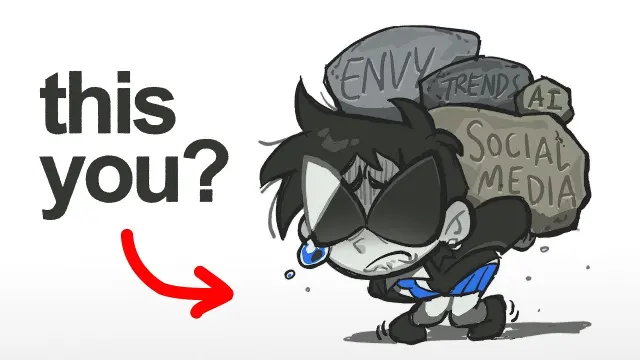
 Ten Tips to Overcome Art Block and Enjoy Drawing Again
#Creative Burnout
1 ideas
Ten Tips to Overcome Art Block and Enjoy Drawing Again
Get new #Creative Burnout ideas by email
Every Thursday: the week's best ideas, with the newest from #Creative Burnout.
Related tags
Creative Burnout: Rest, Recover, and Find Your Way Back
Creative burnout is the point at which the work you once loved stops giving anything back. It differs from a bad day, a stubborn project or a simple lack of ideas. Those pass. Burnout settles in: the thought of opening your sketchbook or sitting down at the keyboard feels heavy, everything you make seems flat, and the things that used to restore you now feel like another obligation.
It usually arrives quietly, built from ordinary habits rather than one dramatic event. Making output the only measure of progress, comparing your work to finished pieces by people further along, saying yes to every request, or treating rest as something earned rather than needed — all of these drain the same well. Creative work also draws on attention and feeling, not just time, so a schedule that looks manageable can still be exhausting. Many people discover burnout only after pushing through it for months.
The signs are fairly consistent. You procrastinate more than usual, then feel guilty about it. Work that once absorbed you now feels like grinding. You either stop noticing what you like in other people's work or start judging it harshly. Small setbacks land harder than they should. Sometimes the body speaks first, with tiredness that sleep doesn't fix.
Recovery rarely comes from trying harder. A few things tend to help.
Read more
Take the pressure off
Step away from the project that has become a test of your worth, even briefly. Give yourself permission to make something bad, private, or pointless. Doodling without a goal, copying something just to understand it, or playing with a material you have no skill in can loosen the grip of expectation.
Feed the input
Burnout is often an empty-tank problem. Seek out work in other fields — museums, films, books, walks, conversations with people who think differently from you. Collect things you respond to without asking what they are for.
Change the shape of the work
Shorter sessions, smaller formats, clear stopping points. Finish something tiny on purpose. If you normally work alone, find one person to share unfinished things with; if you normally work for an audience, keep something entirely to yourself.
Look at the rest of your life
Sleep, movement, food and time outdoors are not peripheral to creativity — they are the conditions for it. So is having hours in the day that ask nothing of you.
Be patient with the return
Energy comes back unevenly. Expect false starts and flat days without reading them as proof that you are finished. Beginning again is a skill, and it is usually gentler than the first attempt.
Beginners should know this early: burnout is not a sign of insufficient talent or dedication. It is a signal that the balance between giving and replenishing has slipped — and unlike inspiration, it responds well to care.
#Creative Burnout: frequently asked questions
How do I tell whether I'm dealing with creative burnout or just a normal creative block?
A block usually clears with a change of approach, a break or a new idea, while burnout settles in and stays. With burnout the whole practice feels heavy — you avoid it, feel guilty about avoiding it, and work that used to absorb you turns into a grind. If rest no longer restores you and the flatness follows you into other areas of life, that's the sign to treat it as burnout rather than a passing slump.
What actually causes creative burnout?
It tends to build from ordinary habits rather than one big event. Measuring progress only by output, comparing your unfinished work to other people's finished work, agreeing to every request, and treating rest as something you have to earn all drain the same reserves. Creative work also runs on attention and feeling rather than time alone, so a schedule that looks reasonable on paper can still leave you empty.
Does feeling burned out mean I'm not talented or committed enough?
No — it means the balance between what you give out and what you take in has slipped. Burnout is a signal about conditions and habits, not about ability or dedication, and it responds to care far more reliably than inspiration does. Talent isn't the variable being tested here.
What are the first steps to take when I'm burned out on my creative work?
Start by lowering the stakes: step away briefly from whatever project has turned into a test of your worth, and give yourself permission to make something small, private or deliberately bad. Then feed the input side — other fields, other people's work, museums, films, walks — and collect what you respond to without asking what it's for. Shrinking the work itself, with shorter sessions and clear stopping points, keeps things moving without demanding much.
How do I stop burnout from coming back once I start creating again?
Expect the return to be uneven and don't read flat days as proof that you're finished. Build in clear stopping points, keep at least one thing entirely for yourself if you usually make work for an audience, and protect hours in the day that ask nothing of you. Sleep, movement, food and time outdoors are part of the work, not a distraction from it.
Do I need to take a long break from creating to recover?
Not necessarily — recovery rarely comes from trying harder, but it also doesn't require a dramatic shutdown. Many people do better with a gentle change of shape: shorter sessions, smaller formats, experimentation in a medium they have no skill in, or a brief pause from the one project carrying all the pressure. What matters is that the giving and replenishing get back into balance.
Videos come from YouTube and posts from Instagram; titles and summaries are our own. All rights belong to their creators.