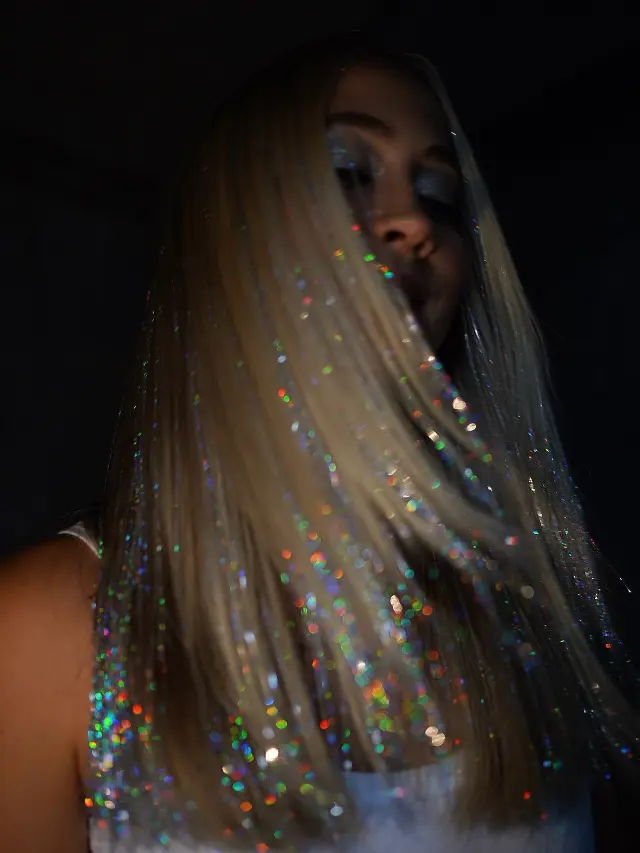
 Holographic hair tinsel installation for a sparkly finish
#Creative Hairstyles
1 ideas
Holographic hair tinsel installation for a sparkly finish
Get new #Creative Hairstyles ideas by email
Every Thursday: the week's best ideas, with the newest from #Creative Hairstyles.
Related tags
Creative Hairstyles: A Guide to Inventive Hair
Hair is one of the few things you can change completely and then change back again. Creative hairstyles sit at that point where everyday grooming turns into play: braids that travel in unexpected directions, colour placed in stripes or hidden underneath, accessories pinned in as part of the structure rather than added at the end. The point is not to follow a rule but to treat hair as a material you can shape, fold, dye, pin and decorate.
Where the ideas come from
Inventive hair has always existed in ordinary life. Braiding and wrapping traditions across Africa, Asia, the Americas and Europe carry centuries of patterns and meaning, and many techniques now seen as "new" are older than the people wearing them. Alongside that, stage and film costumery, dance, folk dress and ceremonial hairstyling have long treated hair as something sculptural. Most of what circulates today is a remix of these sources, so it is worth learning where a technique comes from before borrowing it.
The main directions
Read more
- Braiding and plaiting: three-strand work, fishtails, cornrow-style sectioning, rope braids and braids joined into shapes. The base is tension — even, not tight.
- Updos and structure: buns, twists, rolls and pinned shapes, often built from a ponytail so the weight has an anchor.
- Colour as design: placement rather than all-over, such as a hidden panel, a graduated strip, or a shade concentrated at the ends.
- Texture play: curling, straightening, crimping, backcombing or smoothing sections so different surfaces sit next to each other.
- Accessories: clips, pins, ribbons, scarves, beads and temporary sparkle. Some are removed the same night, others stay in for days.
- Temporary and costume work: hair that is styled for an evening and washed out afterwards.
What beginners should know
Start with clean, dry hair and a plan. Sectioning is the real skill underneath almost every elaborate look — clip the rest out of the way and work one small piece at a time. Give yourself more length than you think you need, because braids and twists shorten hair as they form. Practise on hair you can wet down and start again.
Tools matter less than grip and patience: a comb for parting, small elastics, pins that match your hair colour for invisible anchoring, and a mirror you can angle. If you are using heat, keep the setting moderate and move the tool rather than holding it still. With colour, adhesive or chemical processes, patch-test first and read the instructions properly; anything that alters the hair's structure is better done slowly or with a professional than guessed at.
Finally, mind the scalp. Any style that pulls, itches or aches is too tight, and wearing the same tight style day after day is worth avoiding. Creative hair should be comfortable enough to forget about — that is usually the sign you got it right.
#Creative Hairstyles: frequently asked questions
How do I start with creative hairstyles if I've never done anything elaborate?
Begin with clean, dry hair, a comb for parting, and one small section rather than the whole head at once. Sectioning is the skill underneath almost every intricate look, so clip the rest of the hair out of the way and practise on hair you can wet down and start over. Give yourself more length than feels necessary, since braids and twists shorten the hair as they form.
What do I actually need before I attempt a creative style?
Grip and patience matter more than a drawer full of tools: a parting comb, small elastics, and pins matched to your hair colour for anchoring that stays hidden. A mirror you can angle helps more than you would expect. For anything involving heat, colour, adhesive or chemical processes, read the instructions properly and test on a small area first, or have it done by a professional rather than guessing.
Which direction should I choose — braiding, an updo, colour, or accessories?
Pick the one that matches how long you want the style to last and how much time you can give it. Braids and pinned updos are structural and stay put, colour as design is usually a placement decision rather than an all-over change, and accessories or tinsel can be a finish you add for an evening and remove afterwards. Texture play is the easiest entry point, because you can combine smooth and curled surfaces without committing to a shape.
How do I look after a creative style once it's in?
Mind the scalp above all: any style that pulls, itches or aches is too tight, and repeating the same tight style day after day is worth avoiding. Comfort you can forget about is usually the sign the tension is right. If a look relies on heat, adhesive or chemical processes, go slowly and treat it as something to build up to rather than rush.
Any tips for a creative hairstyle for a specific occasion?
Decide first whether you want something temporary that washes out afterwards or a structure you can wear for several days, because that choice decides the technique. Building an updo from a ponytail gives the shape an anchor to hold its weight, and accessories pinned in as part of the structure look more intentional than ones added at the end. Practise the look once before the day itself so you know how your hair behaves.
What mistakes do beginners usually make?
The most common ones are working without a plan, using too little hair length, and pulling everything too tight in an effort to make it hold. Another is borrowing a technique without knowing where it comes from, when a little time spent learning its origins makes the choice more respectful and often more accurate. Skipping a patch test on colour or adhesive, or holding a heat tool still instead of moving it, are the mistakes with the longest consequences.
Videos come from YouTube and posts from Instagram; titles and summaries are our own. All rights belong to their creators.