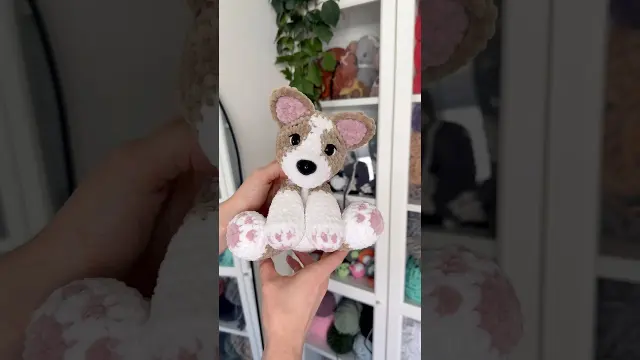
 Crocheting a Floppy Corgi: Amigurumi in Progress
#Crochet Amigurumi
2 ideas
Crocheting a Floppy Corgi: Amigurumi in Progress
Get new #Crochet Amigurumi ideas by email
Every Thursday: the week's best ideas, with the newest from #Crochet Amigurumi.
Related tags
Crochet Amigurumi: A Beginner's Guide to Soft Sculpture
Amigurumi is the craft of crocheting small stuffed figures — animals, dolls, food, fantastical creatures — usually from yarn worked in a continuous spiral so the fabric forms a seamless tube. The word is Japanese, a compound of "ami" (crocheted or knitted) and "nuigurumi" (stuffed toy), and the technique grew popular in Japan in the second half of the twentieth century before spreading widely through craft books and, later, online pattern sharing. What draws most people in is the combination of simplicity and charm: the stitches are few, the shapes are small, and the results have a soft, rounded, slightly cartoonish quality that is hard to resist.
How amigurumi is made
Almost all amigurumi is worked in single crochet, in the round, without turning at the end of each row. Instead of joining rounds with a slip stitch, you place a stitch marker at the start of each round and keep spiralling upward. This produces the tight, dense, even fabric that holds stuffing without gaps and gives finished pieces their firm, sculptural look. Most patterns are worked from a magic ring — an adjustable loop that closes to leave no hole at the centre — and shaped by increases and decreases: adding stitches to widen a round, joining two together to narrow it.
Reading a pattern
Read more
Amigurumi patterns are written in rounds rather than rows, and often use short abbreviations: sc for single crochet, inc for an increase, dec for a decrease, and a number in brackets for the stitch count at the end of each round. A line like "R3: (sc, inc) x 6 (18)" simply means repeating that pair of stitches six times to reach eighteen stitches. Learning to read this shorthand fluently is the biggest hurdle for beginners, and it comes quickly with practice.
Choosing yarn and hook
The usual choice is a smooth yarn in a light, solid colour, crocheted with a hook one or two sizes smaller than the label recommends. Working tightly matters more than any particular fibre: cotton gives crisp definition and a matte finish, acrylic is soft and widely available, and blends fall somewhere between. Light colours hide the uneven stitches that beginners always notice in their own work. A plain yarn also keeps the shape readable, since textured or variegated yarns can obscure the silhouette.
Practical tips
Count your stitches at the end of every round until you trust your rhythm — most amigurumi problems are simply a stitch lost or gained several rounds back. Stuff firmly but gradually, adding small amounts as you close each piece, so the figure keeps its shape rather than going lumpy. When joining limbs to a body, pin them in place first and check that they sit evenly from the front. Finally, safety eyes are the usual choice for expressions, but sewn or crocheted features are safer for anything intended for a baby or a pet.
Amigurumi rewards patience rather than speed. Start with a simple ball or egg, then a small animal, and the shaping logic behind almost every pattern will begin to feel familiar.
#Crochet Amigurumi: frequently asked questions
How do I start crocheting amigurumi if I've never made a stuffed figure before?
Begin with a simple shape like a ball or an egg, which teaches you the spiral working method without the complication of limbs or colour changes. Once the basic round feels natural, move on to a small animal — the shaping logic repeats across almost every pattern. Practise reading the round-by-round shorthand before starting, since that is the hurdle most beginners stumble on.
What do I actually need to make my first amigurumi?
A smooth yarn in a light solid colour, a hook slightly smaller than the yarn label recommends, a stitch marker, stuffing, and a tapestry needle for closing and joining. Safety eyes are the usual choice for faces, though sewn or crocheted features are safer for anything going to a baby or a pet. Everything else is optional rather than essential.
Which yarn should I pick for amigurumi?
Cotton gives crisp definition and a matte finish that shows shaping clearly, while acrylic is soft, widely available and forgiving. Blends fall somewhere between the two and work perfectly well. What matters most is working tightly and choosing a plain, light colour, since textured or variegated yarns blur the silhouette and hide uneven stitches.
How should I care for a finished amigurumi piece?
Check the yarn label's washing guidance before cleaning anything, since fibres differ in how much agitation they tolerate. Surface cleaning or a gentle hand wash with minimal handling generally keeps the stuffing and shaping intact. Let the piece dry fully in shape rather than wringing it, and keep it away from rough play if the features are sewn rather than securely attached.
What are the most common mistakes people make when crocheting amigurumi?
The classic one is losing or gaining a stitch several rounds back, which throws off the whole shape — counting at the end of every round catches this early. Stuffing all at once instead of adding small amounts as you close a piece leaves figures lumpy or underfilled. Pinning limbs in place before attaching them also prevents the lopsided look that comes from eyeballing the position.
What kinds of amigurumi are good to make as gifts?
Small animals and seasonal figures tend to be the most welcome, since they suit a shelf, a nursery or a gift bag without needing much space. Food shapes and fantastical creatures appeal when you want something more whimsical than a straightforward toy. Match the yarn and features to the recipient — sewn details rather than safety eyes for young children and pets.
Videos come from YouTube and posts from Instagram; titles and summaries are our own. All rights belong to their creators.