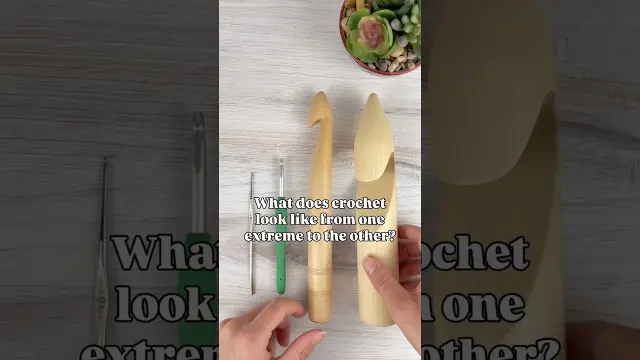
 What a 40mm crochet hook can make in amigurumi
#Crochet Hook
1 ideas
What a 40mm crochet hook can make in amigurumi
Get new #Crochet Hook ideas by email
Every Thursday: the week's best ideas, with the newest from #Crochet Hook.
Related tags
Crochet Hooks: A Beginner's Guide to Types, Sizes and Grip
A crochet hook is a short, hand-held tool with a notch at one end that catches and pulls loops of yarn. Working one loop at a time, you build fabric row by row — a single strand looping through itself, which is what separates crochet from knitting, where two needles hold many live stitches at once. The word itself comes from the French "croc", meaning hook, and the craft grew from humble household work into a form of needlework practised across the world.
The parts of a hook
Every hook has the same basic anatomy. The pointed tip slides into stitches; the groove just behind it — the throat — holds the yarn; the wider flat section, sometimes called the grip or thumb rest, is where your fingers sit; and the shaft determines the finished size of your stitches. Hooks are also made in two broad styles: inline hooks, where the tip aligns with the shaft, and tapered hooks, where the head narrows before widening into the shaft. Neither is better; they simply suit different hands and habits.
Materials
Read more
Aluminium hooks are smooth and slippery, letting yarn glide quickly, which makes them a common first choice. Steel versions in fine sizes are used for thread work. Wood and bamboo warm up in the hand and offer a little grip, which many people find kind to their wrists and useful with slippery yarns. Plastic sits at the budget end, while ergonomic handles — added grips in rubber or resin — can make long sessions easier for hands that tire.
Sizes and matching yarn
Hooks are labelled by the diameter of the shaft, usually in millimetres. Small numbers suit fine thread and tight, dense fabric; larger numbers suit thick yarns and loose, open textures. The golden rule for beginners is to read the yarn label, which suggests a hook range, then make a small sample square to check that the fabric feels right — not so tight that it stiffens, not so loose that it looks holey. Your own tension matters as much as the hook, so two people using the same size may produce different results.
Holding the hook
There is no single correct grip. The pencil hold places the hook like a pen, resting it between thumb and fingers; the knife hold wraps the hand over the top, closer to how you would hold a spoon. Try both and keep the one that lets your wrist stay relaxed. The hand holding the yarn controls tension, feeding it steadily so stitches stay even.
Practical tips
Start with a light-coloured, smooth, medium-weight yarn — dark or fluffy yarns hide your stitches. Choose a hook with a clear size marking, keep a note of the size you used with each project, and set the work down before your hands ache rather than after. Learning to read your own stitches, rather than counting rows blindly, will solve most beginner confusions, and a single spare hook in a common size is worth keeping in your bag for practice anywhere.
#Crochet Hook: frequently asked questions
How do I start crocheting if I have never held a hook before?
Begin with a smooth, light-coloured, medium-weight yarn, since dark or fluffy fibres make your stitches hard to see while you are learning. Pick one hook with a clearly marked size, learn a simple grip, and practise making even loops before attempting a full project. Keep sessions short and stop before your hands ache rather than after.
What do I actually need to begin, besides a hook?
A hook and a ball of yarn are genuinely enough to start; everything else is comfort rather than requirement. Choose a hook whose size sits in the range recommended on the yarn label, and make a small sample square so you can see whether the fabric feels too tight or too loose. A spare hook in a common size kept in your bag lets you practise anywhere.
Should I choose an inline or a tapered hook, and which material is best?
Inline hooks have the tip aligned with the shaft, while tapered hooks narrow at the head before widening again; neither is superior, they simply suit different hands and habits. Aluminium glides quickly through yarn, wood and bamboo warm in the hand and give a little grip, and added rubber or resin handles help hands that tire during long sessions. Try a few and keep whatever lets your wrist stay relaxed.
How do I look after my hooks so they last?
Keep your hooks somewhere they will not be crushed or scratched, since a nicked throat or tip will catch the yarn and spoil your tension. Store them by size so you always know what you are picking up, and note the size used for each project so future work matches. Setting your work down when your hands begin to tire is as much part of care as storing the tool well.
What are the most common beginner mistakes with a crochet hook?
The usual troubles come from mismatching hook and yarn, gripping far too tightly, or blindly counting rows instead of looking at the stitches themselves. Learning to recognise the shape of your own stitches solves most of the confusion beginners run into. Working with dark or fluffy yarn too early is another frequent stumble, because it hides exactly what you need to see.
What kinds of things can I make once I am comfortable with a hook?
The same short tool works across an enormous range: fine thread and small hooks for delicate lace, thicker yarn and larger hooks for cosy, open textures, and tightly worked stitches for stuffed toys and shaped pieces. Because the fabric is built one loop at a time, you can also change direction and shape as you go rather than working straight rows only. Choose the yarn and hook combination to match the texture you want, then sample a small square before committing to a larger piece.
Videos come from YouTube and posts from Instagram; titles and summaries are our own. All rights belong to their creators.