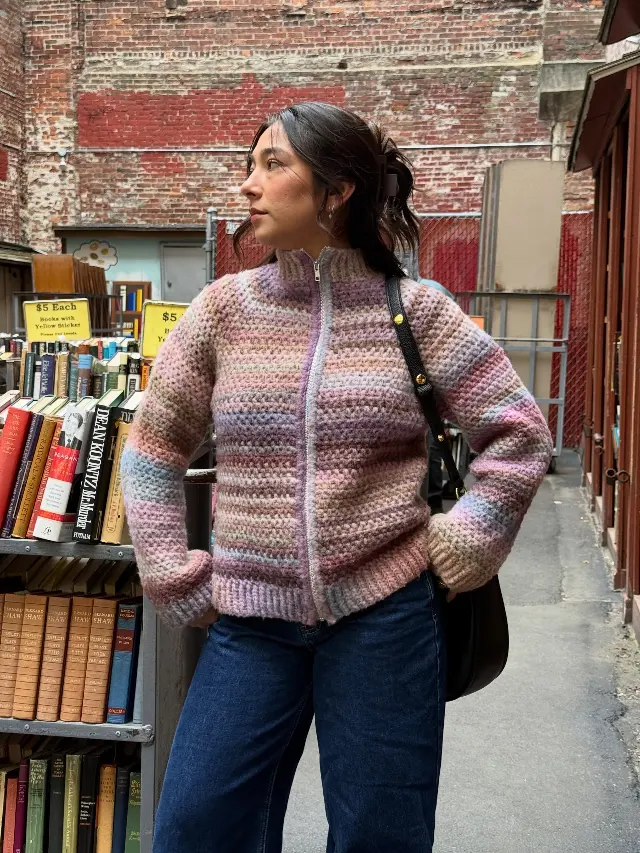
 Handmade crochet zip jacket with mock turtleneck design
#Crochet Inspo
1 ideas
Handmade crochet zip jacket with mock turtleneck design
Get new #Crochet Inspo ideas by email
Every Thursday: the week's best ideas, with the newest from #Crochet Inspo.
Related tags
Crochet Inspiration: Ideas, Techniques and Tips
Crochet is a way of making fabric from a single continuous strand of yarn, worked with one hook rather than two needles. Small loops are pulled through one another to build rows or rounds, and because each stitch is finished before the next begins, the fabric can be shaped, turned and joined almost anywhere. That flexibility is part of why crochet attracts so many makers: a project can be a flat square, a seamless tube, a lacy edge or a three-dimensional object.
Where it comes from
Crochet as we recognise it took shape in Europe in the nineteenth century, though yarn looping techniques existed in many cultures long before. Because early crochet was often worked in fine thread, it was first associated with lace imitations and decorative household linens. Coarser yarns and thicker hooks later opened the door to garments, blankets and household items, and the craft spread widely as an everyday skill passed between families and friends.
The basic building blocks
Read more
Almost everything begins with a slip knot and a chain. From there, a small family of stitches does most of the work: slip stitch, single crochet, half double, double and treble. Varying their height, placement and combination creates dense firm fabric or open airy lace. Increasing and decreasing shape the piece, and working in rounds removes seams altogether.
Styles and techniques worth knowing
- Granny squares and motifs: small units joined into blankets, bags and garments, ideal for using up leftover yarn.
- Amigurumi: tight, dense crochet worked in continuous spirals to make stuffed figures and toys.
- Filet and tapestry crochet: stitches and colour changes used to draw pictures and patterns into the fabric.
- Lace and doily work: fine thread with open, repeating motifs.
- Freeform crochet: improvisational, texture-led work without a fixed pattern.
What beginners should know
Start with a smooth, light-coloured yarn in a medium weight and a hook size recommended on its label; pale yarn makes stitches easy to see. Learn to hold the hook and yarn comfortably rather than tightly, since tension shapes the whole fabric. Work a small practice swatch of each basic stitch before starting a project, and count stitches at the end of every row — most early mistakes are simply a lost or extra stitch at the edge. Patterns are written in abbreviations, so keep a key nearby until they become familiar.
Finding inspiration
Ideas rarely arrive from nowhere. Pay attention to colour combinations you notice in fabrics, buildings or food, and keep a note of them; a palette is often the starting point for a whole project. Texture photographs well — study how a stitch pattern catches light before committing to a large piece. Worked examples are useful for understanding construction as much as appearance, so look closely at how a garment is shaped at the shoulders or how a border is joined.
Finally, keep a record of what you make: yarn, hook size, notes on fit and any changes you improvised. That small habit turns each finished piece into a reliable reference for the next one.
#Crochet Inspo: frequently asked questions
What supplies do I actually need to start crocheting?
You need a hook, a ball of yarn and very little else — a pair of scissors and something to mark stitches will make life easier. Choose a smooth, light-coloured yarn in a medium weight with the hook size recommended on its label, since pale yarn lets you see your stitches clearly. Begin with a slip knot and a chain, then practise the basic stitches on a small swatch before committing to a real project.
How do I choose which style of crochet to try first?
Let the finished object decide for you: small joined motifs suit blankets and bags, tight spiral work suits stuffed toys, and fine thread with open motifs suits lace and doily pieces. Improvisational, texture-led work is wonderful but harder to learn from, so save it until the basic stitches feel automatic. Looking closely at how a worked example is shaped and joined teaches you as much as the appearance of the finished piece.
How should I look after crochet items so they last?
Follow the care guidance that came with your yarn, and always test on a spare swatch before washing a finished piece. Store work folded rather than hung, since crochet stretches under its own weight, and keep pieces away from anything that could snag the loops. Making a note of the yarn and hook you used turns each finished item into a reference for repairing or repeating it later.
What mistakes do beginners make most often?
The classic one is a stitch gained or lost at the edge of a row, which throws everything after it out of line — so count your stitches at the end of every row. Holding hook and yarn too tightly is the other common habit, and it makes the whole fabric stiff and hard to work. Keeping a key of the pattern abbreviations nearby also saves a lot of confusion while you are still learning to read them.
Where do people find ideas for their next crochet project?
Inspiration usually comes from noticing rather than searching: colour combinations in fabrics, buildings or food are often the starting point for a whole palette. Study texture closely too, since a stitch pattern changes character depending on how it catches the light, and photographs are a good way to judge that before starting a large piece. Keep a running record of what you make and any changes you improvised, so the next project builds on the last.
How is crochet different from knitting?
Crochet works a single continuous strand with one hook, building small loops through one another, while knitting uses two needles and many live stitches held on them at once. Because each crochet stitch is finished before the next begins, the fabric can be turned, shaped or joined almost anywhere, which is what allows flat squares, seamless tubes and three-dimensional objects from the same technique. That flexibility is the main reason crochet suits both lacy decorative pieces and sturdy everyday items.
Videos come from YouTube and posts from Instagram; titles and summaries are our own. All rights belong to their creators.